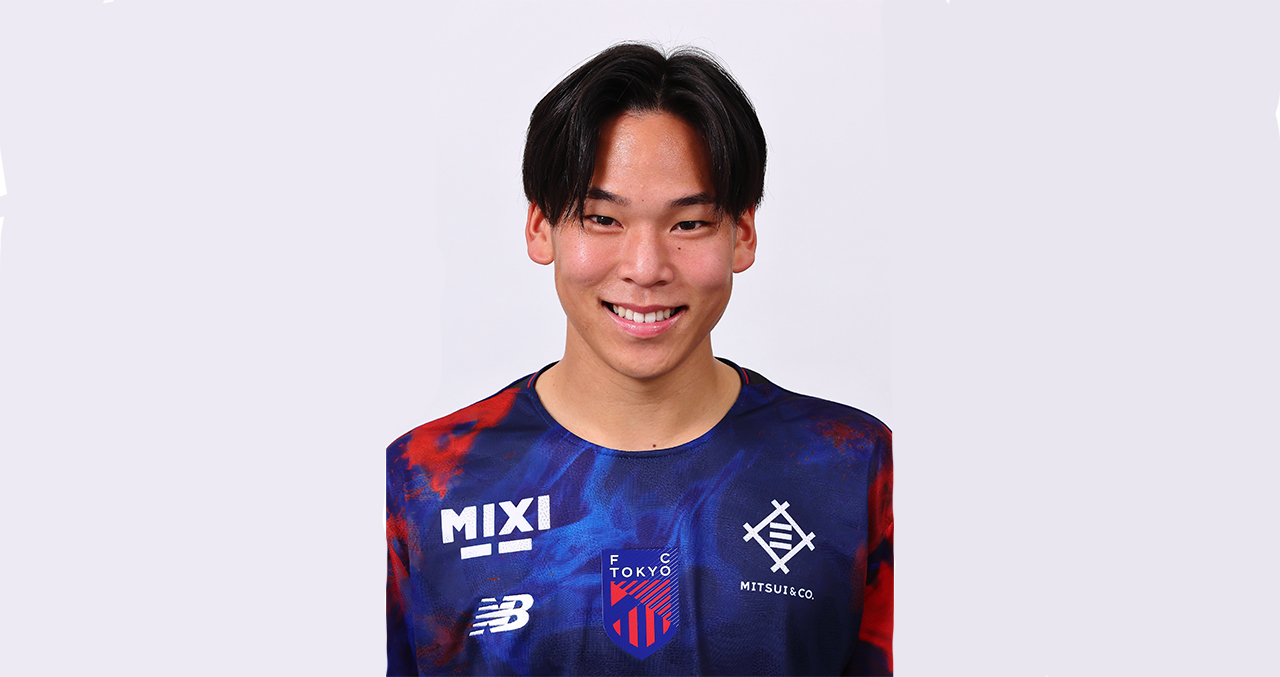
Albert PUIG ORTONEDA Coach Interview
Q, What should fans and supporters call the coach?
A, For the past two years, I have been called Albert, but the 'to' is not pronounced, it's Albert. The accent is on the 'be', that's the original. For some reason, in Japan, I was registered as Alberto, and even Wikipedia has it as Alberto (laughs), but I would be happy if you could call me Albert from now on.
Q, Albert, this will be your first challenge in J1 and with a club in the capital, FC Tokyo. How did you feel when you received the offer?
A, First of all, I want to say that I was really comfortable working in Niigata. The club made efforts to change its direction, and the players followed the playing style I aimed for. I believe the fans and supporters also liked it. However, I am always seeking new challenges. I have spent most of my career as a youth coach. After coaching at the FC Barcelona academy, I was able to take on the role of Academy Director at Barcelona, which is one of the most important positions in youth development worldwide. I was involved in various reforms within the club, and after that, I embarked on a new journey of challenges.
Q, You have served as the Technical Director for the Gabon national team and as a coach for New York City in Major League Soccer in the United States, correct?
A, When Domenec Torrent, who served as the right-hand man to Josep Guardiola (former Barcelona coach, current Manchester City coach) for a long time, was appointed head coach at New York City, he invited me, saying, "Won't you join me?" During the two years supporting Torrent, I developed the desire to become a head coach myself. However, it wasn’t just anywhere that I wanted to go. I wanted to be involved in an attractive project in a country or city that I respected, and at that time, I received an offer from Albirex Niigata. Two years passed, and then the feeling to take on a new challenge arose again.
Q, So this is a challenge in J1, right?
A, Yes, and I wanted to take on the challenge with a top-class club in J1 that has an attractive project. I received several offers, but the most appealing one was from FC Tokyo. I was attracted by the club’s initiative to embark on reforms and the idea of challenging a new team playing style. Moreover, it is a club located in the capital of Japan, a wonderful country. I was also interested in the fact that, although it has the potential to become a great club, it has not yet achieved results that match that potential. Additionally, the uniform, which resembles Barça’s blaugrana (meaning 'blue and claret' in Catalan), was one of the factors that caught my interest (laughs).
Q, This is also a club where Takefusa KUBO once belonged. Do you feel any connection?
A, Barcelona acquired Takefusa KUBO when he was 10 years old, and I was the one who made that decision as the Academy Director at the time. I think it’s a beautiful story that I have now come to the club where KUBO played after Barcelona. However, it is unfortunate that he did not return to Barcelona (laughs).
Q, I have also watched your matches during your time in Niigata, but once again, what kind of soccer do you aim to play at FC Tokyo?
A, (Thank you for watching the games.) The Barcelona I once worked for emphasized positional play, a style of soccer that constantly demands what to do with the ball both in attack and defense. I believe the style Barcelona has expressed matches well with the strengths and characteristics of Japanese players. Many Japanese players are intelligent. They have a strong impression of understanding clearly why a certain play is required and why a certain phenomenon occurs. Compared to the world’s top countries, they may be physically inferior, but on the other hand, their technical level is very high. They also have speed. Additionally, they possess a dedicated character, so they are good at pressing and winning the ball back.
Q. These are exactly the qualities required in Barcelona’s style, aren’t they?
A. I have always wondered why Japanese players don’t pursue a style like Barcelona’s. I believe we were able to prove that Barcelona’s style suits Japanese players during my time in Niigata. Although most players had never experienced it before, by the second year, they were able to express it quite well. What’s even more important is that the fans and supporters liked that style of play. Many spectators came to the stadium. If we can express the football we showed in Niigata here in Tokyo, the capital of Japan, it would be truly wonderful.
Q, The soccer you coached in Niigata seemed to have attack and defense designed simultaneously. Also, it was distinctive how the shape changed significantly between forming a defensive block and building up in attack.
A, Whether in attack or defense, everyone must play as a single block. In my country, we express this as "everyone traveling together." Possession (keeping the ball) is important, but even more emphasized was position (players' positioning). With these two—position and possession—we can realize better attacks. Also, in soccer, there are broadly two ways to defend: defending space and defending by maintaining possession of the ball. As Johan Cruyff said, as long as we keep possession of the ball, the opponent cannot attack.
Q, So having the ball means good defense, right?
A, Exactly. If each player takes good positions, we can maintain better possession and create more chances. If we have good positioning in attack, when we lose the ball, we can press effectively to regain it. That is the positioning I seek. And in defense, players must sweat and run for the team. Those who cannot do that will not be allowed to play. If there is a player who thinks they are so great that they don’t need to run, I will give that player Guardiola’s phone number (laughs).
Q, So you recommend going to Manchester City (laughs).
A, Actually, if you look around the world, there is only one player who doesn’t have to run. That is Lionel Messi. In other words, everyone in Tokyo has to run. On top of that, even if the opponent applies high pressing, I want the players to connect passes firmly without fear. In Niigata, during the first year, they kept clearing the ball one after another. But by the second year, they stopped clearing and started keeping possession and passing to teammates. I want the Tokyo players to change in a shorter period of time.
Q. It seems you watched several of Tokyo’s games in the 2021 season. Were there any players you are looking forward to or found interesting for the 2022 season?
A. I watched many Tokyo matches, but you really can’t know until you see the players with your own eyes. First, I want to observe the players with a blank slate. I plan to hold meetings and have clear communication with the players. I am the type who prefers to talk to players individually. If they have questions, I want them to come ask me, and I want to offer advice as well. I tend to express myself straightforwardly without sugarcoating, so sometimes it might be hard to hear. Regardless of whether they are young or veteran players, I want to convey what I think to them.
Q. Niigata played wonderful soccer in the 2021 season, but they somewhat lost momentum toward the end. What do you think was the cause of that? Tokyo also lost momentum and missed out on the title despite having a great season in 2019. Are there any lessons from that which can be applied to Tokyo?
A. I don’t know what happened in Tokyo, but I can explain what happened in Niigata. In over 90% of the matches in the 2021 season, although we outnumbered the opponents in chances and shots, I believe the main reason for the loss of momentum was repeatedly dropping points due to a lack of finishing ability. Niigata was clearly more offensive than any other team, but it is difficult to explain why such a team had so many draws. There were even matches where the number of shots was 20 to 3, yet the score was 1-1.
Q. Looking at rival teams, Peter UTAKA (Kyoto Sanga F.C.) and Lukian (Júbilo Iwata) demonstrated their scoring ability, didn’t they?
A. I believe they brought valuable points to their teams. If we can score the opening goal, the opponent has to come forward to score, making it easier for us to add more goals. For example, the match where we defeated Tokyo Verdy 7-0 at home was such a scenario. However, perhaps due to the impact of that game, many teams started to strengthen their defense afterward.
Q. Tokyo has a great lineup of strikers.
A. They need to prove once again that they have strong finishing ability. This is because the 2022 season will require them to demonstrate their scoring ability in tight spaces. Counterattacks usually provide space when taking shots, but in the 2022 season, there will be more games where we press the opponent. As a result, the space in front of the opponent’s goal will become narrower. The question is whether they can still score under those conditions. Of course, I have high expectations for them. I also have expectations for the younger players. Japanese tend to be concerned about age, but I do not hesitate to use young players. While I respect veterans, what matters on the pitch is not age but performance. Whether a player is 35 or 15 years old makes no difference.
Q. Takefusa KUBO also stepped onto the J1 pitch at the age of 16.
A. Japan has many talented young players, so I want to pay attention to the academy players as well. If there are good players, I want to give them a chance to challenge themselves in the top team. On the other hand, foreign players must bring something to the team that Japanese players cannot provide. That applies to me as well. If a Japanese coach can only offer what is already available, then there is no need for me to lead the team. Also, I believe that the coach who succeeds me must be a Japanese coach.
Q. So, you mean building a solid foundation, right?
A. Sooner or later, I will leave this club, this city, and this country. My mission is to nurture FC Tokyo, a club for the people of Tokyo. I was surprised that everyone in Japan says, "We aim to win the championship." I don’t say that. I hate losing more than anyone and am obsessed with winning, but what I can promise is to instill a clear playing style, equip the team with the strength to always compete for the championship, and grow the club. We will focus on players from the academy, reinforce with high-quality foreign players, and continuously grow while recruiting players suited to my playing style. FC Tokyo is still not among the top-level clubs in terms of management scale in J1. The current professional soccer world is not an easy place where clubs that cannot compete at the top in management scale can always aim for the championship. However, if the team and the entire club continue to grow, it will also promote growth in management scale.
Q, In addition to developing the current players, if the club’s financial strength improves, it will be able to build even more solid power.
A, That is a time-consuming process and must be advanced with patience. I hope the fans and supporters will support us with a long-term perspective. I want them to carefully watch what kind of play the team aims for and what kind of play it expresses. If we continue to express play that everyone can feel proud of, the number of fans and supporters at the stadium should increase. I believe that the more fans and supporters increase, the more it will lead to acquiring many sponsors.
Q. If the number of sponsors increases, income will increase, making it possible to strengthen the team with higher-quality players.
A. For example, Kawasaki Frontale is always involved in the title race precisely because they have a clear playing style. I also want to build the foundation of this club over two to three years. Based on that foundation, I want to develop the club into one that can compete for titles every year. For that, not only the players and the team but all areas of the club need to become professional. I believe it is also my role to promote that. It’s not just about the playing style expressed on the pitch; the entire club must grow. Being a wonderful person, being a professional, and being an excellent worker are required.
Q. Finally, please give a message to the fans and supporters of Tokyo.
A. I believe that Japanese people have a national character of respecting each other. I am also a person who values respect. Let’s work together and fight as one. If I make a mistake, I will apologize, but I will not apologize if we lose a match. There are times when you give your all but still cannot win. That is not a failure. Every project requires time and patience to succeed. Within that, I want to keep fighting so that everyone can unite. I look forward to the day I can meet all of you!
text by Atsushi Iio