

FC Tokyo finished 4th in the Meiji Yasuda J1 Century Vision League. In the Regional Round EAST Group, they closely pursued the leading Kashima Antlers but fell short of the championship goal set before the season opener. However, under the leadership of Rikizo MATSUHASHI, now in his second year as head coach, the team developed a diverse offensive capability and showcased an attractive style both offensively and defensively. It was a fulfilling half-season that raised expectations for the 2026/27 season.
In the 2025 fiscal year financial results, FC Tokyo recorded a record high annual sales of 7.21 billion yen. Amidst this upward trend in business performance, the resignation of President Shigeya Kawagishi was announced effective July 1. This interview reflects on his approximately four and a half years in office since February 2022. In this latter part, we look back on President Kawagishi’s tenure and revisit the club’s growth efforts and the underlying vision behind them.
The first part is here
Interview and composition by Yuji Matsuoka (Chunichi Sports)
──Looking back again on your four and a half years in office, what are your thoughts?
"I believe the discussions with Tokyo Gas in 2021 were the starting point. While FC Tokyo was unable to break through its 'ceiling,' I heard that Tokyo Gas was also honestly struggling with how to proceed. As MIXI, Inc., since the club's name includes the capital, we felt it had to be a central club in Japan. From there, we considered various approaches on 'how to bring it there' and started with the proposal, 'Could you entrust it to MIXI?'
In the business plan, for example, using the Japan National Stadium was one aspect, but we also calculated estimates by segment on the business side and planned with the belief that we could "grow sufficiently" compared to other clubs. Initially, the clarity regarding the football side was not high, but the business plan included the intention to operate the business side in a way that would allow significant future investment in football.
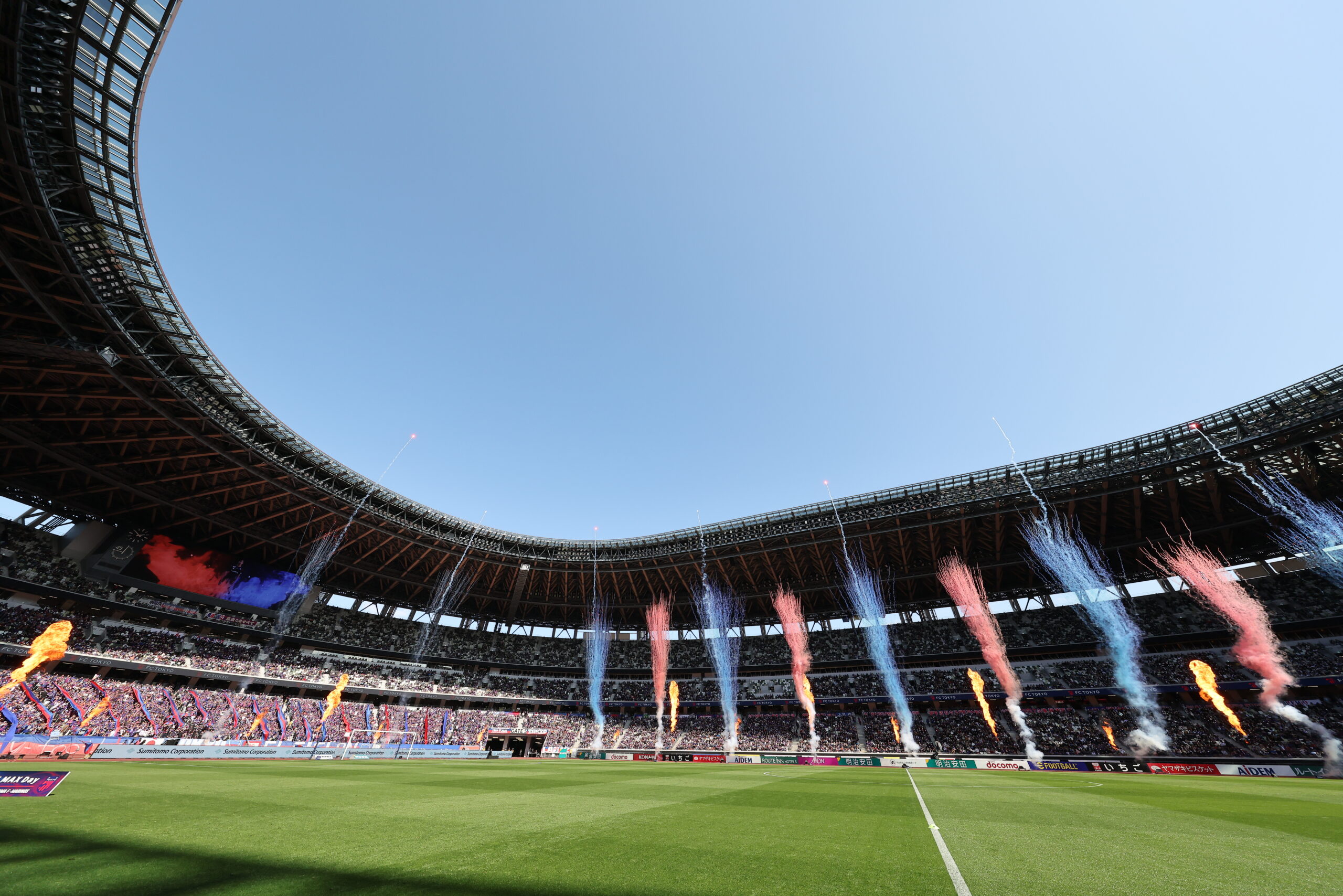
On the other hand, after joining the club, I felt that where FC Tokyo was headed was neither documented nor clearly defined.
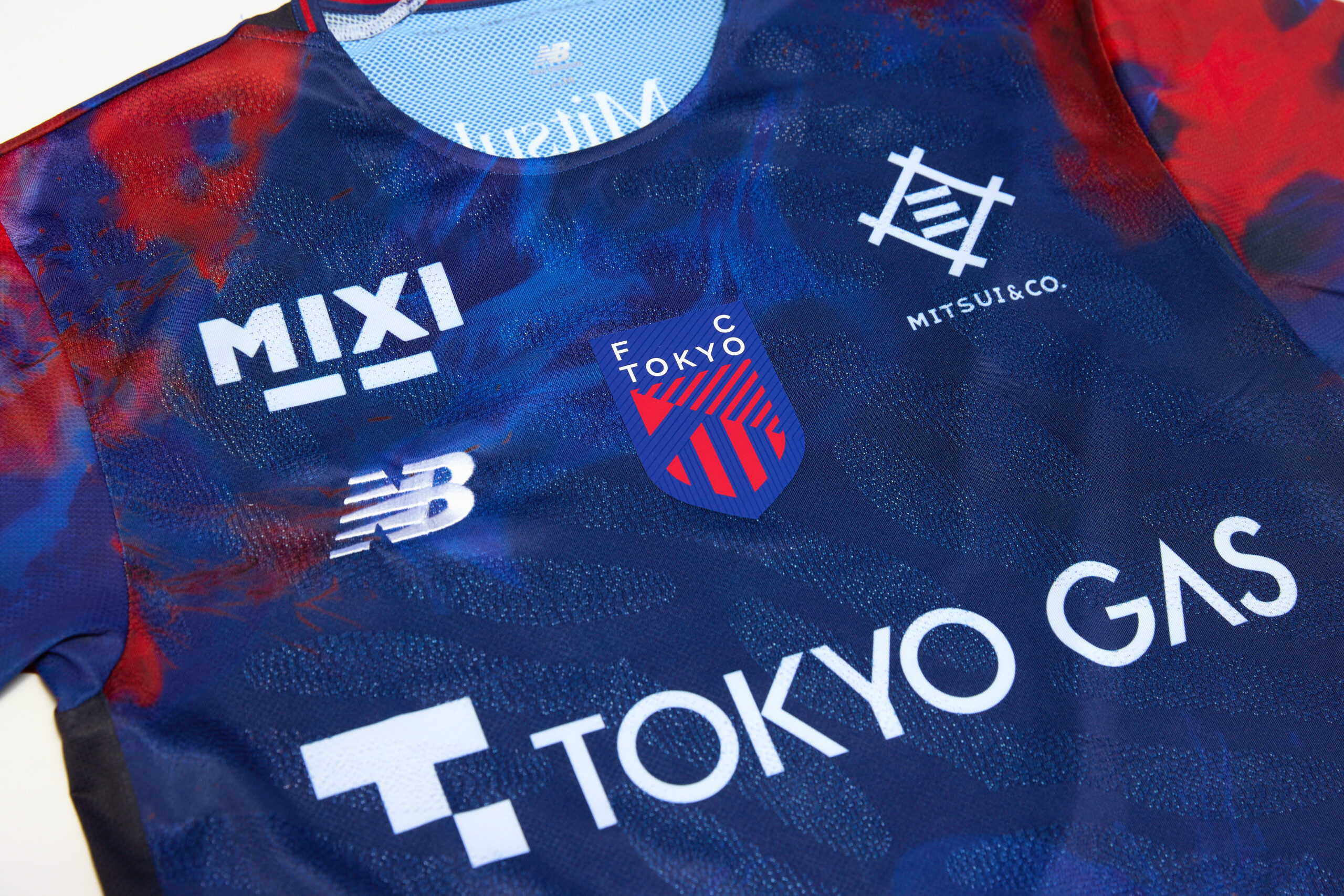
First of all, I was very conscious of "Tokyo." It is Japan's number one city and the strongest brand in the country. The sponsor name "TOKYO GAS" is displayed on the chest of the uniform, and having "TOKYO" written there has a strong impact. When inbound customers buy the uniform, the inclusion of "TOKYO" is very well received. Even when asking various people around the world, the brand that is stronger is "TOKYO" rather than "JAPAN." I myself am from Kanagawa Prefecture and live there, and I have a faint admiration for Tokyo. It might be a kind of complex, but in that sense as well, I was extremely conscious of "Tokyo."
Because of these circumstances, there was also a situation where many people said, "FC Tokyo is a waste." "It's a waste to be perpetually mid-tier." Everyone said, "We want to win the championship," but there was no one who could articulate the story or process the club would go through to achieve that victory. Tokyo has overwhelming potential, so during the first six months, I focused on that, grounded myself in it, and thought about connecting everything based on it. Since there was absolutely no discussion about what the image of "Tokyo" actually was, I felt, "If we consciously focus on this, we can grow."
For example, there were staff members who had never been inside a high-rise office building and had only seen the view from Tokyo Tower. The training ground in Kodaira and the office in Chofu have a suburban atmosphere. Even when confirming the image of "Tokyo" within the club, it was truly scattered, with each person seeing "Tokyo" only from their own perspective. I believe that, to begin with, they were unable to objectively view or consciously recognize what "Tokyo" really is. That is precisely why we thought we had to become a group that intensely focuses on "Tokyo." The image of "Tokyo" that FC Tokyo envisions is diverse, chaotic, yet cutting-edge and exciting as the number one city — with this in mind, we first thought that FC Tokyo must be an entertainment entity. The background to starting to write "VISION 2030" to bring FC Tokyo closer to the "Tokyo" brand was exactly this process. We discussed it with many people and ultimately compiled it, and that was the starting point.
In 'VISION2030,' we set the direction and speak about becoming a symbol that represents 'Tokyo.' It is not 'FC Tokyo = Tokyo,' but rather the goal is to become 'Tokyo = FC Tokyo.' As long as this goal is not missed, the message is basically that anything can be done.
However, at first, I was often asked within the company, "What should we do?", "What are we supposed to do?", "What should we work on?" I was only indicating the direction, so I kept saying, "Everyone is free to decide how to do it."
In that context, over the past few years, the field has come to think for themselves and gained the freedom to act independently. Since I have not always been at the center of the soccer or sports world, I didn’t fully understand it, but I noticed that topics about age and alma mater often came up within the club. The introductions of the development department and staff always included their ages, which felt very strange to me. In the internet industry where I worked, age was not a concern. A person’s achievements at work were their status, and nothing else mattered. I never cared about which university someone graduated from. At most, people’s identities were somewhat confirmed by their educational background, but whether someone graduated from high school or a technical college didn’t matter. If they could do the job, that was all that counted. I thought that the strict hierarchical relationships typical of athletic clubs remained strongly, and communication often resembled top-down orders like “Do it this way” or “That’s not allowed” from above. I have been conscious of making this as flat as possible, creating psychological safety where various people can freely talk and express their opinions.
If we don't do that, the business won't progress beyond my imagination. As long as the direction is right, if we decide that it’s okay to move forward at whatever speed and momentum from here on, the pace at which the on-site staff move should surpass my imagination. The ideas and unseen things that I don't have are definitely held by the field. The reason the sales, which were projected to be 6 billion yen in 2025 in the business plan, reached 7 billion yen is because everyone went beyond my imagination and made it happen.
──This means that the efforts to create an organization that delegates authority to the field have begun to show results.
“The retention rate of business staff has increased significantly. It is important that everyone feels they want to work for and contribute to this club. This includes good communication, the discretion given to individuals, the responsibility entrusted to them, and the sense of being relied upon—I believe we have cultivated these various atmospheres quite well. In fact, in the past two years, not a single business staff member has left. When I first took office, quite a few staff members resigned, but that gradually decreased. I believe this is a major reason why the business has grown.”
When the retention rate increases, what has been done so far is not reset. Sometimes changing people can bring results, but the know-how and personal expertise accumulated so far can be lost, making it impossible to continue and forcing a restart from scratch. Launching new members also incurs costs in terms of time and resources. However, recently, there has been communication like "Let's improve last year's efforts," allowing for updates every year. I feel that this has been beneficial for the club's growth, especially in the business aspect. Of course, we have also improved the treatment of staff. Since there were voices saying, "It's difficult when considering marriage and raising children," we thought it would be a waste if people who can contribute leave because of treatment issues, so the club has significantly changed its personnel system.
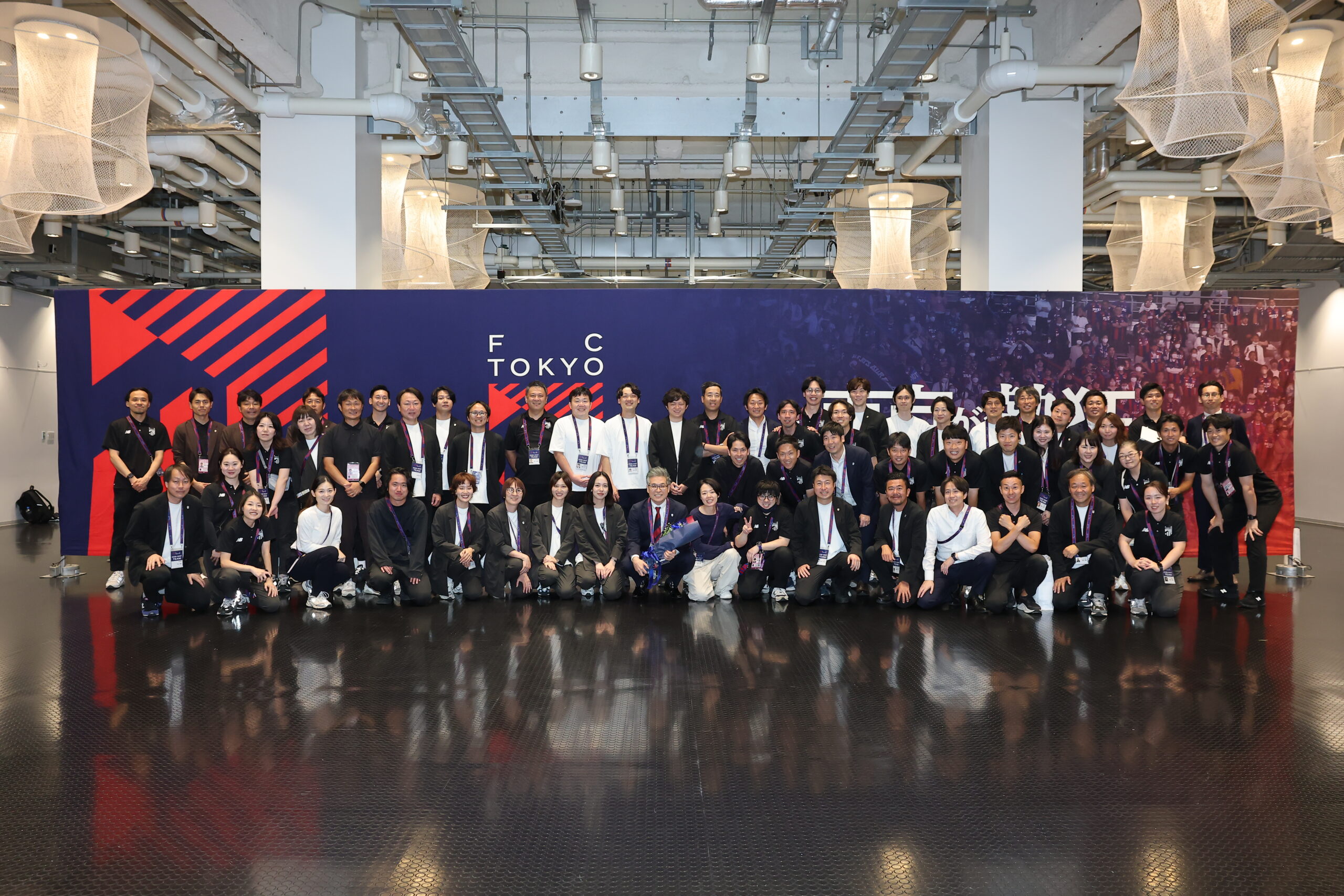
──I think changing organizational culture is quite a challenging task. What methods did you use to carry it out?
“I am not the type to make decisions in a top-down manner. I have always emphasized autonomy by saying, ‘If you want to do it that way, then go ahead and do it.’ Because the top communicates like that, I think the mindset of ‘That’s fine’ has taken hold. In the past, there was an incident where the head of accounting embezzled funds, and since then, budget and money management have become extremely strict. Although there were internal regulations, in practice, every expenditure required the president’s approval starting from even one yen. In other words, no one could use money with any responsibility. The process was such that all spending had to go through the president. The department heads didn’t know what or how much they could spend, so they had to ask the management department under the president to allocate the budget.”
But that made everything slow. Because it was unclear whether funds could be used or not, projects would stall at the decision of whether to proceed. Instead of starting with a known budget and then thinking, "What should we do?", starting from not knowing if there was a budget inevitably slowed the pace. So, I immediately allocated and disclosed the budget to each department to make it visible. This was influenced by the trauma of past embezzlement, so I said, "Let's return to normal operational authority," and allocated budgets to each department. For the first time, department heads began to create business plans based on their budgets. By thinking about what to spend the budget on and what to do, discussing with the field and staff, and becoming able to act autonomously with the mindset of "We can do this ourselves," various challenges, new initiatives, and innovations emerged.
Of course, I have to present a vision. I clearly communicate things like, 'This is the greater cause, right?' and as long as the purpose is not compromised, I do not concern myself with the means. With various methods and approaches available, I have encouraged trying different things and said, 'Anything is fine as long as it’s within budget.' Even if somewhat unusual proposals arise and critical voices emerge, I have said that I will take full responsibility for them.
──Will President Kawagishi's resignation be a major turning point for the club? Is there anything you want to convey or hope will be valued going forward?
“The new president is not exactly the same person as me, so of course there will be some changes. I hope the organization will enjoy a certain degree of change and move forward. However, what I can say with confidence is that the staff have grown tremendously over these past few years. They are able to act on their own without being told by anyone, so no matter who becomes president, the strength of the staff should be fully utilized. I believe the new president will decide to maintain that. I also think the new president will identify challenges that I couldn’t see and address them by developing various strategies and tactics.”
──It seems there were some difficult decisions during the four and a half years. Looking back now, how do you feel about them?
“I believe that many fans and supporters have the image of me as ‘the president who changed the emblem.’ I think that will continue to be the case, and when I announced my resignation, I saw various discussions and criticisms on social media. Looking back now, since I was a president who suddenly came from MIXI, Inc., and the first thing I did was change the emblem, the impression was probably that ‘someone who hadn’t achieved anything suddenly did this.’ So at that time, no matter what I said, it had no persuasive power, and since I myself lacked credibility, I think criticism would have come no matter what.”
Of course, the process was clumsy. Regarding the emblem change, several clubs had attempted it, and while we looked at precedents, it was the first time for FC Tokyo and something no one had experience with. We struggled quite a bit with the question, 'How do we do this?' We gathered people within the club who had long histories with the club and those who had supported the team as fans for a long time to hold repeated discussions, but in the end, there was a huge booing at the stadium, so I believe criticism would have arisen no matter how we handled it.
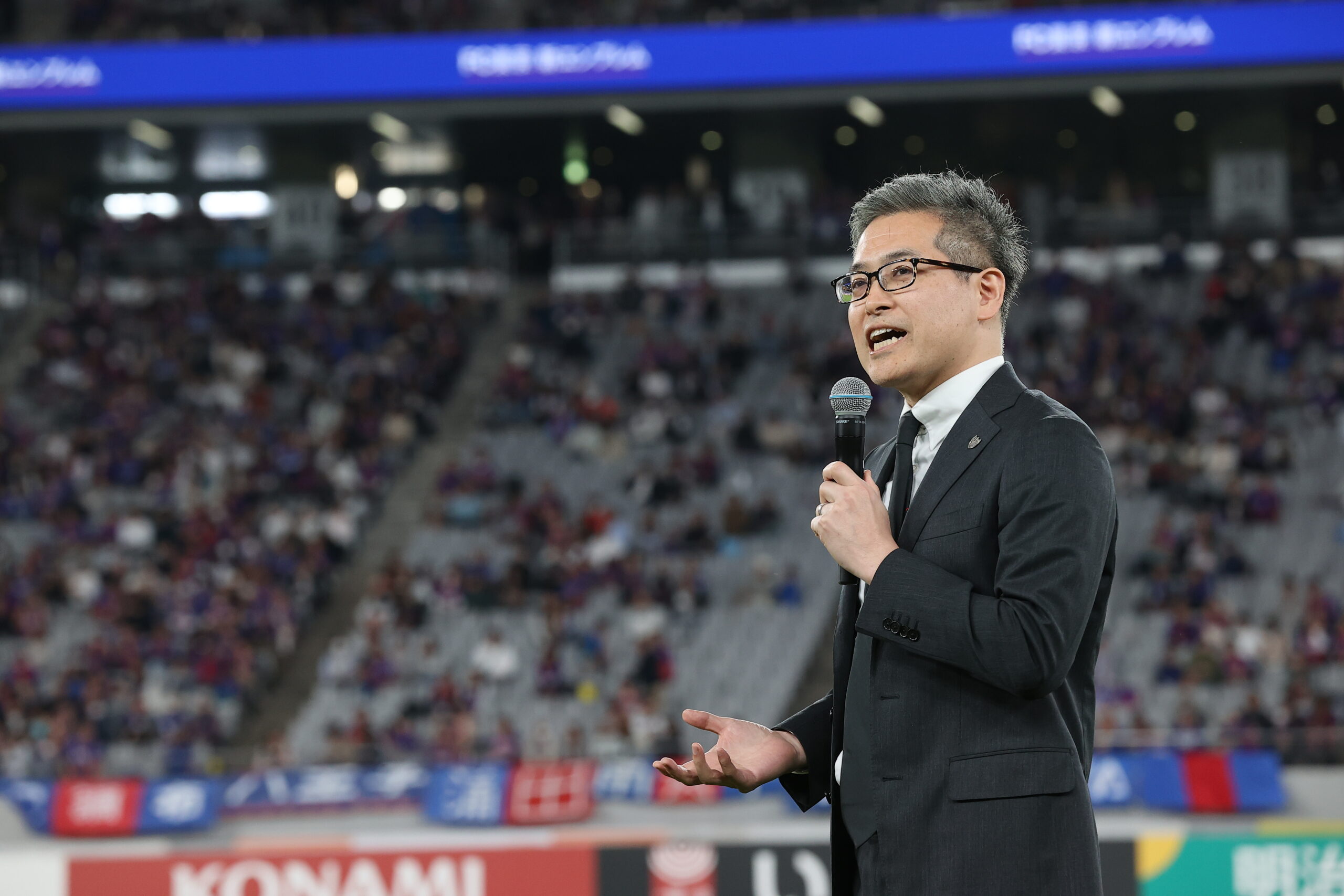
There is a reason why we changed the emblem. Since this is the last opportunity, I would like to explain it once again.
As I mentioned earlier, a major theme for me was how to consciously perceive 'Tokyo.' So, regarding the emblem, I began to compare whether it symbolized 'Tokyo = FC Tokyo.' I wasn't thinking about changing the emblem from the start; it was about six months after I joined FC Tokyo that I gradually started to think, 'Shouldn't we take some action?'
In the broadcast when we announced the emblem change, I used the word 'stagnation.' However, at that time, I was unable to put into words the true nature of that stagnation. We were not consciously aware of 'Tokyo.' Perhaps we had lost our goal. I wondered, 'Why is that?'
I believe there can be multiple opinions and perspectives on this, but I think FC Tokyo has been strongly influenced by the existence of Tokyo Verdy. While Verdy Kawasaki, a nationally recognized club, became Tokyo Verdy and attracted attention, FC Tokyo was a Tokyo-local club. As the fans’ chant goes, 'We must not lose to Verdy,' I believe FC Tokyo’s position was to catch up to and surpass Tokyo Verdy. There was a rivalry rooted in the difference in origins between a national club and a Tokyo-local club, as well as in their hometowns and home stadiums. I think FC Tokyo was the challenger in this process, proving its legitimacy.
It has been 25 years since we joined the J.League, and by the time I assumed the position of president, the situation had largely reversed except for the history of titles. Thanks to the efforts of many people involved with FC Tokyo, the number of fans and supporters, the club’s revenue, and recent achievements in the J.League had all surpassed those of Tokyo Verdy. As a result, it was no longer a matter of 'not losing to Verdy,' but FC Tokyo existed as FC Tokyo in its own right. In other words, the goals set at the club’s founding had been achieved, and I believe it had become necessary for FC Tokyo to establish new goals and objectives. However, what I felt shortly after becoming president was that, aside from the goal of winning league titles, the club had lost sight of other goals. That was the true nature of the stagnation I sensed.
So first, we rewrote the club’s philosophy and set the slogan as 'Tokyo in Ecstasy.' The purpose is to make 'Tokyo' consciously recognized both inside and outside the club. The original slogan, 'Aiming to be a strong and beloved team,' is a very beautiful phrase. It represents a very important concept, but at the same time, I felt we were relying too much on those words. It also seemed to me that it made the club’s guiding principles somewhat ambiguous, and that the phrase points to an ultimate state that we ourselves cannot control.
Given these circumstances, what I wrote in 'VISION2030' was to reset the club’s objectives and goals. We redefined them as 'Let’s become Tokyo = FC Tokyo,' 'Let’s become the culture of Tokyo,' and 'Let’s become the brand of Tokyo.' These are goals that are appropriate to aim for from our current position. Regarding these reset goals, the question was whether this emblem could help us reach them. If we are to become 'Tokyo = FC Tokyo,' we need to reach beyond just the soccer cluster. It was this consideration—whether this emblem could achieve that or if there might be a different approach—that sparked the idea.
There were often opinions that MIXI, Inc. had been behind it from the start or that it was for commercial reasons related to merchandise sales, but that is not true. The emblem was changed as a major means necessary for FC Tokyo to become a brand of Tokyo. Of course, when considering the design, commercial and marketing perspectives were taken into account, and the visibility of 'TOKYO' was emphasized given the purpose. The design approach around the club’s founding in 2000 and in 2025 differs. It’s not that the design at that time was bad, but after a quarter of a century, various common senses and ways of thinking change, so we adapted to that.
Changing the emblem was the most difficult decision during my tenure. I have no problem with receiving criticism regarding the emblem change itself or the process. However, as a club, the clock is moving forward along with the resetting of our goals. I would appreciate it if this discussion could end here.
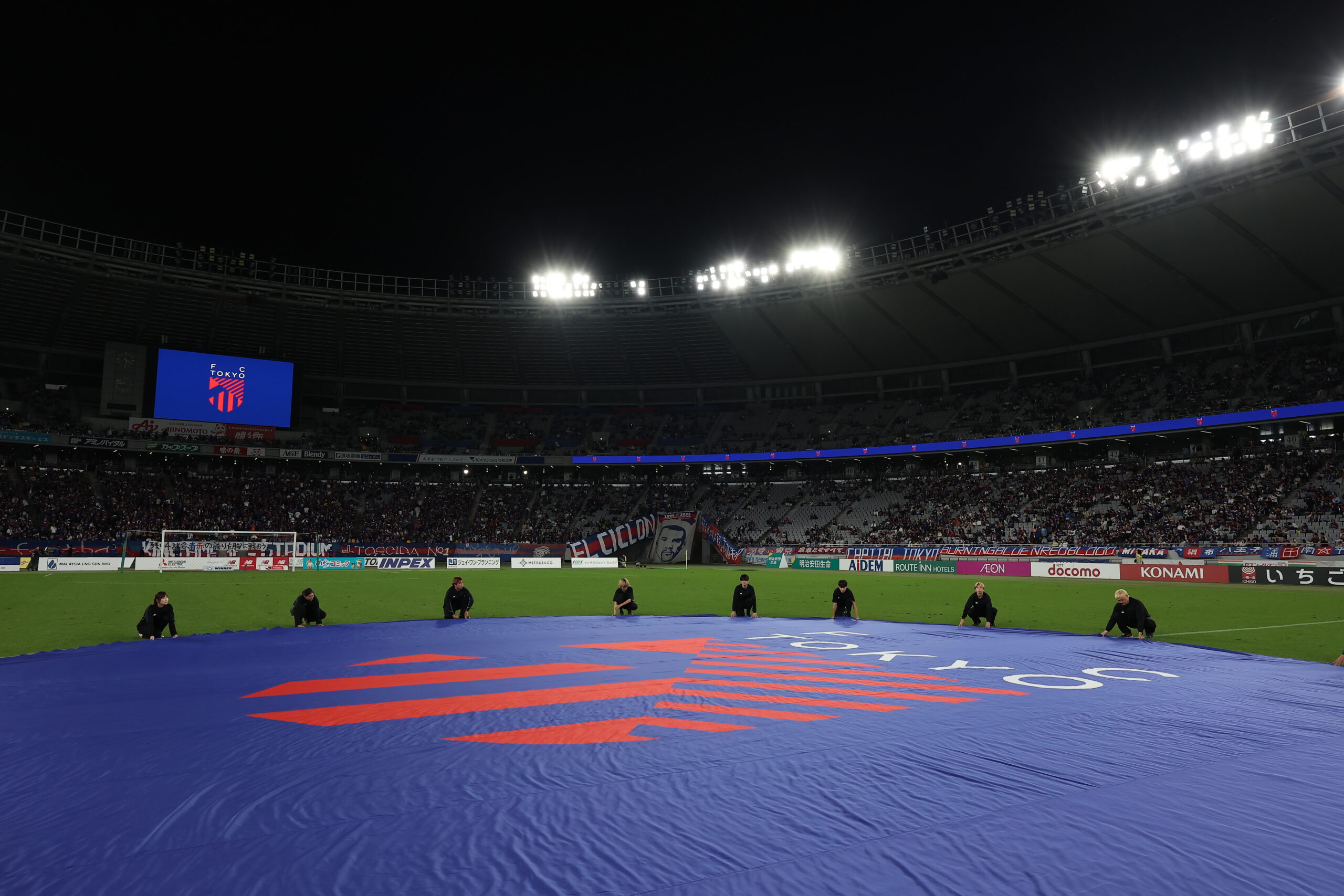
Regarding other matters, based on the feedback from fans and supporters, it seems that the solid growth in the business side, the relocation of the training ground—which will surely become a historic milestone for the club—and the integration with the women's soccer team Sfida Setagaya FC have all been well received, so I feel very positive about these developments. However, the things that only the president and the club’s top management can do are, in a sense, limited to those areas, and it was the staff on the ground who grew the business. I believe that is a result achieved by the team and the entire club as a whole.
──President Kawagishi has often said that "a soccer club is a dual wheel of business and football." While the business side has been going smoothly, could you share your thoughts on investment in football?
"Looking back, FC Tokyo narrowly missed the league championship in the 2019 season, and in the following 2020 season, about 3 billion yen was invested in personnel expenses. This was the largest in the club's history and even during my tenure, it has not reached that level. The decision at the time was to raise the level of investment one step further to absolutely win the league championship. Honestly, it was an investment that greatly exceeded the club's capacity. It would have been good if we had won then, but we were hit by the COVID-19 pandemic, which made management difficult, and the J.League's philosophy reinforcement allocation also changed its approach, so I can only say the timing was unfortunate.
When I took over management, the club was facing significant deficits for two consecutive years. Unable to maintain the inflated personnel expenses, we had to start by downsizing, so during the first two years of my tenure, we were unable to allocate a large budget to personnel costs.
Looking back now, the third year when the business side grew beyond expectations and the annual sales nearly reached 7 billion yen in 2024 was probably the right timing to step up investment in football. I felt that the business side’s sales were about to hit a “plateau,” and I believed that some upfront investment in football was necessary at some point. Regarding the insufficient commitment to football in 2024 and the management decisions, I lacked the courage.
The idea of reinvesting football profits back into football remains unchanged, but the timing of transfer fee income will also shift due to the season transition. Taking this into account, we need to invest aggressively in football and make bold moves that we can balance out later; otherwise, we won’t be able to keep up with the overall growth pace of the league. Since other clubs’ personnel expenses are increasing tremendously, I believe the competitive environment is tougher than imagined. I would like to leave the judgment on how to balance these factors and how to compete to the new president.
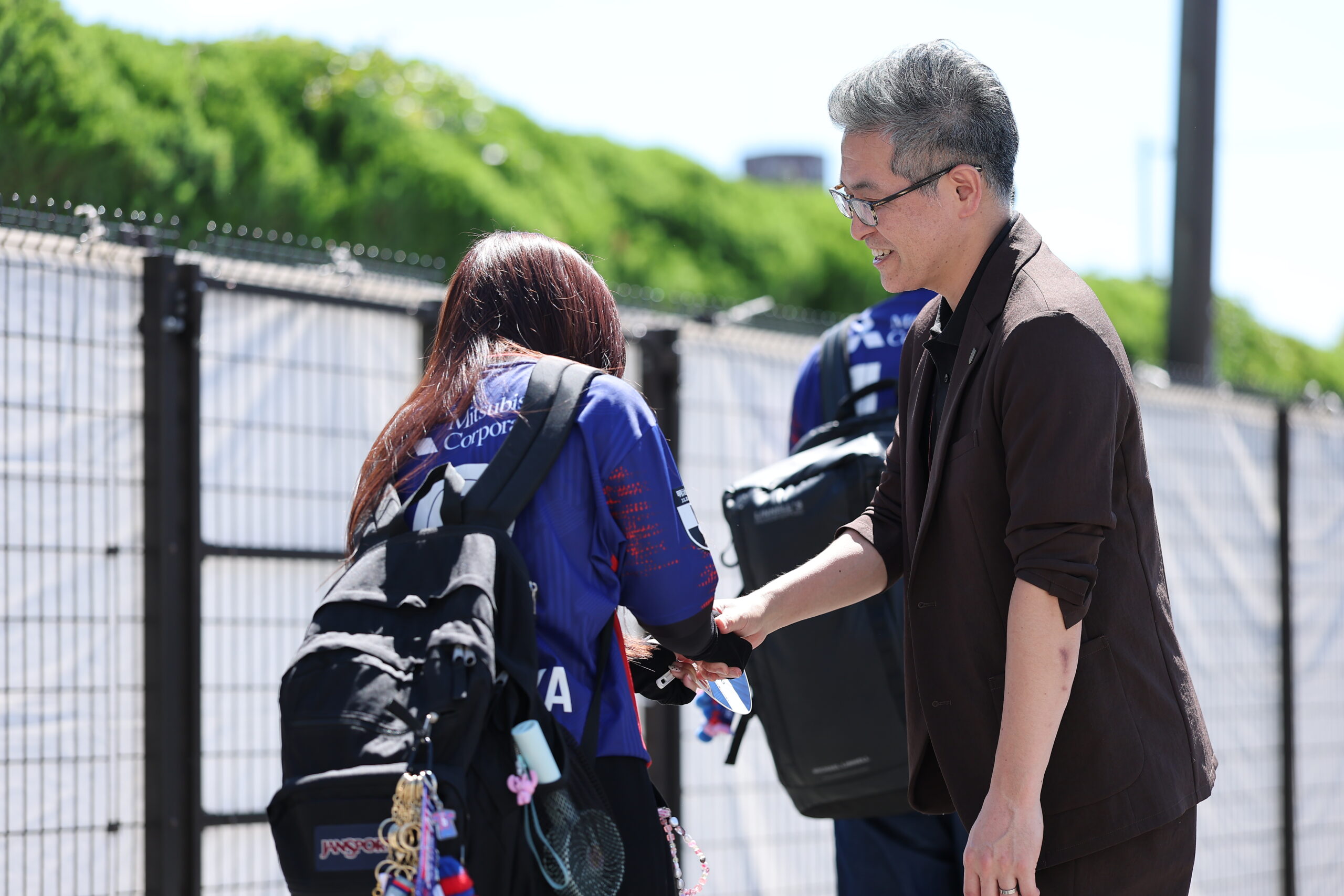
──You stood at the gate to welcome fans and supporters, regardless of whether it was a home or away game. How did you feel about facing and interacting with them?
"During these four and a half years, I stood at the gate for almost every match, whether home or away. When I took over as president from Mr. Naoki Ogane, I was asked, 'What do you want to do?' and I actually kept thinking about it throughout my tenure. However, since we changed the emblem, I felt I had no choice but to face everyone sincerely, and I wanted to listen to everyone’s feelings and explain things face-to-face if anything arose, so I kept welcoming people at the gate. And I thought, 'Maybe I’ll step back once we win the championship.' I had many conversations with fans and supporters and received various opinions. I also explained things frankly within the scope of what I could share. Because I spoke openly, many people often told me, 'It was good to hear so many different stories.' Rather than just how to face fans and supporters, I think I genuinely enjoyed the dialogue itself with everyone."
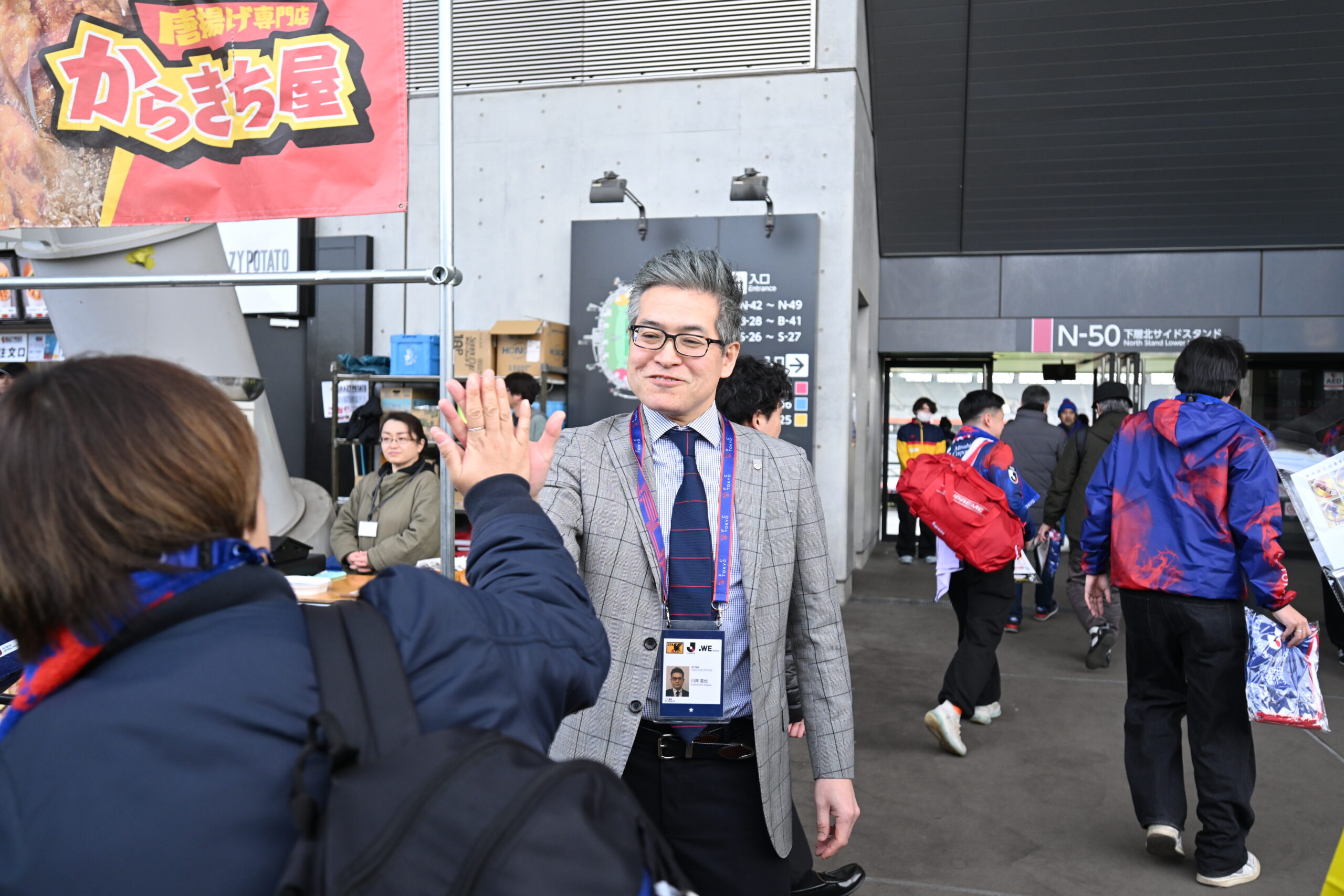
As the seasons passed, I strongly felt the need to consider what to communicate and what to talk about as president. I always stood at the gate, talked with many people, and thought it was best to have them fully understand, so I kept doing that. I was truly able to connect with many people on a heartfelt level and exchange opinions, which I am very grateful for and also very happy about.
──As we look toward the future of the club, please share a final message.
“The 2026/27 season will be when we reap the results of the Meiji Yasuda J1 Century Vision League. If you focus on that, I believe it will be an exciting season. Also, in February next year, the women's team ‘FC Tokyo Sfida’ will be established. By declaring our aim to join the WE League, I have heard that discussions have started within the WE League, which currently does not accept new entries. There will also be an international friendly match against Borussia Dortmund, and the U-21 J League will begin. It will be a year full of topics, so I hope everyone will immerse themselves in soccer and FC Tokyo.”
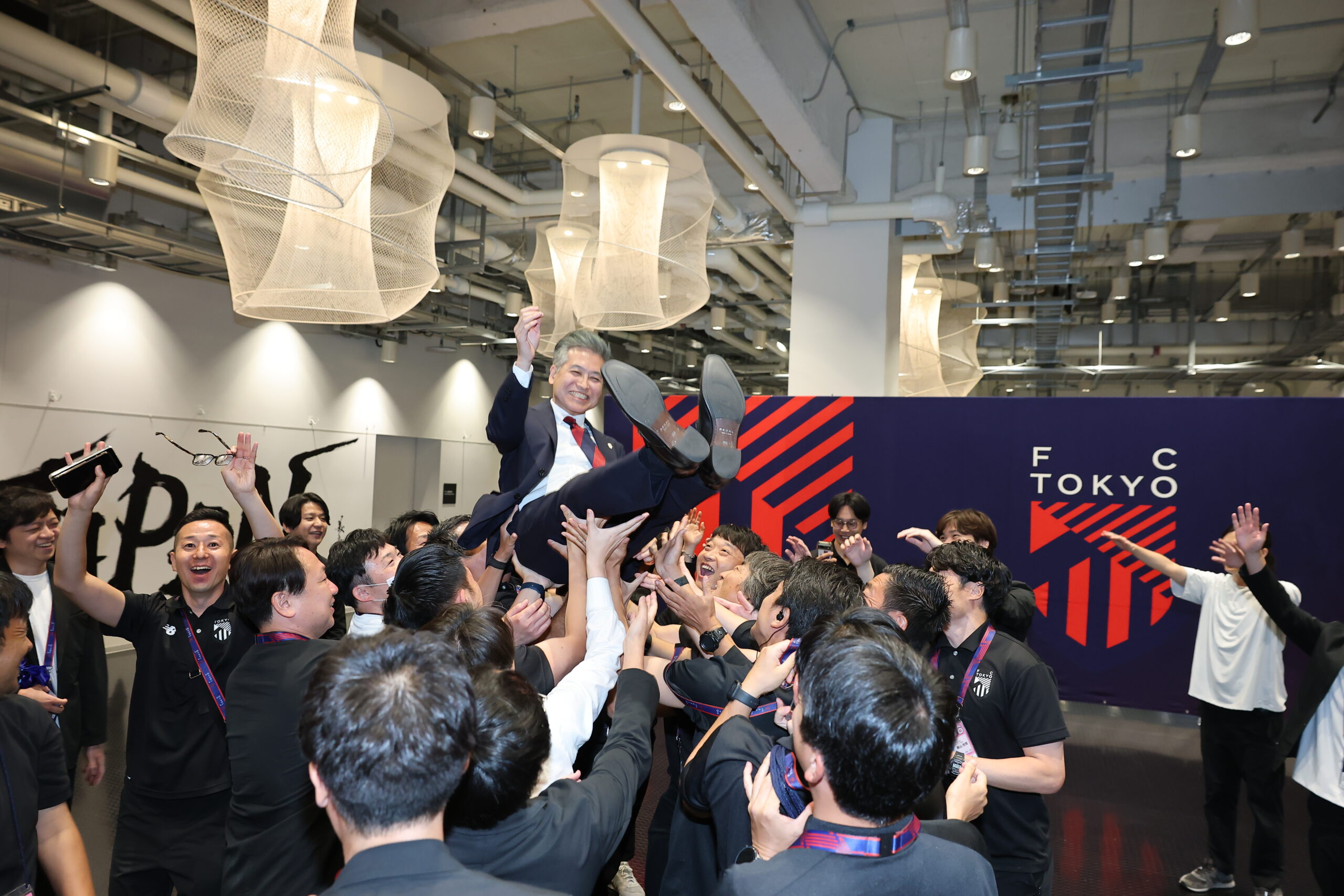
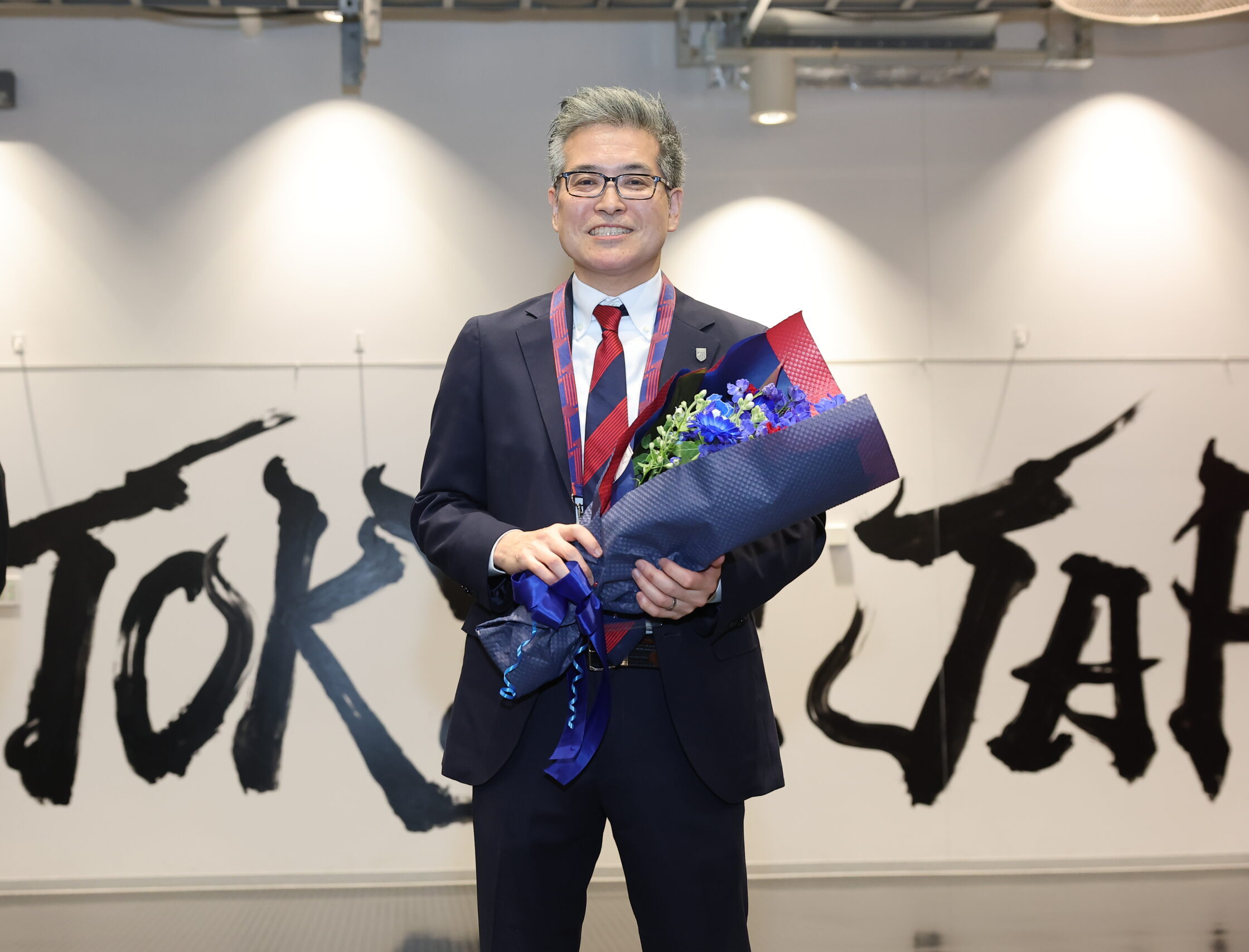
I am grateful to have been able to work in this position during what felt like both a long and short period of four and a half years. I was truly supported by many people, and I would like to take this opportunity to express my gratitude. However, I was unable to deliver results on the football side. It is very disappointing that I could not meet the expectations of everyone supporting FC Tokyo. I have been determined to win a title at all costs, but I deeply regret that we could not reach that goal together, including winning the league championship. Still, it was good that we were able to show the possibility of winning a title by finishing 4th in the special tournament and reaching the best four in last season’s Emperor's Cup.
This season, we received the very gratifying words from fans and supporters saying, "It's fun to cheer for you." Under the new president, we will continue to take on new challenges, so we hope you will keep supporting us. I will also continue to support as an individual supporter from now on. Thank you very much for the past four and a half years.
◇Previous Management Reports Are Here
2025 Season Summary: Accumulated Achievements and Challenges (Part 1)
2025 Season Summary: Accumulated Achievements and Challenges (Part 2)
2024 Fiscal Year Financial Report and Club Status (Part 1)
2024 Fiscal Year Financial Report and Club Status (Part 2)
2024 Season Summary: Business and Football (Part 1)
2024 Season Summary: Business and Football (Part 2)
2023 Fiscal Year Financial Report and Club Status (Part 1)
2023 Fiscal Year Financial Report and Club Status (Part 2)