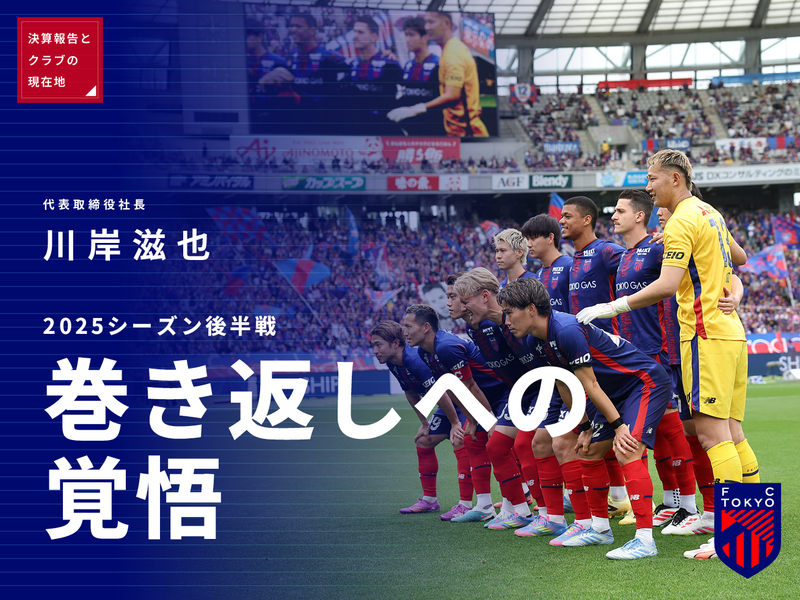


Determination to Make a Comeback
in the Second Half of the 2025 Season
FC Tokyo's 2024 fiscal year financial report announced on April 24. Operating revenue exceeded the previous year, reaching a club record high of 6.989 billion yen, a 17.9% increase year-on-year. Net profit also turned positive, reaching 72 million yen.
While steadily improving numbers on the management side, the team has not been able to achieve the desired results in the first half of the 2025 season. This has been a result that reflects the difficulty of the sport of soccer.
In the first part of this management report, we will start by reviewing the competitive aspects of the 2025 season. Additionally, we spoke with President Shigeya Kawagishi about team composition from now on and the club's initiatives.
Coverage & Composition = Kei Sato (Freelance Writer)
Interview Date: June 14, 2025 (Saturday) Before the match against Cerezo Osaka
── Last year, we received an explanation of the details immediately after the financial report was released. This year as well, we hope to hear about each section.
We had intended to explain the recently announced financial results to our fans and supporters, but we ended the first half of the season with disappointing results. This time, I would like to start by talking about the team's situation so far in the 2025 season.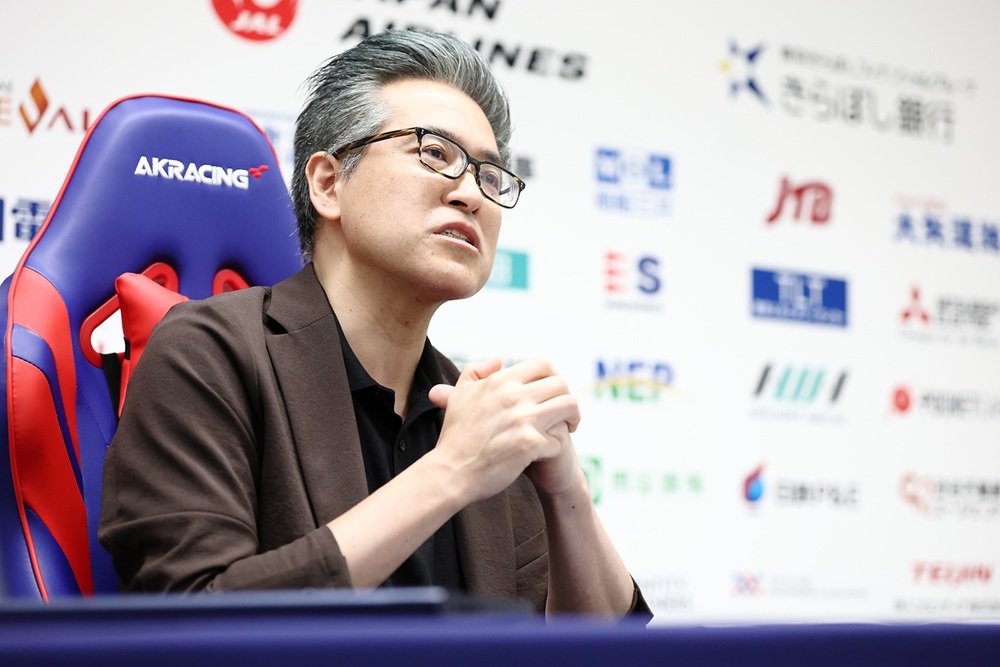
── Understood. Then, let’s start by talking about the football aspect of the 2025 season. As of now, 18 matches have been played, and despite differences in the number of matches played, FC Tokyo is in 18th place. Please share your thoughts on this performance.
It is a fact that we are currently in the relegation zone, so the club recognizes this as a very severe and serious situation. How we recover from here will define our approach in the second half of the season. We must respond to this with our full strength.
──From the president's perspective, the results were very different from what was envisioned before the season.
FC Tokyo has always set "winning the league" as its goal. We have fought every season with the desire to reach that goal as soon as possible. From that perspective, the current position is a significant gap from what we had envisioned. That is an undeniable fact. Now that the first half of the season has ended, we must thoroughly examine what the challenges were. Many players from the academy have taken the field, and we have been able to implement initiatives that connect to the future, but while valuing those aspects, we must also establish measures to steadily accumulate points and fight through the second half of the season.
── How do you think about the reasons for the gap between what was expected and the actual results?
Regarding the efforts themselves, there were parts where we were able to thoroughly carry out each process. That is how I feel, but while there were things we built up, I believe that each of those had some shortcomings as well.
── The biggest difference compared to last season is definitely the change of the head coach. Since it is Rikizo MATSUHASHI's first year as head coach, there must have been some difficulties.
I believe that having a new head coach is challenging not only for us but for any team. Of course, there are teams that have achieved immediate results after a coaching change, but there are certainly difficult aspects. Even so, we entered the season with expectations. However, the results did not meet those expectations. Judging from the outcome, various aspects of the new coach’s implementation—such as the tactical performance of the players—were each somewhat lacking. The cause is not a single factor; rather, these small deficiencies accumulated, resulting in the current performance.
── The appointment of Coach Matsuhashi was announced on December 21 of last year. I have heard that President Kawagishi spoke directly with the new coach only after some time had passed since the end of last season. Compared to other clubs, the announcement of the appointment was relatively late. Did this cause any delays in the team formation for the 2025 season?
First of all, I believe there is no definitive answer as to the correct timing to start team formation. Having said that, I cannot completely deny that there were some issues as you pointed out. Most player contracts are multi-year contracts. Because of that, there is inevitably a part where we inherit the squad and members desired by the previous head coach, and then, in addition to that, we respond to the new coach’s requests while forming the team before the season. I’m not sure if it’s accurate to call it a delay in the start, but within that flow, there may have been some limitations on what could be done regarding team formation from the time of appointment.
However, I want to make this clear: I believe there are two types of head coaches—those who make specific requests for reinforcements, and those who select from candidates presented by the strengthening department. I think Coach Matsuhashi is more of the latter type, and in that sense, as we began team formation from December, I believe we proceeded through discussions while presenting various candidates.
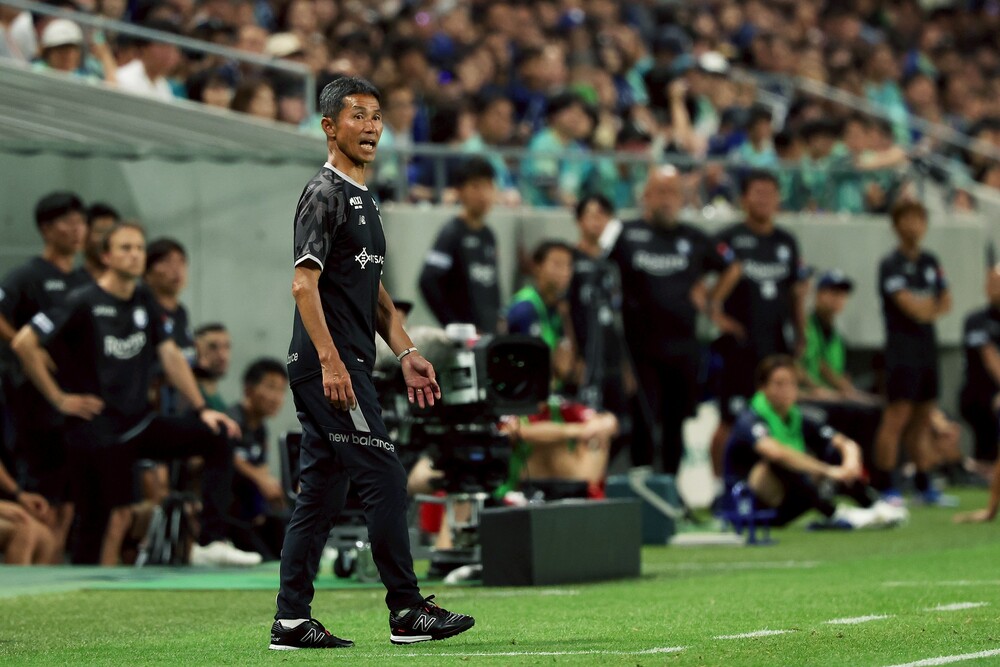
── It seems you took proactive action during the special registration period (window) set in June. Please tell us the intentions behind acquiring Sei MUROYA, Motoki NAGAKURA, Alexander SCHOLZ, and Kim Seung-gyu.
If we were to succinctly describe the style of soccer Coach Matsuhashi aims for, it would be "soccer that takes control." This aligns with the club's policy, and while the way of taking control may differ depending on the coach, we believe that something solid has been built up so far this season.
For example, looking at the expected goals, the data used by the club shows improvement compared to last season. However, the actual number of goals has decreased, which means that although the team is able to get close to the goal and take potentially promising shots, they have not been able to capitalize on those chances.
In other words, the part of creating chances, which Coach Matsuhashi wants to express, has been successfully demonstrated. With that firmly in mind, we focused on the challenges and considered how to resolve those issues. This is what we should work on for the second half of the season, and it also serves as a guideline for how to act during the special registration window in June.
──So acquiring Nagakura is one of the solutions, correct? Is it right to understand that the reason for actively moving in June, which was specially set, rather than waiting for the regular registration window to open on July 7, was the urgent need to add strength as soon as possible?
Since the schedule is quite packed in the first half of this season, waiting until the July window would mean having played a significant number of matches already. To be honest, after the comeback loss against the Urawa Reds in Sec. 17 of the Meiji Yasuda J1 League on May 17, we decided to fully take action wherever possible in June. The fact that there was a special registration window at this timing was fortunate for us, and we must ensure that when we look back later, it will be seen as a good reinforcement.
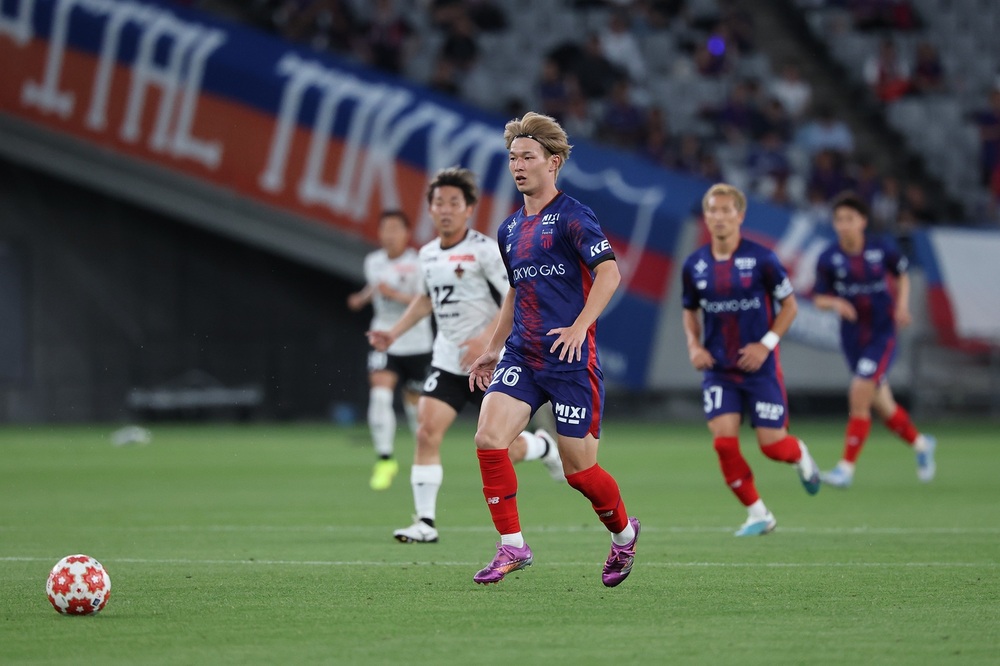
──Regarding the acquisition of Scholz, can we consider it reinforcement aimed at improving the defensive aspect? There is also an impression that we have conceded many goals from set pieces this season.
As you mentioned, there were many noticeable scenes where goals were conceded easily from set pieces and crosses. How to rebuild the defense is also a major challenge, and we were looking for a player who can take leadership in defense, a leader who can organize the team. Masato MORISHIGE is that type of player, and having another experienced player like Scholz join us is extremely significant. He is also a player who can deliver passes, so I believe he fits well with the style of football that Coach Matsuhashi aims for, building up firmly from the back and taking control.
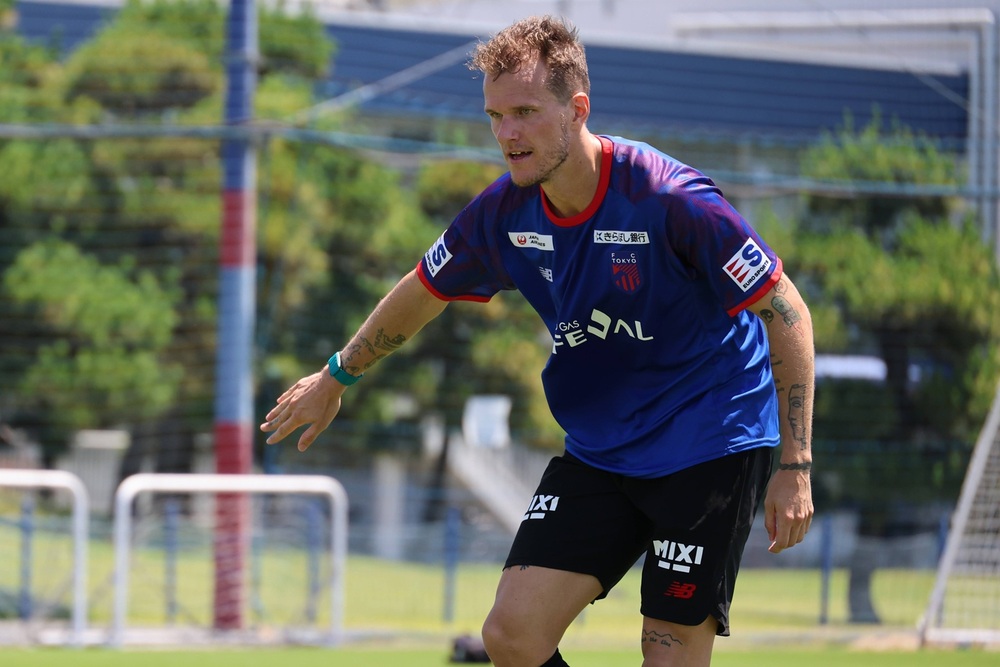
Including players like Muroya and Kim Seung-gyu, by strengthening the team with four players who can compete for regular positions, the internal competitiveness of the team has also increased. What we needed was to establish a system that could power up and fight in the second half of the season. For that reason, knowing the J.League was also a condition for reinforcement. There was no time to have them get used to Japan from scratch. Although there were budget issues, we consulted with MIXI, Inc. and were able to expand the budget framework to acquire the four players. We have a very strong sense of crisis, but considering the number of matches in the second half, we can still cling to the top ranks. We want to break away quickly and steadily improve our standings.
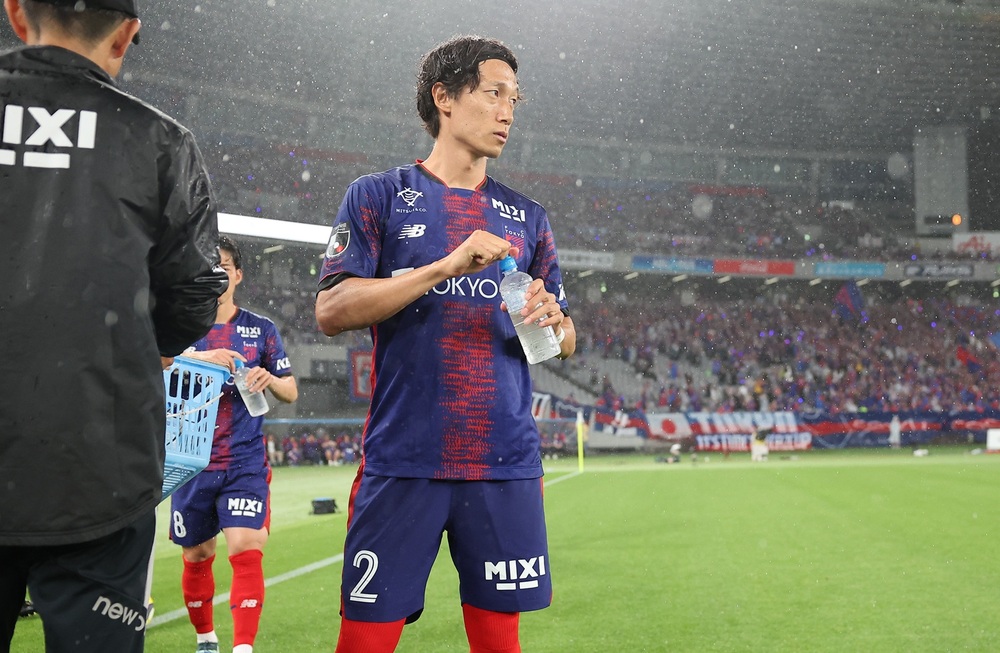
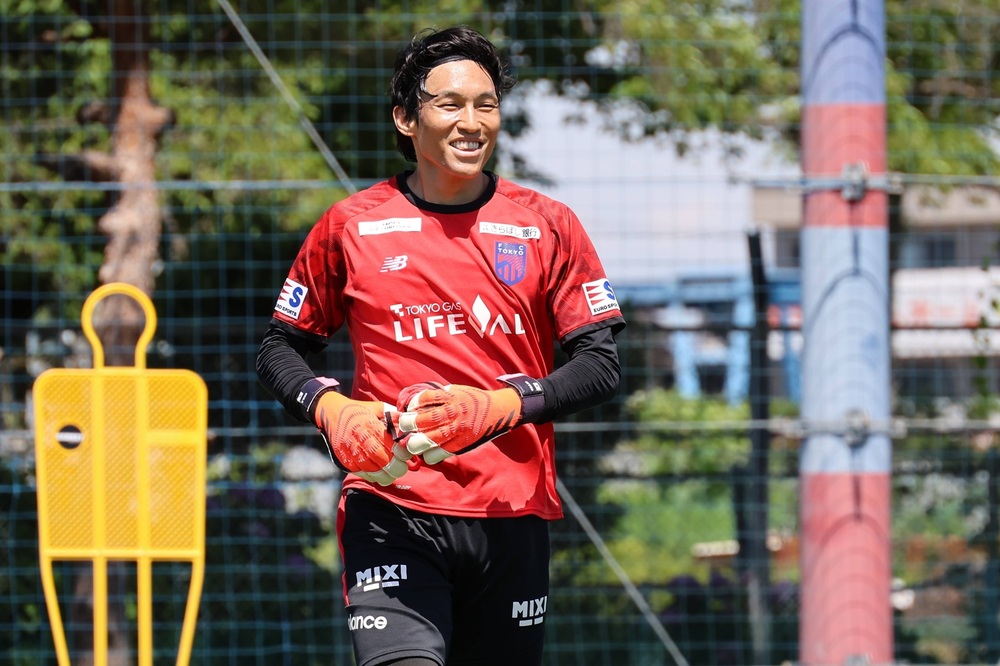
──Muroya returned from Germany, but in June, other players who had previously played for FC Tokyo, such as Ryoya OGAWA (Sint-Truiden VV → Kashima Antlers) and Shuto ABE (RWD Molenbeek → Gamba Osaka), also returned to the J.League from overseas clubs. Was there also consideration to acquire them?
Earlier, I mentioned that FC Tokyo has many players who came through the academy, but I believe we will continue to frequently experience cases where players who have walked alongside us for a long time go overseas. And when they return to Japan, timing becomes one key point to have them play for Tokyo again. For example, this year, regarding Kento HASHIMOTO and Muroya, we were able to prepare while confirming their return timing. On the other hand, both Ogawa and Abe returned earlier than we had anticipated. We had been communicating with them, but since we understood that they still had the option to play overseas, honestly, we were not fully prepared on our side. Amid that, they received very good offers. Since it is the players’ own lives, we want to respect their choices this time, and I think we have no choice but to accept such situations. We are also prepared for such cases to occur in the future.
It is difficult to realize a return in the way that the club and fans/supporters desire in every case, and I believe we have no choice but to accept that. However, we want to do everything we can. The story of players leaving FC Tokyo, succeeding overseas, and then coming back is a wonderful one, and we hope that such experiences will be returned to the team and the club. Personally, I believe there can never be too many stories like that.
──Please tell us a little more about the football side. In the Japan national team activities in June, in addition to Yuto NAGATOMO, Kota TAWARATSUMIDA was selected for the first time. What does this mean for the club?
First of all, I am personally very happy, and I believe it is also a joyous thing for the club. The existence of the academy can be said to be one of our traditional strengths, and this is well reflected when looking at the members of the top team this season. Many players from the academy have turned professional, and Masataka KOBAYASHI was even selected for the national team. Maki KITAHARA and others who have been selected for the age-group national teams are also examples, and the presence of such players serves as motivation for the academy players. For the club, the more such topics there are, the more recognition spreads, so it is something to be welcomed. Thanks to this, we have received the J.League Best Youth Development Club Award four times so far, and we want to continue enhancing the academy so that this momentum does not fade away.
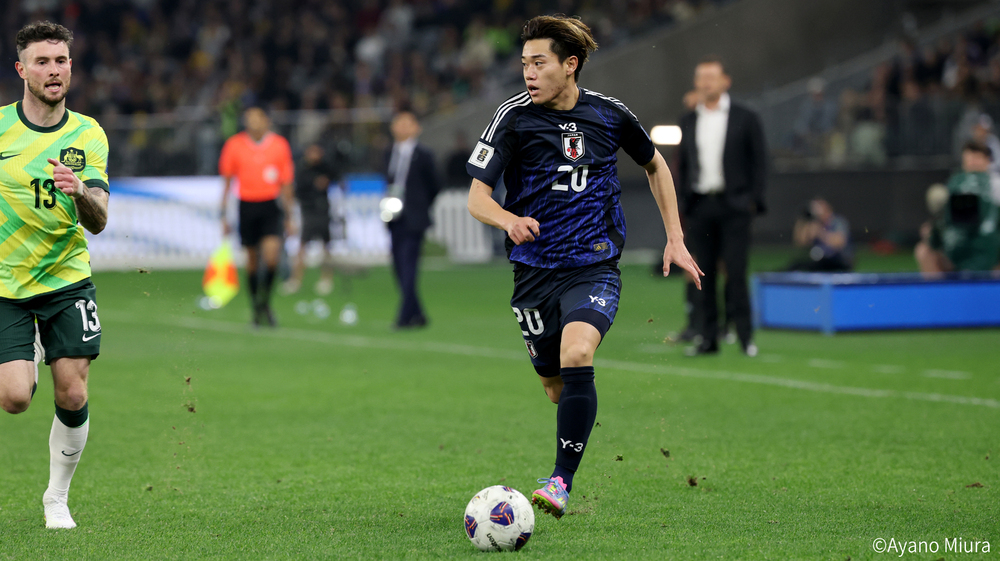
──Tawara Tsukida made his starting debut in the match against Australia. What were your impressions after watching the national team game?
I was happy, but he was nervous, wasn’t he? Personally, I was watching him quite critically, thinking, "You can do more!" I wanted him to give his all in making an impression, and I believe that Tawara Tsukida is a player with that kind of ability. I hope this won’t be a one-time thing and that he will continue to strive to be called up regularly. I also think that performing well at the club is a condition for being selected.
──Ryunosuke SATO, who is on a development-type loan to Fagiano Okayama, was selected for the Japan national team for the first time at the same time as Kouta TAWARATSUKITA. Earlier, we talked about loan transfers; can this also be considered a success story?
He is currently on loan at Okayama, but since he is a player under contract with us, of course, we are happy about his success. He has been given playing opportunities at Okayama, achieved results, and was selected for the national team, which is truly gratifying. We look forward to seeing him return to Tokyo in the future and perform well.
── The club has decided to participate in the U-21 League starting from the 2026 season. Please tell us about the background of this decision.
As I have mentioned before, I believe one of the club’s strengths and characteristics is the enhancement of the academy. Within that, how to create a pathway beyond the academy has always been a challenge for the club. I think this has also been a challenge for the entire J.League. Some players move directly from the academy to the top team, while others return to the professional world via university. For the club, there are cases where players who have been promoted to the top team, like Kouta Tawara Tsukida, can perform well from their first year, but there are also times when players struggle to get playing opportunities and are not given enough chances to grow through actual match experience. Even if we send them out on development-type loans, there are cases where they are not used much. Of course, when deciding on a loan, we consider how much playing time the player will get, but ultimately, there are cases where things don’t go as expected. Given these challenges, we thought the newly proposed U-21 League from the J.League would be one solution. Therefore, not participating was not an option.
──Participating in a new league requires a corresponding budget.
I believe this is something everyone feels, but many players want to play overseas. Since soccer is a global sport, that is only natural, and the J.League’s shift in season timing to align with the European season also aims to revitalize the market. This trend cannot be stopped, but when players transfer, we must consider ensuring that the club receives financial compensation. That is very important. Against this backdrop, the new U-21 League can be seen as an initiative to accelerate player development and increase their value. Of course, there are operational costs involved, but we believe these can be sufficiently covered through team strengthening and future transfer fee income. For the club, this is an investment, and we intend to secure a solid return. Kuryu MATSUKI, who transferred last summer, was not an academy graduate, but he left a substantial amount of money with the club upon his transfer.
Tokyo once had a U-23 team and competed in the J3 League. There, players like Takefusa KUBO, Kashif BANGNAGANDE, Seiji KIMURA, and Teppei OKA had opportunities to play and we witnessed their significant growth. Based on that experience, we believe this league will be very meaningful.
The latter part is here
♢Previous Management Reports are here
2024 Season Summary: Business and Football (Part 1)
2024 Season Summary: Business and Football (Part 2)
2023 Fiscal Year Financial Report and Club Status (Part 1)
2023 Fiscal Year Financial Report and Club Status (Part 2)