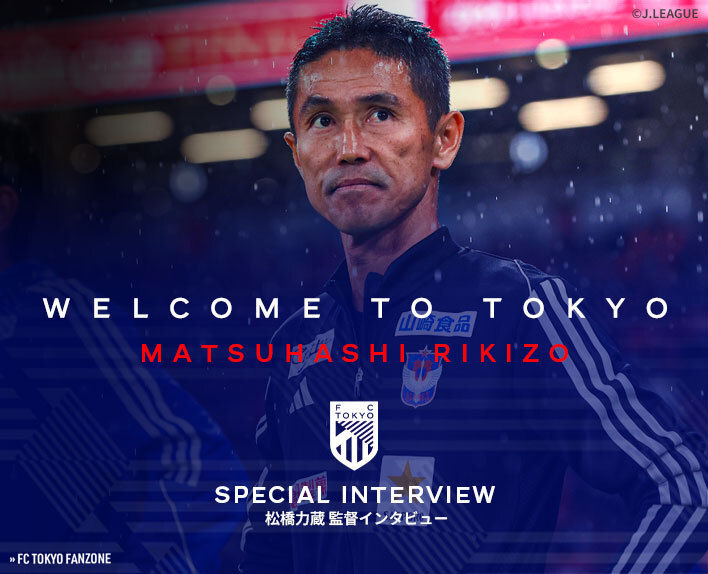


Win with good soccer. Backward calculation from victory and goals
The 2025 season is finally starting. Tokyo will be fighting alongside the new head coach Rikizo MATSUHASHI in this new season. In this first interview, he spoke passionately about various topics, from the circumstances of his appointment to his experiences as a player, his pride as a coach, his personality, his approach to players, and the soccer style he aims for with the blue and red team. Born in Chofu City, which can be said to be the home of Ajinomoto Stadium, the new coach is natural and full of humanity. With the start of the new team just around the corner, the vision for “Rikizo Tokyo” is beginning to take shape with various keywords.
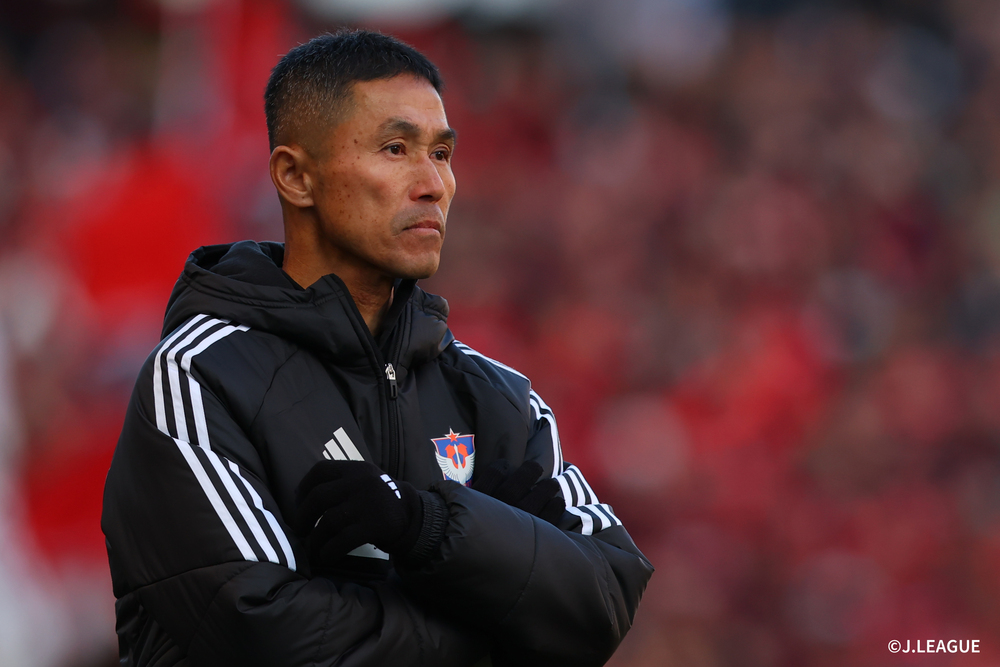
Born in Chofu
──First of all, congratulations on your appointment as manager. What were your thoughts when making this decision?
It was truly an honor, and half of me felt, "No way." My career as a manager isn't that long, and even when it comes to achievements, although we were promoted to the J1 League, it wasn't just me but the efforts of everyone I worked with. Therefore, when I compare the evaluations from those around me with what I envision and the pace of growth in my managerial career, I actually felt a bit of an imbalance. Even so, I was very happy to be recognized and to receive the offer at such an early stage.
By the way, Coach Matsuhashi was born in Chofu City, where Ajinomoto Stadium is located.
I am often asked this, but my "place of birth" is Kokuryo, Chofu City, and I was raised in Chiba Prefecture.
──That said, returning as a coach to the place where I was born. It feels like the beginning of a wonderful story.
That's right. I also feel that this is a kind of "fate." When my appointment as Tokyo's manager was decided, my mother also contacted me and said, "It's destiny, isn't it?" It's interesting, isn't it? I sometimes wonder if there's something behind it, and I truly want to make it something meaningful.
──What would you like the fans and supporters, who walk alongside a locally born coach, to call you?
There isn’t anything in particular, but I’m often called "Riki-san." One nickname from a player that I thought was clever was "Pawa-zou-san." Only the "Riki" part was in English (laughs). Teruhito NAKAGAWA, who I worked with at Yokohama F.Marinos, shortened it even further to "Pawa-san." They really put a lot of thought into it (laughs).
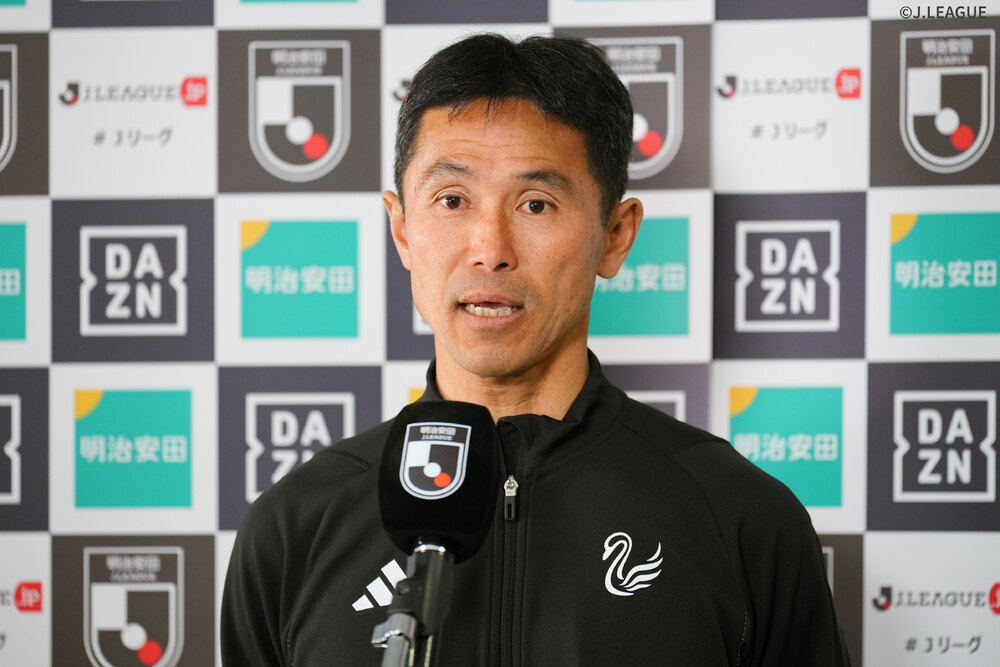
Value Communication
──Looking back briefly at Coach Matsuhashi's career, he played for Nissan Motor, Yokohama Marinos (at the time), Kyoto Purple SANGA (at the time), and Jatco, and then he has walked the path of a coach.
It was significant to be able to interact with many wonderful players and coaches. Although it was truly little by little, various clubs gave me opportunities, allowing me to grow. I am still far from complete, but by looking at soccer from various angles, I have built up my own identity. Among these experiences, my time as a staff member at Yokohama FM’s academy was especially impactful. The exchanges with coaches and colleagues have truly borne fruit. We earnestly faced soccer and discussed in detail, day and night, themes such as how to advance players to the next stage. This applies not only to coaches but also to conversations and efforts with staff from various clubs. I believe those times laid the foundation for me. Of course, there were naturally times when we clashed. Including that, it was a place where I felt I was truly tested amid the waves.
As a character, he is said to be "serious and passionate." It was impressive that during the season when Albirex Niigata achieved promotion to J1 League, all the players seriously claimed, "The MVP is Muriqui." I believe this is the best proof that the coach's passion became the foundation of the team.
Passion is necessary, but I also believe it is not a methodology. My thoughts and words are exactly what I truly think. How one is as a person is important when moving things forward, but if you treat that as mere "decoration," it becomes a lie. I am myself, and I do not create a persona to show that side; if I don’t understand something, I say I don’t understand. I ask when I want to be taught. It’s impossible to be perfect in everything, and it’s natural to seek guidance from the coaches and colleagues around me where I fall short. I also learn from the players. Maintaining solid communication is important, but it’s not about having a special personal style; I simply want to face the players sincerely myself.
──The "words" that express that feeling are very impressive. During the Niigata era, you shared many resonant phrases such as "the strongest enemy is the one in front of you" and "the philosophy doesn't change, but the methods do." The most striking was "overcome with technique." When the opponent comes at you with high pressure, instead of running away, I felt a positive and strong policy was shown to confront and surpass them with our strengths to win. There seems to be a strong commitment to words.
I believe there are words that deeply resonate in the heart, stimulated by various things including reading. I used to jot down good words, but recently I’ve actually stopped doing that actively. I started thinking, "Isn't that a bit superficial?" The words that truly stick in my heart are those that come out of my mouth when something has made a big impact on me and matches the scene right in front of me. I think important words should be set aside until they firmly settle in the heart and naturally come out when needed.
──Serious and passionate. On the other hand, he is also lightly teased by the players, for example, being called "Rikizo MATSUHASHI, handsome!" by both the players and supporters, showing a lovable character side as well.
I am truly grateful. I also wonder if being too serious is really good, and I’m not so "damn serious" all the time—there are times when I take things lightly. Somewhere deep down, I always think things will turn out as they should, and I’ve even told the players, "I don’t know, so I’m counting on you guys" (laughs). If you’re rigid all the time, I think you really can’t be relied on. Some unconventional ideas probably wouldn’t come out if you’re too serious, so it’s fine to relax and take it easy. I understand both the good and bad sides of my emotions, so when I feel emotional ups and downs, I consciously try to "stay neutral no matter the situation" and "keep my center of gravity properly balanced."
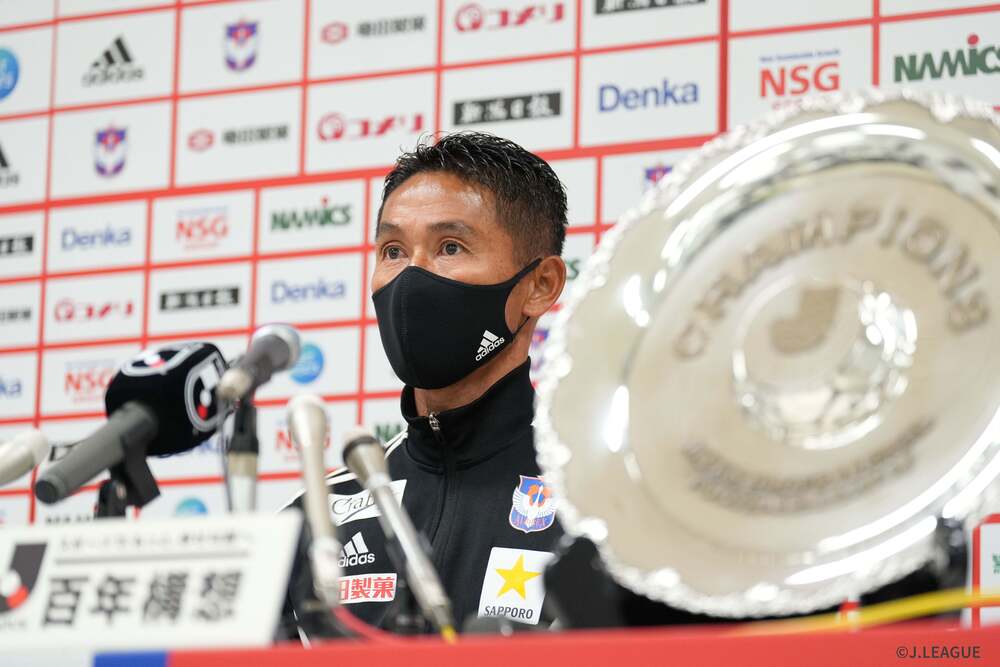
"I've grown tired of hearing about 'good soccer'"
──How have you viewed the team and club in Tokyo so far?
I have seen it steadily growing into a major big club. Tokyo is the capital of Japan, a truly large city known worldwide by everyone. I believe the club is also moving toward becoming one of those "major places."
──What kind of persuasive words were used when you were appointed as the coach?
It wasn’t so much a persuasive pitch, but it was the first team to approach me, and they also explained why it was me, including the club’s vision.
──What kind of vision and projects were they?
In terms of how to establish the club's style of soccer, I have taken on a major role amid a gradually changing trend. First, I am thinking about how to incorporate what I have into the current strengths of the team, and I believe there are aspects that align with what I have in mind. In Niigata, we built up play carefully, and the phrase "number one in ball possession" was often used as a synonym, but that was not our goal. The players in Niigata understood that well. So, I told the players, "I'm glad that our soccer is evaluated as good, but I'm already tired of hearing that." What we aim for is not "good soccer" but "winning with good soccer." Therefore, naturally, we must work backward from victory and then from goals. Tokyo has players with speed up front, and not only in counterattacks but also fast attacks are attractive. We can attack without many steps, and there are players who can break through individually. It’s just a matter of how to make the most of those characteristics.
──How was that way of thinking cultivated?
I believe this way of thinking has been most influenced by my career as a player during my time at Nissan.S. Rather than playing recklessly, I was asked by my seniors to incorporate a bit of playfulness or technical skill, and I was trained from various angles. That’s why the phrase "use technique to break through" came about. I do have a particular attachment to that. Instead of just retreating the ball vaguely under the opponent’s pressure, by trying things out one by one, luring the opponent out, and breaking their directional flow, many goals and chances are created through this accumulation. When that happens, controlling the ball becomes a fundamental premise, but not only that, attacking quickly is also important, and for that, how to defend is also crucial. First, I want to work together with the players to determine what is best and what is better. I try not to become overly intellectual or hold preconceived notions.
──As expected, "technique" seems to be a major keyword. The episode requested by Kazushi KIMURA, who was a superstar during the Nissan era, is well known.
This has truly become ingrained in me. Kazushi-san always said, "Soccer is a constant pursuit!" Since it comes from him, there’s no doubt about it. Everyone at Nissan back then was like that too. When I made a wrong decision with a pass, instead of hearing "That’s not the way," I was told, "Ah, that way, I see." It felt like my lack of technique was being sneered at, and it pierced my heart deeply. But if I didn’t keep up with that level, I couldn’t get on the pitch. So, I have to keep striving for better technique. I believe that is a very important point.
──What perspective should fans and supporters take to understand and enjoy Coach Matsuhashi's soccer?
I will definitely continue to focus on the technical aspects. Also, I always want the players to play vividly and fully demonstrate their abilities. Rather than fitting things into a rigid form, I want to make judgments while progressing with team building.
──As mentioned earlier, Nakagawa's name came up, but there are players in Tokyo with whom we have worked together so far.
Nakagawa and Keita ENDO experienced winning the league together at Yokohama F.Marinos. I have watched ENDO since his academy days, and Kei KOIZUMI belonged to Yokohama F.Marinos' Primary (elementary school) and Junior Youth teams. Although I did not directly coach them, I have always observed their play. More recently, Takahiro KO was with me in Niigata.
Isn't it a joy as a leader to once again join forces with them due to the bond we share?
That's true. Quite some time has passed, but whether you call it fate or a reunion, I believe meeting here again is very meaningful. I am truly happy about this and want to make it something significant.
──I heard you visited the MIXI, Inc. office in Shibuya for a meeting with the club. I believe you could see all of Tokyo from the upper floors.
The view was amazing, and as soon as I entered the room, I found myself silently taking countless photos. Normally, I'm not the type to take many pictures, but it was truly incredible, wasn't it?
──That huge city will be the hometown of the team led by Coach Matsuhashi. Perhaps you have felt something new about "Tokyo" once again.
I thought, "I've come to a really challenging club" (laughs). Of course, that's a joke, but looking around, I felt the greatness of the city of Tokyo and realized it is a place with immense power. That made me feel once again a strong sense of resolve.
In the announcement of his appointment, he expressed his determination by saying, "I want the stadium to be enveloped in a whirlwind of excitement." Together with the stadium, we expect Coach Matsuhashi to bring a style of football that excites the entire city of Tokyo.
That is what this club aims for, and we truly want to involve many people. The potential is tremendous, and bearing that heavy responsibility, I want to move forward toward big goals together with the fans and supporters.