

The specialized staff belonging to FC Tokyo fight alongside the players both on and off the pitch, constantly using their wisdom day by day. When we shine a light on those who never receive the glamorous cheers of the stadium, the image that emerges is of them sweating with pride in their work.
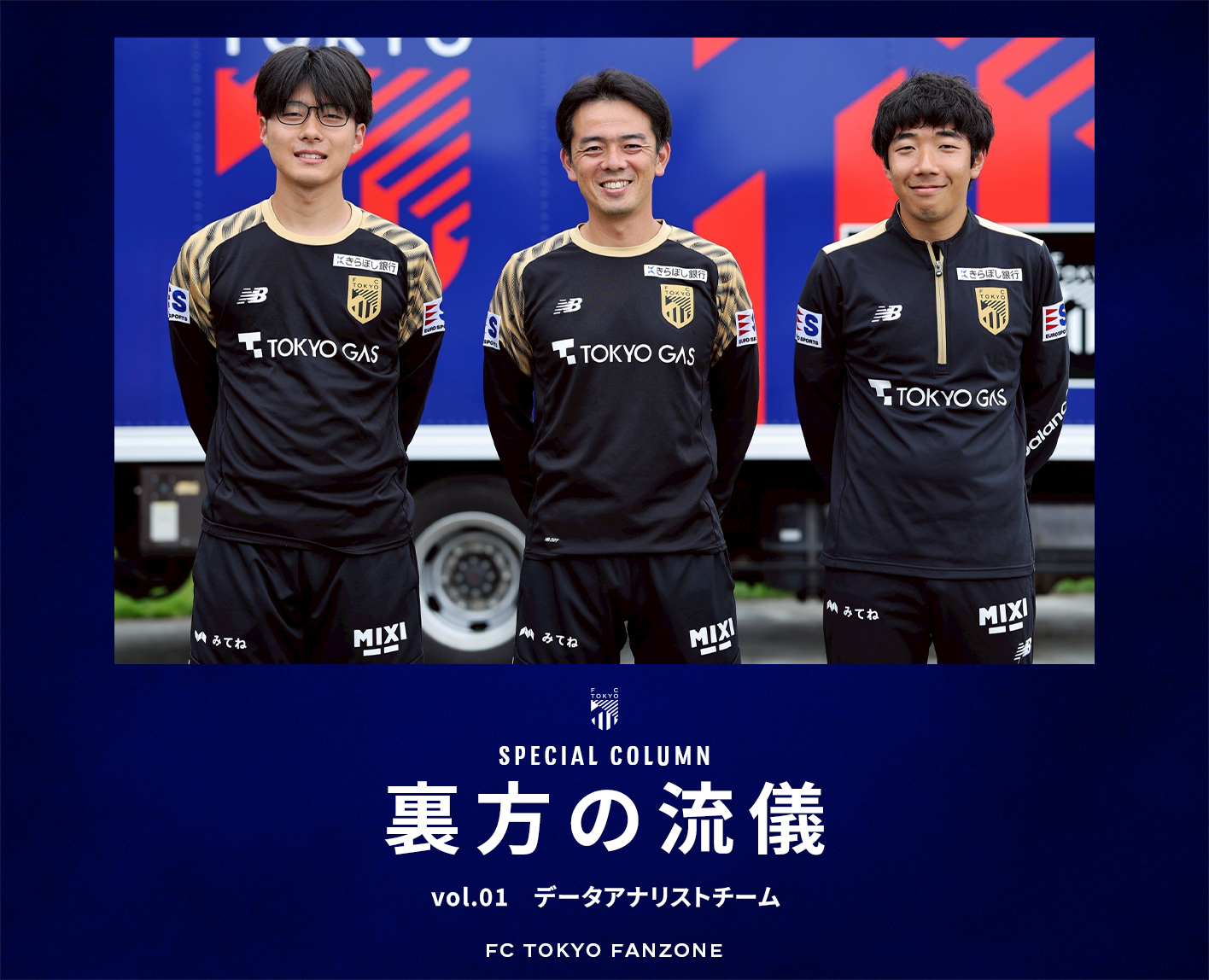
A project that delves into the work of the staff who support the team both in the spotlight and behind the scenes, titled 'The Way of the Backstage.' The first installment focuses on the 'Data Analyst Team.' When we asked Hiroaki FUJI, the Head of Analysis who leads this team, about their duties, he responded with these words.
"We mainly analyze the current situation of the team based on data from the top team. Of course, our work is not only for the team’s victory but also to continuously strengthen the team. We support not only the top team but also the development department, physical, and medical teams, and we are also involved in youth development. Our job covers a wide range of tasks."
As those words suggest, their work spans a wide range of areas. They are always present at the top team's training sessions. Yuki SHIROZU, who also serves as an interpreter, takes on the role of translating not only language but also data. His daily routine begins with filming the training scenes using drones and fixed cameras. Another member, Keito ASAHARA, is responsible for managing the GPS and is tasked with measuring data such as running distances during full-team and extra training sessions. Fuji, who manages them, is in charge of filming the goalkeeper training during practice.
After practice ends, Shirouzu returns to the clubhouse to edit the footage he filmed and uploads it to a video sharing site so that players and staff can watch it anytime. Asahara edits the GPS tracking data so that the physical coaches can view it, categorizing it by position and players undergoing rehabilitation before uploading it; this is their daily routine. They finish this work by early afternoon and then utilize the exported data within each group.
_260720_1.jpg?x59605)
"GPS data is primarily managed and utilized by the performance group. Additionally, using a fatigue data management app created by Asahara, we combine the players' self-reported fatigue levels with that data and the numerical values of how much they ran during matches and training to check whether they are at risk of overworking."
This is an example of a scientific approach that prevents withdrawal due to poor condition by visualizing data. There are various ways to operate this, and all data is centralized to make it easier for each specialist staff member to utilize.
"Regarding medical records, they are formatted from the top team down to the youth development teams. We have them input the data, and by cross-referencing it, we make use of it to adjust the intensity of training as needed. Injury histories are also digitized, so the data is used to review and understand why certain injuries increased at specific times."
Furthermore, the data from each match is consolidated onto a single screen, allowing for constant overview at a glance. They also create reports for each round so that the overall league standings can be understood.
“Regarding match data, we use data from each individual game, and we have made it so that all information about the tendencies of opposing teams can be displayed on a dashboard, which we provide to the manager and coaches for their use. I am mainly responsible for compiling the data each round, reviewing where FC Tokyo stands among the 20 teams based on all the data, and creating reports to confirm our position.”
By visualizing data, a smooth flow has been established that enables objective assessment and communication aimed at addressing issues. It supports logical team building that does not rely on intuition by backing up the tactical tendencies of opponents and the success probability of our own team's play model with data.
"By visualizing the data, for example, in the top team, we plot whether we were able to do what we wanted to in each match of each round, and quantify indicators such as whether we failed in both attack and defense, succeeded in both, or managed one or the other. We review each match and regularly have conversations while objectively looking at the data, saying things like, 'Last season, there were quite a few matches where we didn’t perform well, but in the Meiji Yasuda J1 Century Vision League, there were many matches like this.'"
Past data also serves as a benchmark for deriving the best choices in specific situations. There was an example of this during the preseason period leading up to the new season. It is said that they recently heard from Coach Rikizo MATSUHASHI that "this is a challenge we feel," then quantified it into data, showed it to the players in meetings, and incorporated it into practice. Anticipating such needs and always preparing the required data is also an important part of the job.
"Rather than roughly handing over data saying 'Here is this kind of data,' I sometimes provide it in a way where I listen to what is needed through conversation and say, 'I created data that might be useful for that, would you like to take a look?' Personally, I'm not the type to just say 'Here is all this data' indiscriminately."
How to make vast amounts of data easier to handle and easier to see. Behind this proactive approach to anticipating the needs on the ground lies Fuji’s “sense of urgency about data.”
“The types of data used differ slightly among the physical coaches, coaching staff, and the development department, and their perspectives also vary. For example, physical coaches have to analyze data while doing their own work, and those in charge of development have to analyze which player, A or B, is better while juggling various tasks. That’s precisely why we exist—to make it more user-friendly and to help make better use of it.”
And Fujii said that the accumulation of data is "extremely important," and continued as follows.
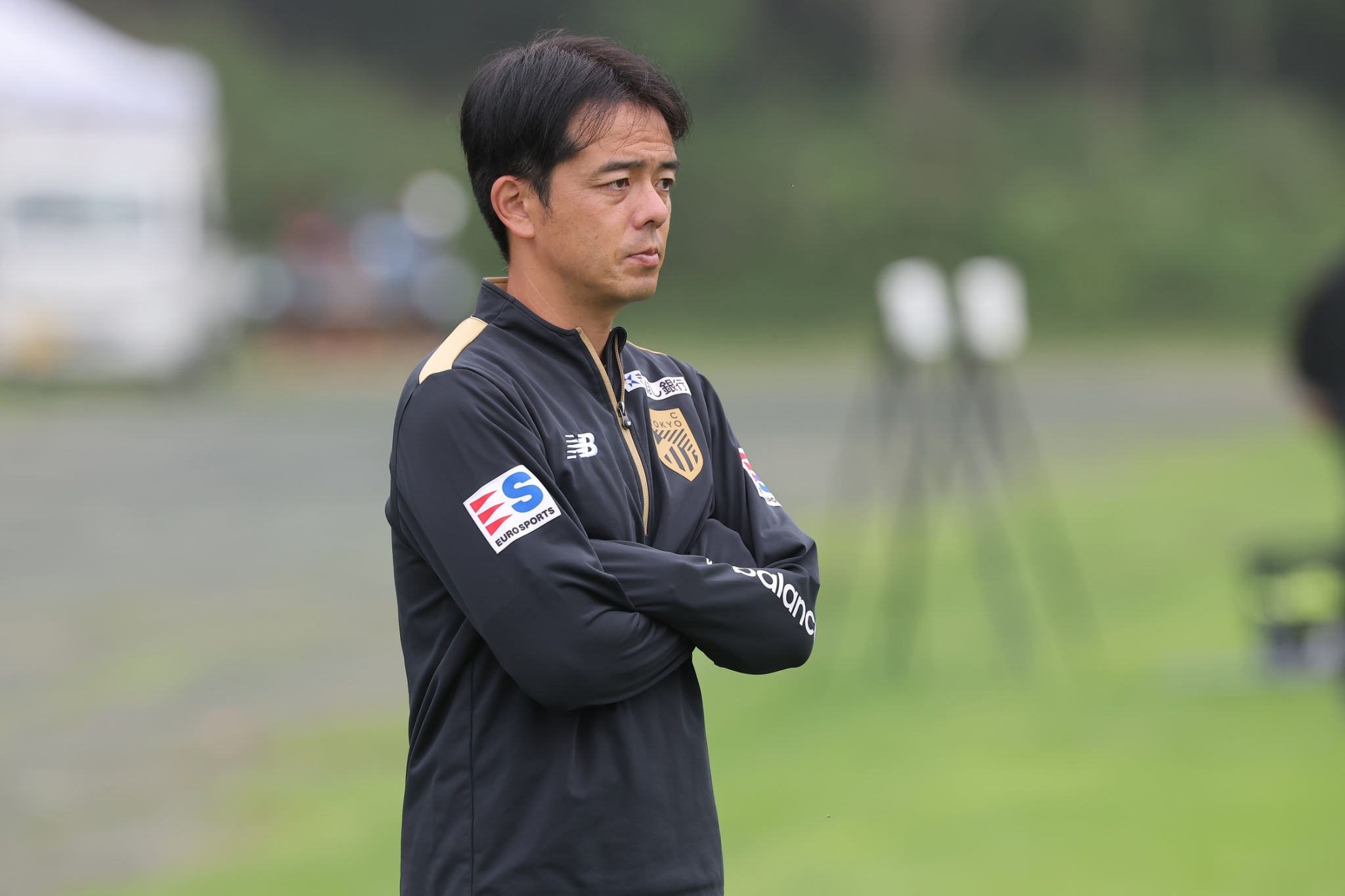
"This might be a somewhat broad topic, but since I also come from a background as an on-site analyst, I have experience continuously analyzing the opponents of the matches right in front of me. When that person transfers, that role and the information accumulated so far disappear. I have felt that myself, and even when I once left the field and worked at Data Stadium supporting various clubs, I witnessed the reality that every time an analyst changed, the club would lose the valuable data from good initiatives that had been made."
In a soccer club, the data accumulated by analysts becomes an asset that can determine the club's future. By storing past match and training histories, as well as scouting information, as objective numerical data, it becomes possible to optimize tactics, prevent injuries, and accurately evaluate players' value. These elements then become the club's valuable assets.
"Right now, I want to thoroughly manage and utilize data in this club in a way that is not dependent on any individual. By producing results, I hope to create a trend where other clubs realize they must do the same, and that Japanese soccer as a whole needs to focus its efforts in this area. In my mind, I envision this as I face my daily work."
That is precisely why Fuji’s perspective also looks toward the not-so-distant future.
“For example, Vissel Kobe and FC Machida Zelvia, which are sponsored by IT companies, have started such initiatives including the development of their own systems. However, FC Tokyo has an overwhelmingly different strength compared to those two clubs. That is the history and outstanding track record of continuously producing many players from the academy. Because of such information and accumulated data, we already possess insights that other Japanese clubs do not have. If we can utilize that, we should be able to reproducibly produce even better players. Currently, we are increasing scouts for the U-12 category and putting effort into those areas as well, and as part of our future roadmap, we have the vision of supporting them together.”
Already, both vertical and horizontal developments have begun in the fields of player scouting and development.
“We are currently in the process of developing, together with engineers from MIXI, Inc., a database to better utilize the scouting information history of all our scouts. At present, reviews of our academy’s three teams are conducted every six weeks. For example, during the first and second terms of each cycle, (development section analyst) Tsukasa Egashira collects numerical data on what changes have occurred within the teams and provides feedback. We make sure to utilize the data while carefully considering whether it aligns with our game model. For instance, even if the team was trying to implement certain tactics in the first term, in the summer tournament of the second term, they might have prioritized winning by playing defensively and using counterattacks. We visualize such shifts in style as data, even in areas where subjective understanding is possible, to see if that truly represents our football. Within the academy, data is actively used as material for objective communication.”
These efforts should help quantify and visualize the 'game model' that the top team aims for, creating a common language to share the same tactics and evaluation criteria throughout the entire academy.
Shiramizu, who sometimes serves as the interpreter for Alexander SCHOLZ, reveals that there are "two main sources" of job satisfaction.
_260720_2.jpg?x59605)
"The first is as a data analyst. There are still many unknowns when it comes to data utilization in soccer clubs, and I believe there are not many clubs that are actually using it effectively. I think being able to challenge that area is of great significance."
Furthermore, as an interpreter, Shirakawa said, "I am entrusted with interpreting for players and overseas clubs. This is a unique environment only at FC Tokyo. Being able to engage in more global work is a great source of motivation." His face reflected the fulfillment of being close to the rolling ball.
"I had a goal and dream of working in a job related to soccer in the future, and now that it has come true and I can live a life where I am involved with soccer, I find joy in it every day. Every match day, the weekends involved with the J.League, which I have been watching all along, are truly fulfilling."
Meanwhile, Asahara, who spends his days staring at vast amounts of data, occasionally encounters moments when he truly feels, "I'm glad I did this."
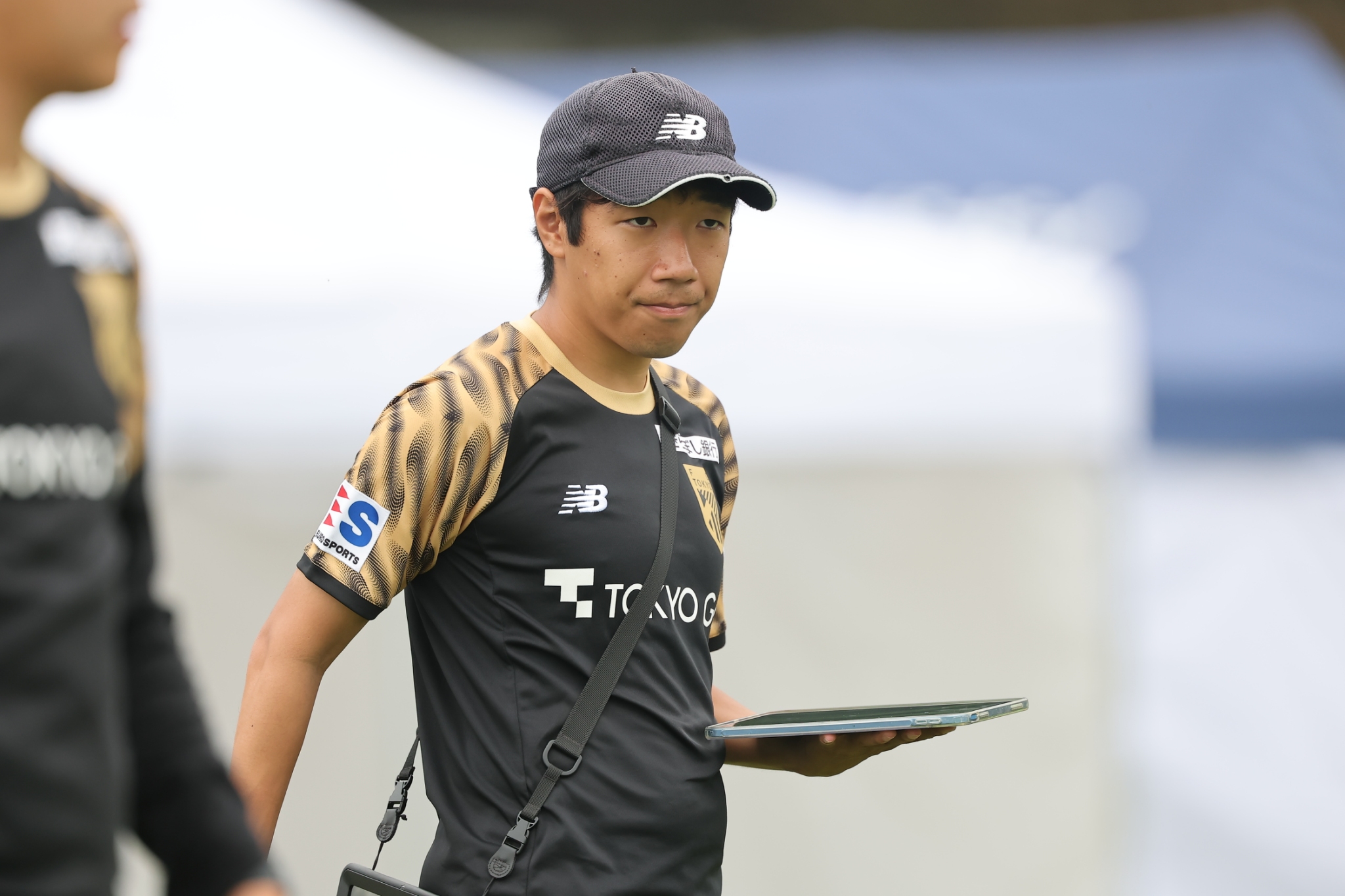
"As a data analyst, I strive to organize data in an easy-to-understand and accessible way for various areas of strengthening, including medical and coaching staff as well as the academy, whenever data is requested. I consider myself still in a growth phase, so hearing from people in each field that the data was easy to understand is very rewarding. I also prepare so that I can respond immediately when players request data. When I receive words of gratitude after that, it really makes me happy."
The depth of the world I have plunged into still has no bottom in sight. That’s why it continues to stimulate Asahara’s intellectual curiosity every day.
“In the field of data analysis, as AI evolves daily, being able to update my knowledge and learning while conducting cutting-edge analysis is fascinating and brings me joy.”
Fuji is no different from the young analysts. When asked about the moments he finds joy in this job, he says, "It’s simple, but I think the real reward is when someone says ‘thank you’ for what I’ve done." Technological progress never stops. But in the end, it probably comes down to how much you can get down and dirty working closely with the players and staff.
"In analysis, sometimes I’m asked to produce certain data or compile specific materials, and when I quickly put them together and hear 'thank you,' it feels rewarding. Within the team, when I suggest from an outside perspective that maybe it’s like this or it would be better to do it this way, I also get thanked. It’s simple, but that’s how I feel."
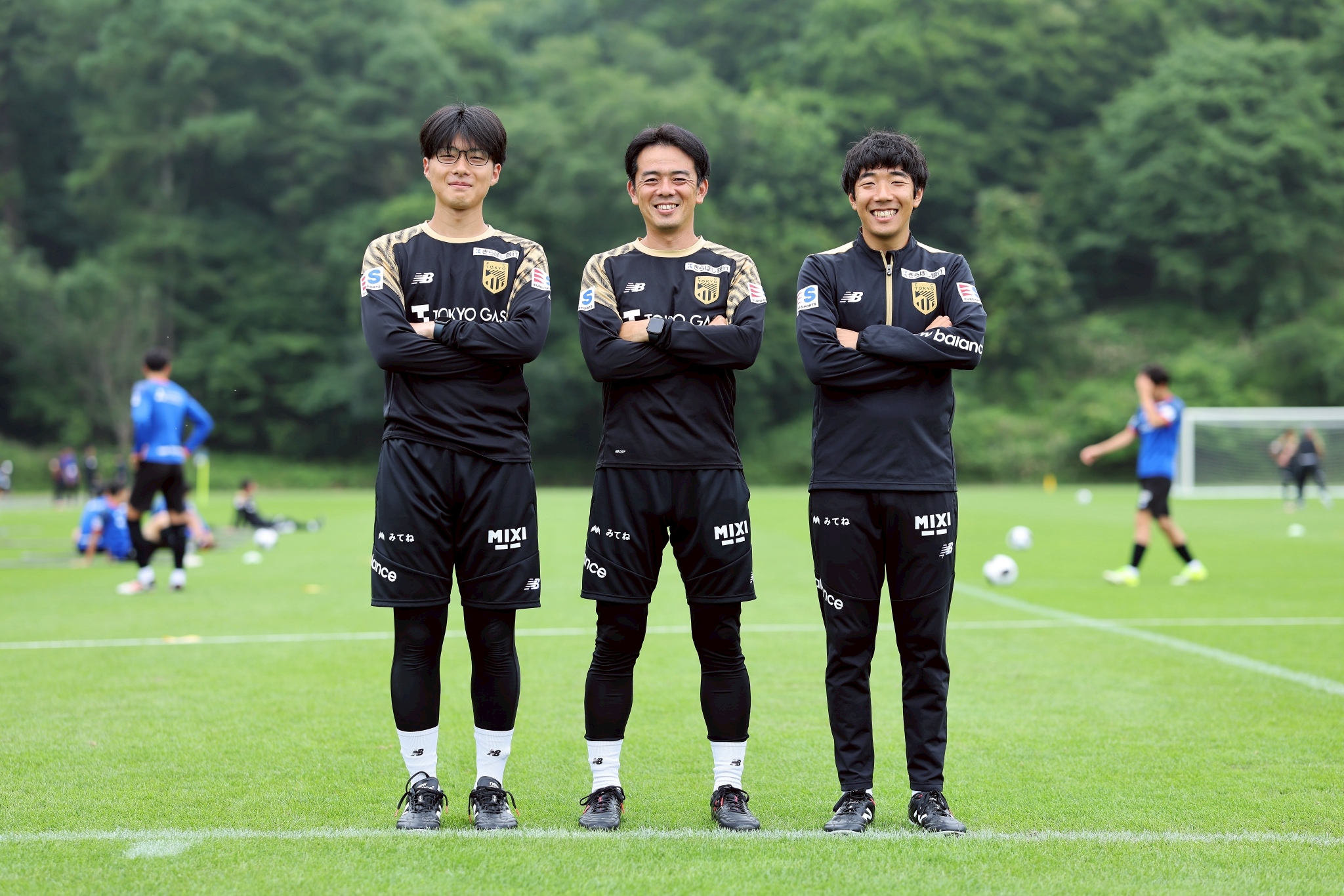
Their desk work, facing cutting-edge technology and big data, must cause stiff shoulders and tired eyes. Even so, the moments when they suddenly feel "my shoulders are lighter, I’ll do my best again tomorrow" might be those brief exchanges of casual words in a corner of the pitch or at the clubhouse.
(Honorifics omitted in the text)
Text by Kohei Baba (Freelance Writer)
Photos by Kenichi Arai