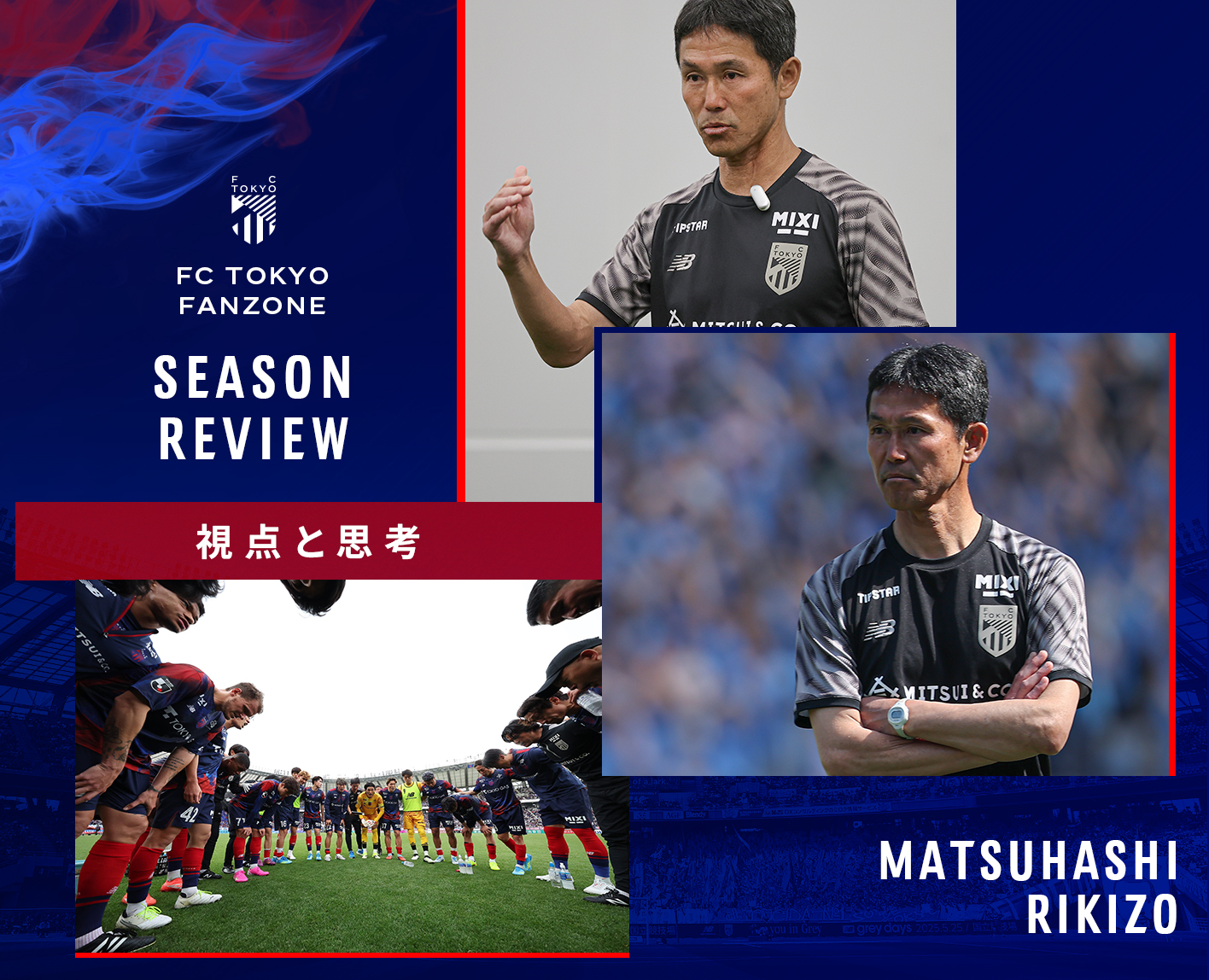


Coach Rikizo MATSUHASHI fought through his second season in charge of the Red and Blue. After a first season caught up in a relegation battle, the team steadily accumulated points from the start in the Meiji Yasuda J1 Century Vision League, fostering player growth while achieving results. Although they fell short of the championship they aimed for, it can be said that it was a half-season of solid progress. In that context, what kind of feelings did the coach have, and how did he view the players? We delve into his perspectives and thoughts.
──I think we had a good season in the Meiji Yasuda J1 Century Vision League, but it is likely that opponents will prepare countermeasures for the 2026/27 season.
“First of all, I think it depends on whether you consider it a good season or not. Although 4th place and 11th place are not the same, in the sense that nothing has been accomplished, they are the same. It is important to be able to return to that point. Being in second place is absolutely not acceptable, and even if you become number one, I think that is not enough. I have talked about this with the players several times. I tend to compare everything to mountain climbing, and I truly believe that is the case. Once you climb up, you absolutely have to come down. And to climb another mountain, you must come down first. If you stay there without doing the descending work, you will die. That is obvious. You have to come down properly. We couldn’t reach the very top, but we did reach second place. However, even if we aim for first place next time, we cannot go up from second place; we all have to come down once and climb again. I think whether we can do this work or not is the key. Before being studied by others, if you can firmly start from a flat position and decide where you stand, I am not worried at all.”
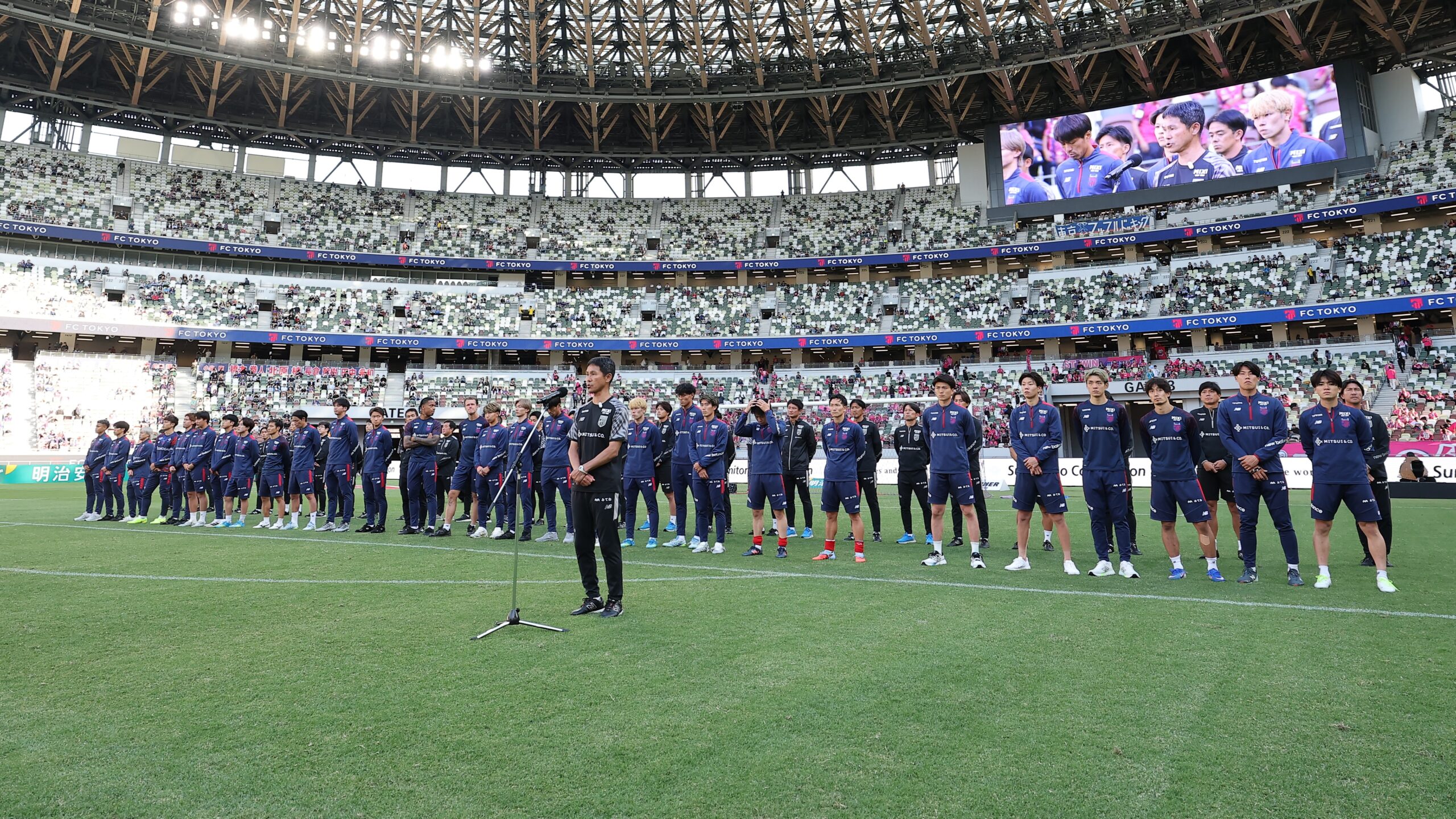
──In the Meiji Yasuda J1 Century Vision League, the newly joined players were very active. What roles do you think players like Hayato INAMURA and Kento HASHIMOTO, who are well acquainted with Coach Matsuhashi’s style of football, played?
“I thought it was more difficult than it appeared from the outside. Given the competition, it’s not easy for them to fully showcase their strengths. However, gathering voices from various sources, I heard that those around them recognize what they bring to the team. While their strengths are acknowledged, their weaknesses are also noted. Each player has a different style and perspective on football. But the other players didn’t adopt a cynical attitude like, ‘They’re regulars just because they know Riki-san’s football.’ Rather, they approached it with a very healthy mindset, clearly aware of where they need to compete, actively trying to learn and adopt the good qualities of the new players so they could also improve. For the team to function regardless of who plays, there must be a relationship where everyone recognizes and learns from each other’s individuality. I believe the new players eagerly learned a lot from the existing players, and this mutual interaction guided the team in a very positive direction.”
──Both players have worked on improving their defensive weaknesses throughout the season.
“That’s exactly right. Of course, no one is perfect from the start, so everyone naturally has their own challenges and weaknesses. However, the important thing is that everyone fully acknowledges these issues and works on them diligently in daily training. But simply carrying those challenges without addressing them and just going through the motions in matches is meaningless. As professionals, it is crucial to take it a step further and firmly connect those efforts to tangible results—victories and growth. The fact that there were many games this season where both quality and results were achieved is because the players did not shy away from their challenges and consistently pursued approaches that led to results.”
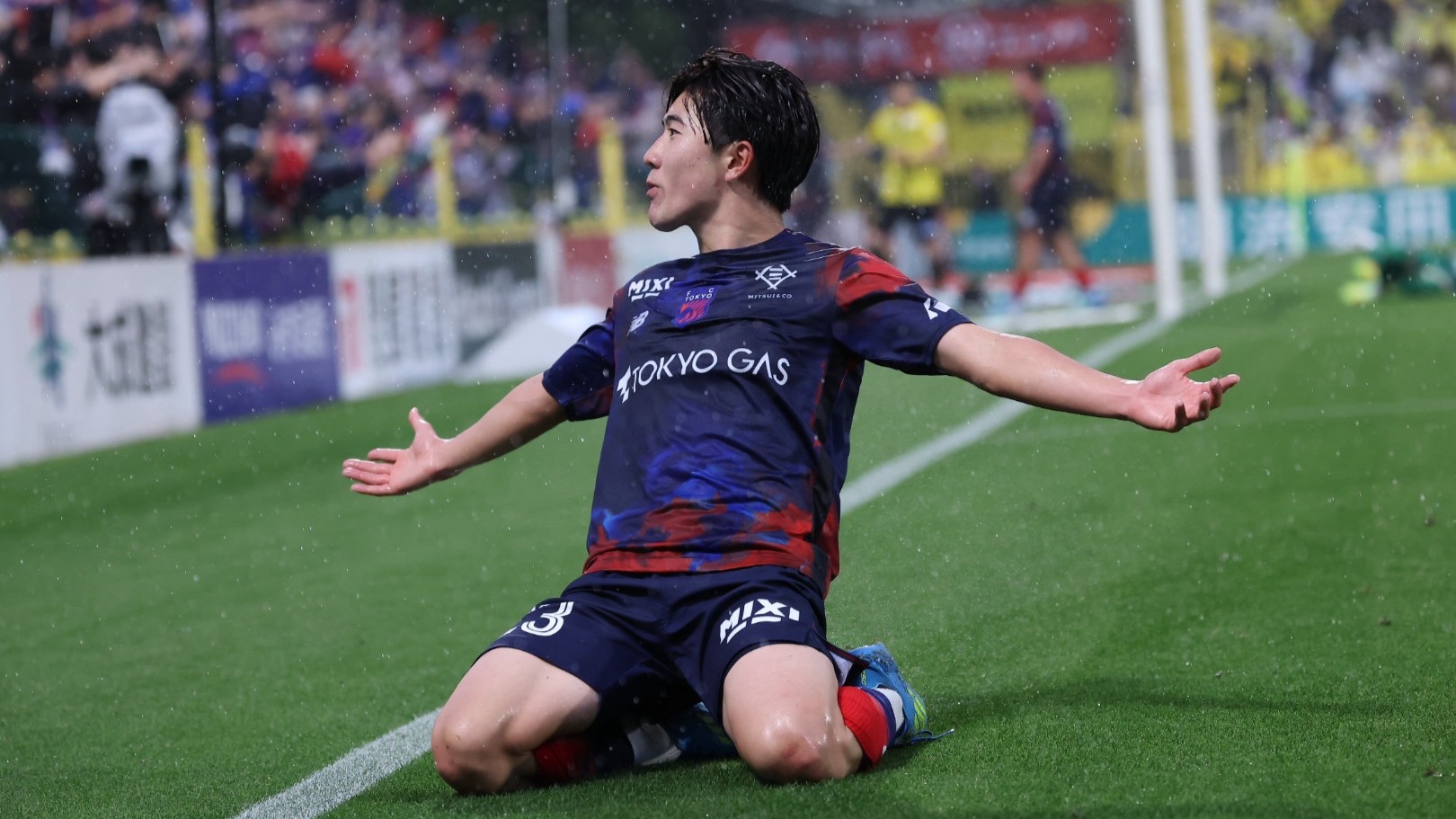
──Ryunosuke SATO, who returned from a loan transfer, led the team. How would you evaluate his growth and the role he played within the team?
“He truly showed a significant presence within the team. Above all, his high level of awareness is remarkable. However, given his potential, I believe he can aim even higher. He achieved results during his developmental loan at Fagiano Okayama, and his performance there earned him a call-up to the SAMURAI BLUE (Japan national team). Naturally, upon returning here, both the team situation and his position changed. Being able to deliver solid results under those circumstances is exactly what defines a good player. Regardless of who the coach is, players like him always secure a spot in the starting lineup or squad. That said, my impression is that he hasn’t yet completely broken out of his shell and hasn’t fully unleashed his abilities. I feel that deep down, he probably wants to challenge the players around him with even higher awareness and demands. He is an academy graduate and, age-wise, is among the younger members of the team. Even when he’s playing and scoring, there might have been moments where he somewhat held himself back. He is a player with the capacity to express himself more, to appeal to those around him, and to make demands. I hope he continues to raise his awareness and pursue his ideals, showing that in various ways to those around him.”
──One of the players who made a remarkable breakthrough this season is Kyota Tokiwa. How did you perceive his actions and daily attitude, including last season?
“He truly has a strong desire to improve and possesses a wonderful personality. One of the conditions I consider essential for a good player is the ability to correctly prioritize things. He has been consistently practicing exactly that. I don’t know what he really thought during the period when he couldn’t get game time. Perhaps he had some moments of solitary frustration. But when we first met, by chance in the washroom, he asked me, ‘Rikizo, what kind of teams’ soccer do you watch as a reference?’ When I asked why, he answered, ‘Because by watching the teams the coach aims for, I want to understand how their defensive midfielders play and use that as a reference for my own play.’ That left a strong impression on me that he is a smart player who can clearly organize and prioritize in his mind what is most necessary and what should be given top priority right now. There are many people in the world who can organize things neatly. But he doesn’t just “organize” by lining things up nicely; he also performs the task of “arranging” by carefully selecting and placing things in a way that makes it easy to use for his own growth. I got the impression that he can fundamentally prioritize things properly. I believe that steady accumulation of effort suddenly exploded the moment he seized his chance. It wasn’t a gradual rise but a sudden, remarkable transformation. Witnessing such rapid growth up close was a wonderful surprise after a long time. And above all, the amazing thing is that his performance never dropped after that. The period when he couldn’t play must have been really tough because he had to face himself. But I have never seen him complain about not playing, nor have I heard such rumors from those around him. Surely there were days when he felt like ‘I don’t want to train,’ but he never showed that outwardly. He faced himself, kept his priorities steady, and quietly continued his individual training. His high performance is nothing other than the fruit of the effort he built by himself, and he has the kind of conviction that makes you have to say so.”
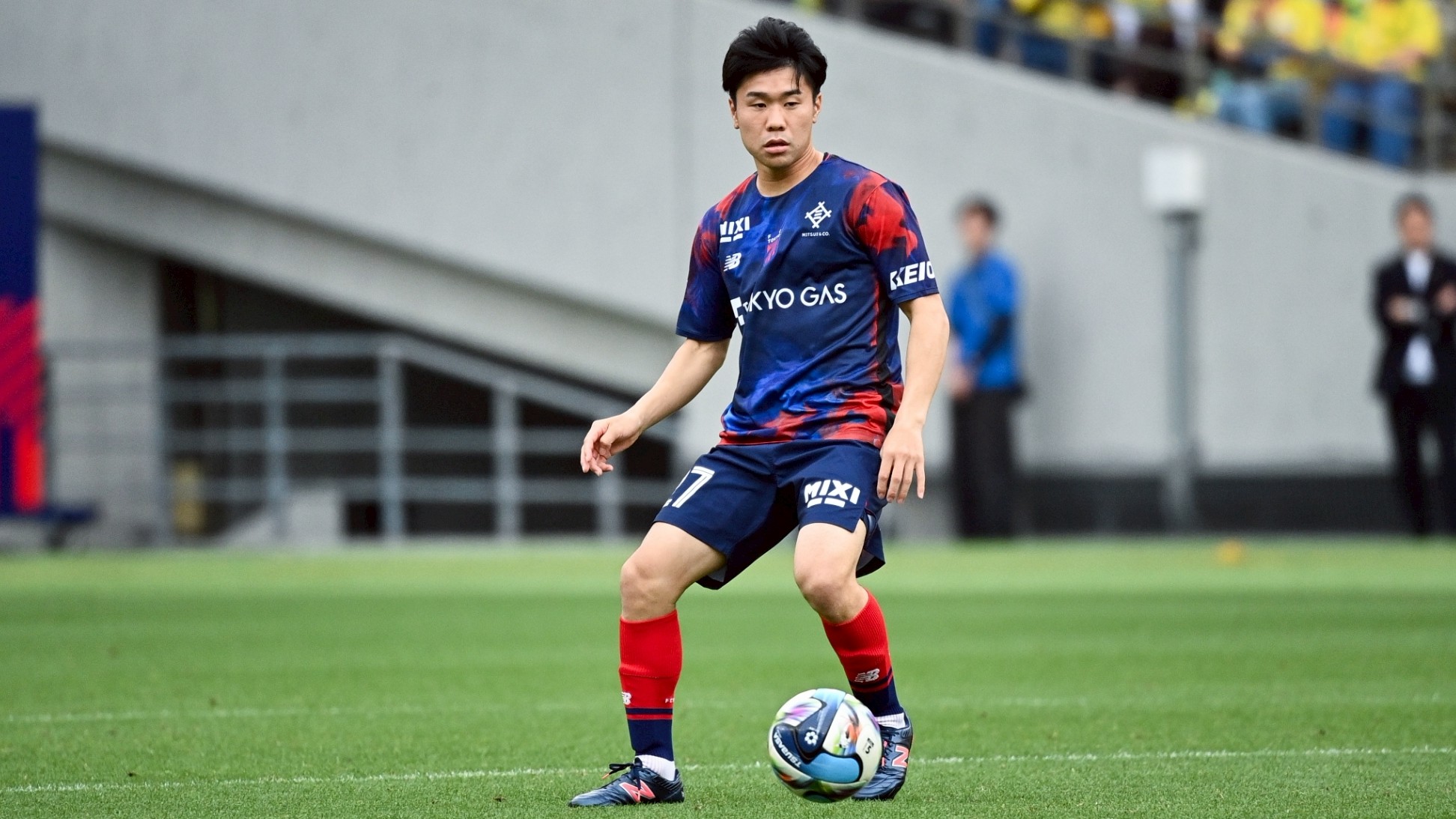
──While continuing to play in matches, Tokiwara was able to positively influence the team both on and off the pitch through his reactions when the team was losing and by inspiring the team. It also seemed that he built a very good relationship with Marcelo RYAN.
“Of course, their positional relationship is important, but more than that, I think their personalities meshed well together. Marcelo has extremely high potential, but he is still young and doesn’t speak Japanese perfectly. He’s often looking at his phone or playing games, so in many ways, he’s just like any other young Japanese person these days (laughs). However, just being a ‘foreign player’ brings enormous expectations and pressure from those around him. Carrying that burden while competing, it’s natural to become nervous during difficult times. But at those moments, seeing Kyota actively encouraging him on the pitch must have been a huge support for Marcelo. It’s not just Kyota; many players on the team properly recognize Marcelo’s potential and deeply consider how to make the best use of him, which is why they were able to extend such support. I believe Kyota is truly someone who thoroughly internalizes many things within himself.”
──I believe Sei MUROYA, who wore the captain's armband this season, was also a significant presence. He may not be the type to speak a lot, but the attitude he showed helped the team function smoothly.
“Absolutely. I think he demonstrated truly excellent captaincy. However, as a personal reflection, there were honestly times when he struggled with how much and what exactly he should communicate to me. So, I also feel that I should have created more opportunities for dialogue. That said, he is the kind of person who can show everything to those around him through his actions and results both on and off the pitch without needing to engage in explicit conversations. It’s not that I took advantage of that, but there were moments when I relied on him too much. Because he delivered such outstanding performances, if he as captain and the other players had been able to share deeper conversations, we might have been able to draw out even more. But even before considering how well he brought the team together, his daily attitude, actions, and even casual remarks naturally and positively influenced the other players around him. He’s not the type to lead with words, but rather with the atmosphere created by his character shown through his example, and I think he did an excellent job of uniting the team.”
──The new 2026/27 season is approaching. How do you feel about the upcoming season as we transition to the autumn-spring system?
“First, it depends on how the camp goes. We are currently discussing with the staff various ways to improve the players’ condition. Of course, physical preparation is important, but I feel that we must raise the mentality aspect much more in many ways. This applies not only to the players but also to myself. When I received the offer to extend my contract for next season, I told everyone that what I have firmly decided in my heart is that ‘I want to win more than anyone else here. I must become a coach with that strong desire.’ It’s not ‘someone out there,’ but ‘more than anyone else.’ When I thought about why I felt this way, a reason suddenly came to mind: people with high aspirations naturally attract others with high aspirations. The opposite is also true—people who constantly complain tend to attract similar people. The saying ‘birds of a feather flock together’ is truly a simple truth. Considering this, I realized that if I, who lead everyone, had any weakness or softness in my desire to ‘win,’ no one would follow me. I have been given the chance to fight together with this club for one more year. I would be happy if even a little bit of people think it was good to entrust me, and if the players feel even a little that ‘I’m glad to work with this coach’ or ‘I got better at soccer because of this person,’ there is nothing more gratifying as a coach. However, even if they feel that way, I absolutely do not want it to end with ‘but we didn’t win.’ So, what is necessary to avoid that? It is that I, as the coach, must have an absolutely stronger desire to ‘win’ than anyone else. The new season must be one with that sense of responsibility. That is why, while physical condition is important, I believe the mentality aspect will become incredibly important from here on.”
──Having witnessed up close Yuto NAGATOMO repeatedly shouting, "I'm going to my fifth FIFA World Cup," seeing him realize that dream makes me once again realize the importance of putting things into words.
"I also say that there is nothing you can't do if you try, but people simply don't try or give up. It's that simple. That's true for every aspect of play as well. I keep emphasizing 'quality, quality,' and if each individual quality is high, they wouldn't be here—they would be thriving on the world stage by now. However, even in top league matches and among national team players, mistakes happen. But they have the skills and techniques to prevent simple control errors from becoming mistakes. Take a fast player like Erling Haaland of Manchester City, for example—he repeatedly breaks behind the defense. You've never seen him stop running with his hand raised just because the ball isn't played to him, right? If the ball doesn't come, he repositions himself and breaks behind again. Eventually, the pass connects perfectly and a goal is scored. That's because he repeats this over and over. He has height and physical ability. Being able to create such situations is not just about having ability, but about properly using it. Repeat, repeat, repeat. It's simply that if you don't run when the ball is played, you won't score—and the passer is the same. Coordinating that is what football is about, and that's why it's called 'the sport of mistakes.'"

──In our era, this story reminds me of Filippo Inzaghi, who was active in the Italian national team, but you have updated it to Erling Haaland, haven't you?
"Actually, I had just talked about Filippo Inzaghi with the players during a team meeting. The European champions participating in the FIFA Club World Cup always used Yokohama F.Marinos' training ground, so I was able to watch the training sessions of Barcelona and Manchester United as well. In 2007, when AC Milan came, during a game-style training, Inzaghi kept repositioning himself repeatedly. I shared that story with the players. Even if he ran behind the defense and was offside, he didn’t mind and would reposition himself if the ball didn’t come. When the ball moved to the side, he would reset his stance to jump in for a cross. When attacking from the center, he would turn his back to the opponent to act as a wall, receive the ball, and skillfully use those around him. If he broke through, he would circle around and enter the area again. It was a repetition of that. Because he did it so many times, goals were born. Even if you intend to succeed with a single move, it won’t work well. Quantity transforms into quality—that’s exactly what he embodied. I think players become excellent not by quality alone but by turning those visible actions into something tangible. When I asked, 'Who knows Filippo Inzaghi?' only four or five hands went up, so I thought, 'I see, I should have said Haaland instead' (laughs)."
──What kind of soccer will you show in the 2026/27 season?
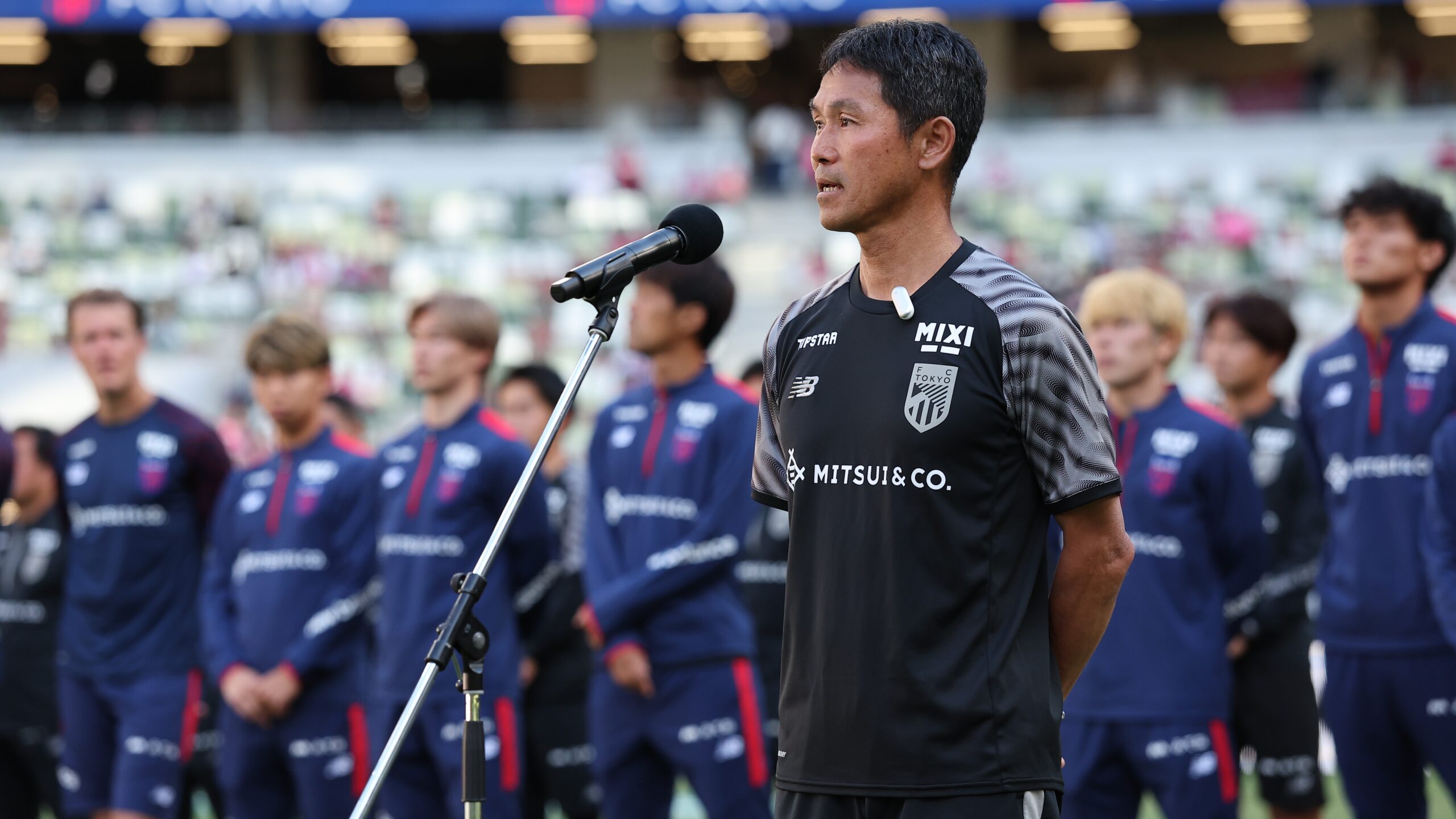
“First and foremost, we want to play the way we want to. It’s not about the opponent or trying to stop them from doing anything; rather, the foundation will be to do what we want to do first. If we try to defend something or adjust to the opponent, we end up playing into their strength rather than our own. Of course, the opponent is not empty-headed—they are a team with a plan. Naturally, we will prepare countermeasures as well. On top of that, we want to surpass them, and we also want to value keeping possession of the ball and holding onto it. If we don’t have the ball at our feet, then we need to actively press, win it back, and then connect to the next attack. Above all, I believe it’s important to keep trying again and again.”
──Then, is there anything you would like to say to the fans and supporters?
"I truly believe this is a real opportunity right now, and I think not only myself but the club feels the same way. I also think there is a possibility that the fans and supporters may be holding such expectations. This is really the time to accelerate, or rather, the moment to see how much strength we can use. However, this challenge applies to us as well as to the fans and supporters. Since this club has never won the league before, I want all the current fans, players, and staff to join forces and seize this timing to win the championship and engrave everyone's names. We want to build that together."
(Honorifics omitted in the text)
Text by Kohei Baba (Freelance Writer)