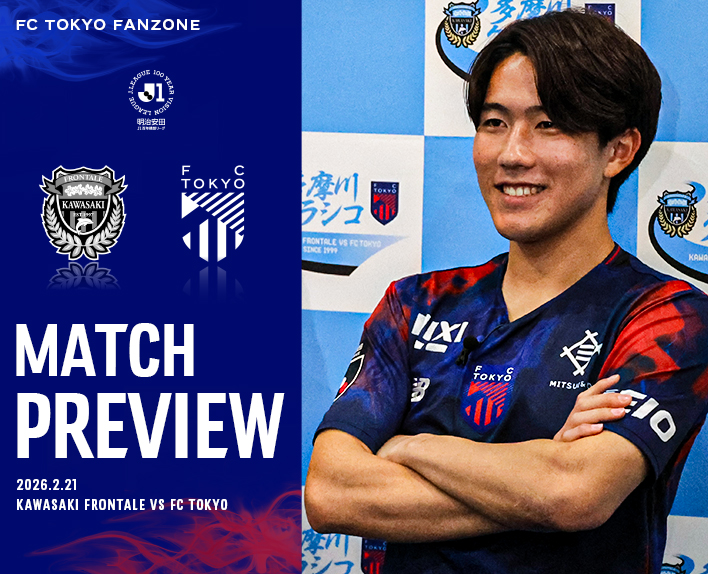


Match Review & Preview
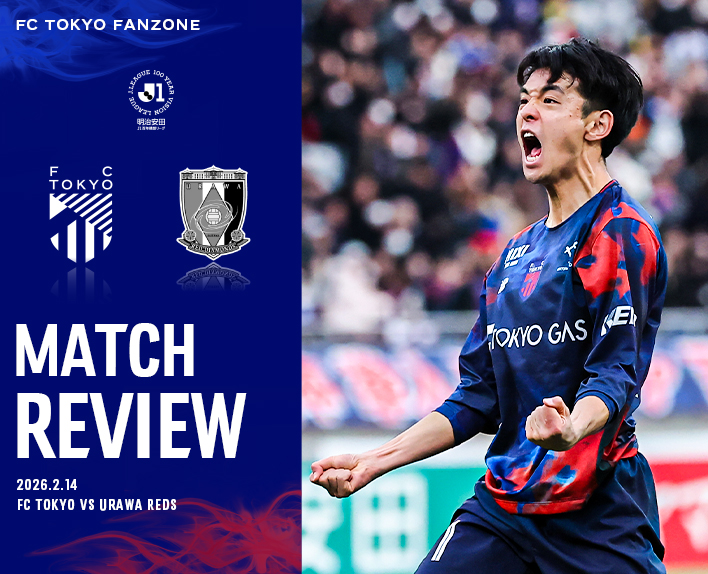
Review of the Previous Match Against Urawa Reds
In Sec. 2 of the Meiji Yasuda J1 Century Vision League against Urawa Reds, we faced exactly the same lineup as the opening match, including the players on the bench. The game, which was part of consecutive matches at home in Ajinomoto Stadium, saw Tokyo take the initiative from the start with aggressive pressing and a solid attack.
Overwhelming in battles for the ball, they pressed in a coordinated manner from a high position to push into the opponent's territory. In the 5th minute of the first half, after cutting off the opponent's corner kick and launching a sharp counterattack, the attack targeting the side of the penalty area, centered on Keisuke SATO and Sei MUROYA on the right side, functioned effectively. Mixing possession and quick attacks, the team proceeded with the match in the style that coach Rikizo MATSUHASHI has aimed for: "taking the initiative in both offense and defense."
A set piece in the 10th minute of the first half, which seemed to allow Urawa to score the opening goal by exploiting a momentary lapse, was ruled no goal after VAR intervention. It was a tense moment, but the team continued to play with full concentration. Although they couldn’t create a decisive chance due to a slight misalignment in the attacking third, they went into halftime with a sense of increasing the possibility of scoring by maintaining their efforts.
In the second half, as Urawa responded to Tokyo's high press with a similar style, the game intensified with frequent and fierce exchanges between offense and defense. Tokyo tried to change the course of the match by bringing on Ryunosuke SATO and Kento HASHIMOTO. However, in the 33rd minute of the second half, after clearing an opponent's cross, the ball was picked up and a long-range shot was allowed. Unfortunately, the shot deflected off a blocking player, changing its course and resulting in the conceding of the opening goal.
The Tokyo bench acted immediately, sending Kento HASHIMOTO and Fuki YAMADA onto the pitch, entrusting the newly joined left-footed duo with turning the situation around. Their play would bring the long-awaited goal for the blue and red.
In the six minutes of added time displayed in the second half, YAMADA, waiting on the opposite side for Kento HASHIMOTO’s left cross, skillfully controlled the ball and struck a powerful volley with his favored left foot to equalize. Tokyo brought the match back to square one at the last moment, leading to a penalty shootout for the second consecutive game.
While Urawa's second penalty hit the post and missed, Tokyo successfully converted all five penalties again, just like in the previous match. In the end, Ryunosuke SATO powerfully struck with his right foot, just as he did in the Kashima game, securing 2 points. The team celebrated back-to-back home victories in two consecutive matches.
This Week's Preview
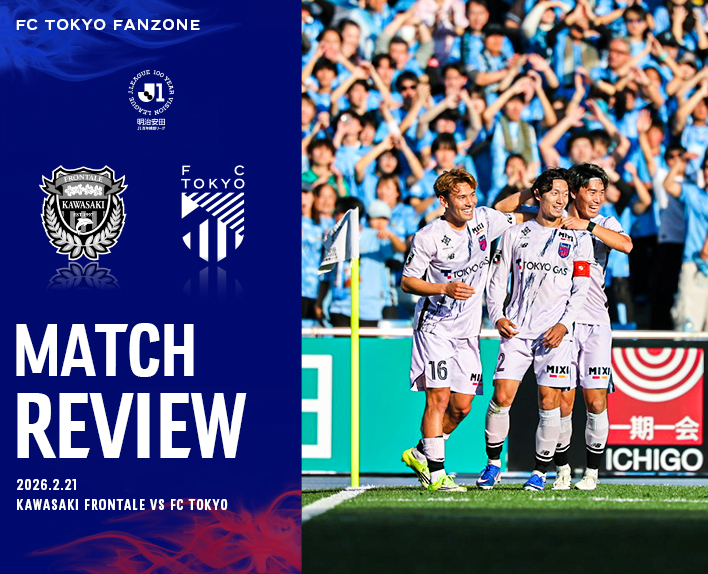
Following the opening match against the Kashima Antlers, the Blue-Red Army also secured a victory in the penalty shootout after a 1-1 draw against the Urawa Reds in the previous round. Having earned 4 points from two matches, FC Tokyo now faces Kawasaki Frontale away in the Tamagawa Clasico.
Although both wins came after penalty shootouts, Tokyo has steadily accumulated victories. The team has entered a cycle of winning while making adjustments, sharing both achievements and challenges among all members, and approaching daily training with a sense of confidence. Therefore, head coach Rikizo MATSUHASHI views the 4 points positively, saying, "It's okay to think of it in a positive way."
However, precisely because we are aiming higher, the desire to win within 90 minutes grows stronger. Against Kashima, we pressed them into their half with a numerical advantage, and against Urawa, we overwhelmingly attacked from the start and created chances, but ultimately we couldn’t secure the win. After the Urawa match, captain Sei MUROYA said, "Including the Kashima game, I feel like we lost points. We created many chances but couldn’t finish them off, so considering that we have at least secured 2 points, we need to reflect and build on that." He expressed that the first two matches from the start were games we should have won.
The 4 points gained, which could be called a “judgment win.” On the right side, both Sei MUROYA and Keito SATO served as the starting points of the attack, and the aggressive pressing from the front line functioned well, showing many scenes that embodied the “soccer that takes control both offensively and defensively” advocated by Coach Rikizo MATSUHASHI. In attack, they have come to switch between possession and quick counterattacks, and in defense, between pressing and blocking, demonstrating a flexible style. Also, including the players brought on during the match, everyone on the pitch has been able to firmly show a fighting spirit, which is surely a sign of the team’s growth.
Regarding this point, the coach also commented, "It is necessary for everyone to maintain concentration until the very end and absolutely avoid situations where we are at a -1 or -2 disadvantage in attack or defense. Each individual must not slack off, and it is important that everyone engages while keeping the overall picture in mind. On the contrary, we must approach the game with the mindset that 11 players feel like 12 or 13." He stated that raising individual awareness leads to an improvement in team strength. Based on a fighting spirit, each player raising their awareness and demonstrating their game intelligence will enhance the team’s overall capability.
This week features the Tamagawa Clasico away. Kawasaki defeated Kashiwa Reysol 5-3 in the opening match and secured a victory in a penalty shootout against JEF United Chiba in the previous round, earning 5 points from 2 matches and aiming for a top position. The three forwards—Elisson, Tatsuya ITO, and Kazuya KONNO—boast one of the league’s most destructive attacking lines, and the team also includes players like Yuto OZEKI and Yuki YAMAMOTO who excel at spatial passing. Coach Rikizo MATSUHASHI describes them as "a team with talented forwards, increased attacking depth, speed battles, excellent inside work, and the power and speed to exploit even the slightest gaps," making it crucial for Tokyo to prevent them from playing freely. Additionally, Tokyo this season can turn Kawasaki’s aggressive offense to their advantage. By maintaining ball possession to neutralize the opponent, focusing on precise counterattacks after regaining possession, and constantly aiming to outmaneuver the opposition to exploit openings, Tokyo hopes to find opportunities for victory.
The Tamagawa Clasico features a clash between two teams both on winning streaks. For Tokyo, aiming for the top while delivering results in the game ahead, it is essential to firmly defeat a top-ranked opponent away from home and move forward. To secure multiple goals and a victory within 90 minutes, the coach has focused on taking strong shots with a full swing of the leg. A well-struck ball not only intimidates the opponent but also demonstrates a powerful assault on the goal, aiming to earn the full 3 points.
Interview with Coach Rikizo MATSUHASHI
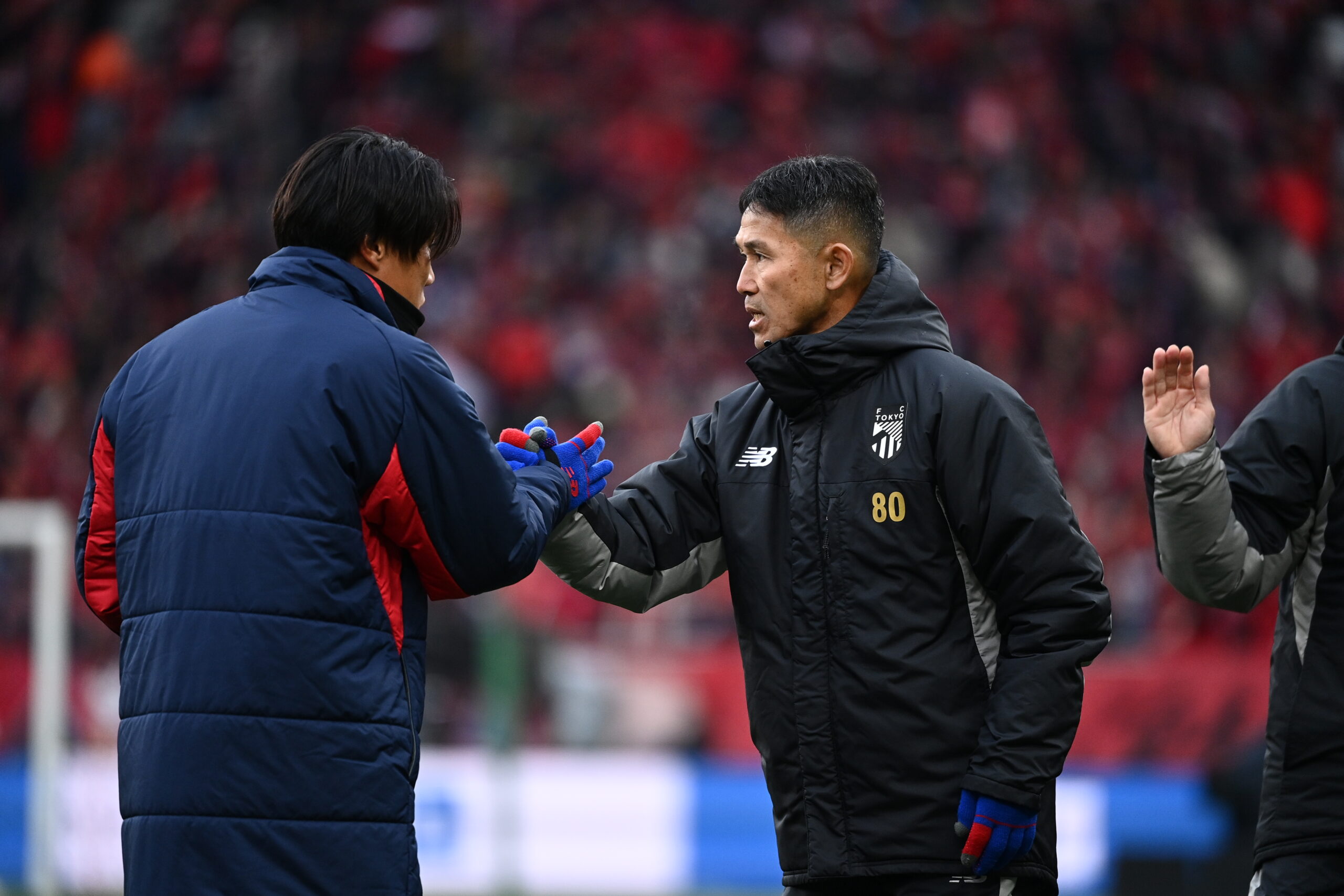
Q: It seems that up to the point of approaching the goal, you have been able to execute what you want to do.
A: Of course, that is an important part we are focusing on, but since the ball has not ended up in the net as a result, I believe we must not use that as an excuse. As I have said many times, if we do not produce results, we cannot reach our goal of winning the championship. We have created many chances and our numbers are steadily improving, but I think it is no good to rely on the phrase “we’re just a little short.” What is truly important to winning is to finish decisively at the end and to defend successfully. We must be as committed to that power as we are to expressing our style.
Q. What is your impression of the Tamagawa Clasico? Also, how do you view the importance of this match?
A. Regarding the Tamagawa Clasico, the fundamental premise is that Kawasaki Frontale is a very offensive and excellent team. I believe that settling this match decisively within 90 minutes will generate momentum for the next game as well. We want to gain confidence from that, and we also want our fans and supporters to feel confident. Although only two rounds have been completed, and it might sound exaggerated to say this, it is very important to approach each match with that potential in mind as we head into the next round. We have earned points in the first two matches, but since we haven’t secured a win within 90 minutes yet, our goal is to fight to achieve a solid victory within the full 90 minutes.
Q. What is your impression of Kawasaki this season?
A. I think they have not changed significantly from before. They have a very talented lineup, and it seems their squad depth has gradually increased. They are good at competing with speed, breaking through the center, exploiting brief openings, and they also have power. I think they are a team capable of doing various things, so the important thing is to absolutely avoid creating any gaps. If you look at their aggressiveness from the opposite perspective, I believe it can lead to highly accurate attacks after winning the ball. Simply put, it might be counterattacks or short counters, but I have a strong desire to dynamically exploit those gaps with plays that go beyond such labels.
Q: In the past few matches, it seems that the players coming on as substitutes have been adding even more momentum to the team. What is your impression?
A: The substitute players have been performing exceptionally well. This time, we have changed the term from "Substitutes" to "Game Changers." We want the players coming on to take on the role of changing the flow of the game. We hope they will influence the match both offensively and defensively—not just as closers, but as changers. We have conveyed this important role not only in words but also in how we label them.
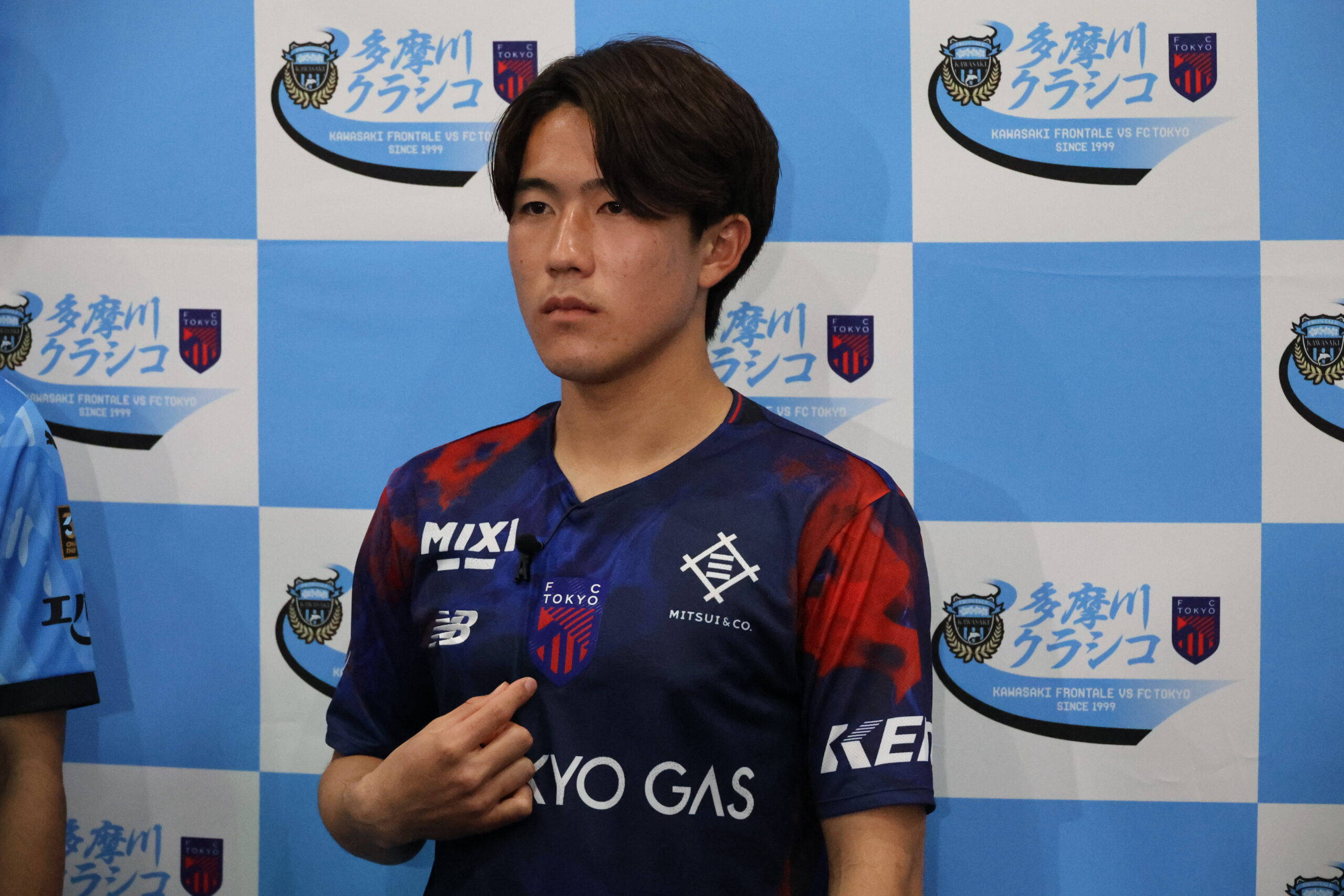
Ryunosuke SATO × Yuto OZEKI Tamagawa Clasico Joint Press Conference>
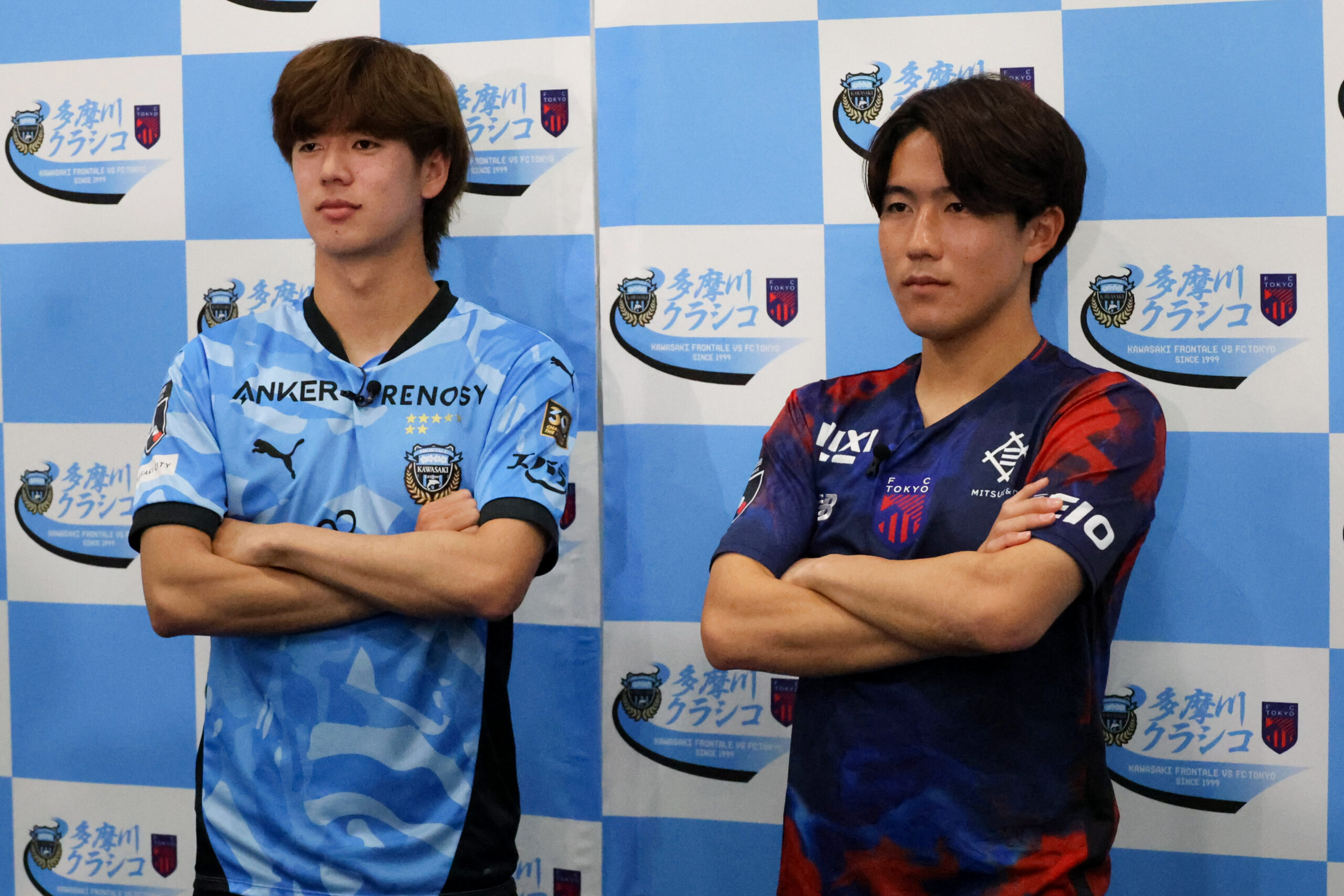
――Since when have you two known each other?
OZEKI: I originally knew him, but Ryunosuke SATO skipped a grade to participate in the U-19 Japan national team activities held in France, and that's where we became close.
――What was your first impression of Sato?
Ozeki: I thought, 'A noisy kid has joined.' He was talking nonstop and always thinking about soccer. He was a real soccer fanatic..
――Ozeki called Sato “Ryu,” but what does Sato call Ozeki?
Sato: “Zeki-san.” He gave a cool impression, but I got the sense that he likes comedy and sometimes says silly things, which was different from my first impression.
――You both played as inside halves for the U-23 Japan national team. Please tell us your impressions of each other's play.
Sato: When I was a first-year high school student and faced him in the Prince Takamado Trophy JFA U-18 Soccer Premier League, he was truly a player who left a strong impression on me. First of all, you never knew where his passes would go, and he would send passes that you couldn’t even tell when he was looking. Ozeki was the same, but the Kawasaki Frontale U-18 team at that time left a really strong impression. When you become teammates, it’s very easy to play with him—not only does he deliver passes well, but he also receives them, so I think he’s a very good player.
――Sato said that, but what do you think, Ozeki?
Ozeki: I'm happy to hear that. Sato has always been a well-known player. He was active in the youth national teams, so I personally knew about him. Indeed, even when playing together, his skills are high, so while he's a tough opponent, he's very reliable as a teammate. Sato has a delicate touch, sharp dribbling, and rarely loses the ball. He can take on opponents facing forward, and his dribbling is excellent, allowing him to attack both inside and vertically, so he can play on either side. He also has stamina, and his overall standards are very high. I often think he is truly a very skilled soccer player.
Sato: It sounds like I have no weaknesses (laughs).
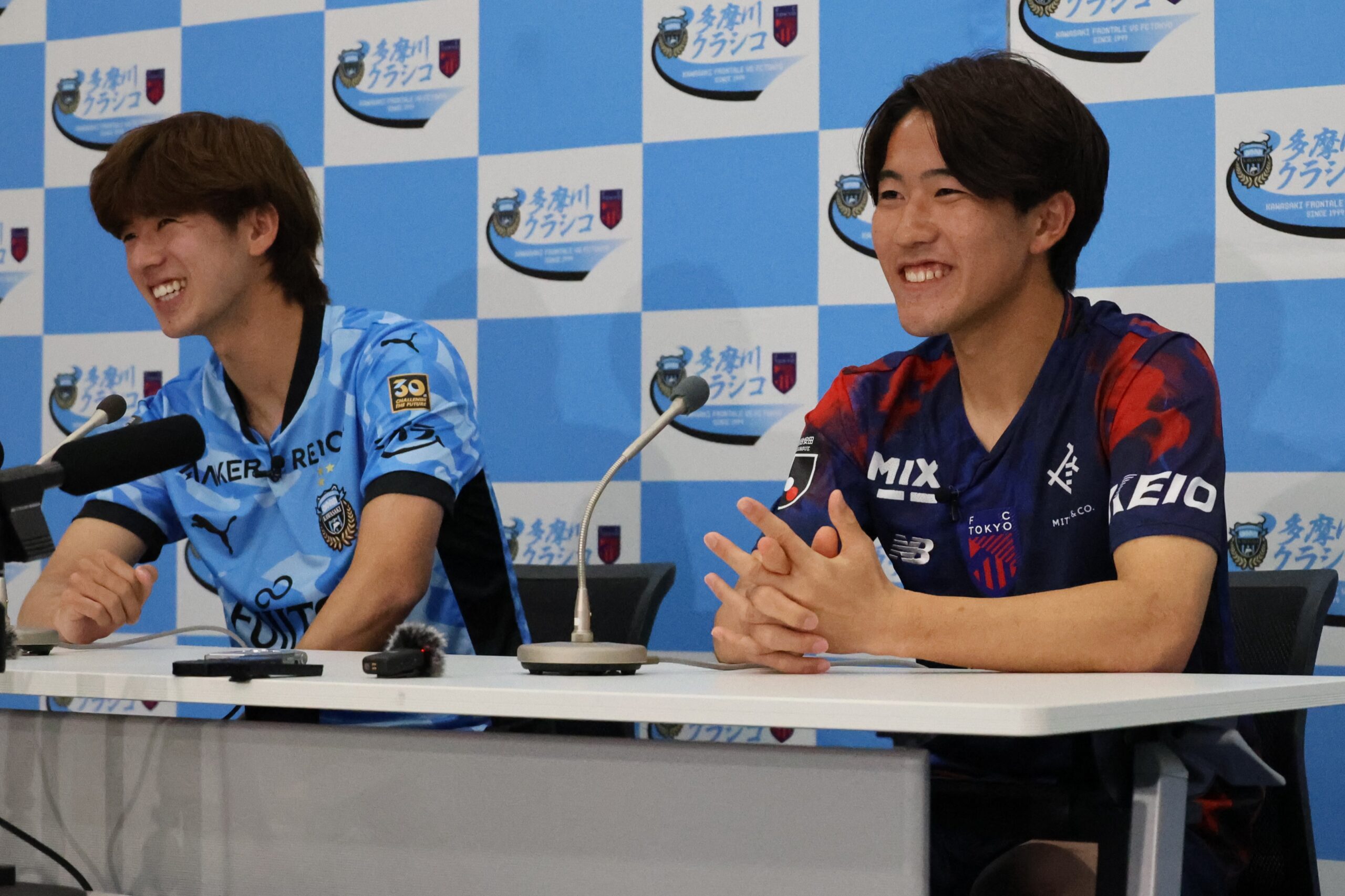
――Are there any areas where you both think you won’t lose to each other?
Ozeki: I don’t think I lose in passing. I believe Sato is better at dribbling. Especially when it comes to passes using space with lofted balls, I don’t lose.
Sato: There's no doubt about that. There's nowhere I can beat Ozeki... none at all (laughs). Not just stamina, but I think I have the edge in agility.
Ozeki: That's also one of my challenges, so I don't think I can beat Sato in that regard.
――The Meiji Yasuda J1 Century Vision League has completed two matches. What are your impressions so far?
Ozeki: Personally, I’m frustrated because my playing time has been short. I feel a bit helpless not being able to contribute to the team. As a team, of course, we wanted to earn 6 points, but since we have secured 5 points, I think we have achieved the minimum expected results. Of course, there are still issues to address, but judging by the results alone, I think we have been able to play good matches.
――FC Tokyo has won both matches in penalty shootouts.
Sato: I wanted to win both matches within the 90 minutes. Regarding the match against the Urawa Reds, it was good that we managed to equalize in stoppage time of the second half and earned 2 points through the penalty shootout. However, winning the match within the 90 minutes is the current challenge.
――In the Tamagawa Clasico, if the match goes to a penalty shootout, Svend BRODERSEN might be guarding the goal as the goalkeeper. You played together last season at Fagiano Okayama and know him well, but do you have confidence in scoring?
Sato: I am confident, but he is truly a great goalkeeper who has saved his team many times in penalty shootout situations. If there is a penalty shootout, including the mind games, it will become difficult.
――Please tell us your thoughts on the Tamagawa Clasico. As a player who came through the academy, you must also have a strong desire to play in it.
Ozeki: Since it’s a Clasico, I’m always fired up, but my intensity rises even more. Because Tokyo is the opponent, both the players and the fans and supporters feel that we must not lose. Being able to perform well in that match is also a motivation for me as a soccer player.
――How did you view the Tamagawa Clasico during your time in the academy?
Ozeki: Personally, I went to watch the Nabisco Cup (now the J.League YBC Levain Cup) Final Round, where Sota HIRAYAMA scored and we lost. I went home crying, and that experience left a strong impression on me, making me feel that we must not lose the Tamagawa Clasico. Because of that feeling, it’s not just because I belonged to the academy, but as a fan and supporter, I have a strong sense that we must not lose to Tokyo.
――Sato has also played in the “Ko” Clasico; when checking the data, he scored 2 goals. Do you remember that?
Sato: I remember. Tokyo formed a selected team from the FC Tokyo Soccer School Advanced Class and participated. I was also happy to be chosen for the selected team. I started in the lineup, but after being substituted out, I was brought back in at the end. At that time, we were losing 0-2, but I scored 2 goals and it ended 2-2, so it remains memorable. Standing on the same pitch as the professionals I had always admired and playing while being watched by fans and supporters was a special experience. I also remember watching the top team’s matches afterward, with my parents buying me merchandise and eating Tokyo’s stadium food while watching the game.
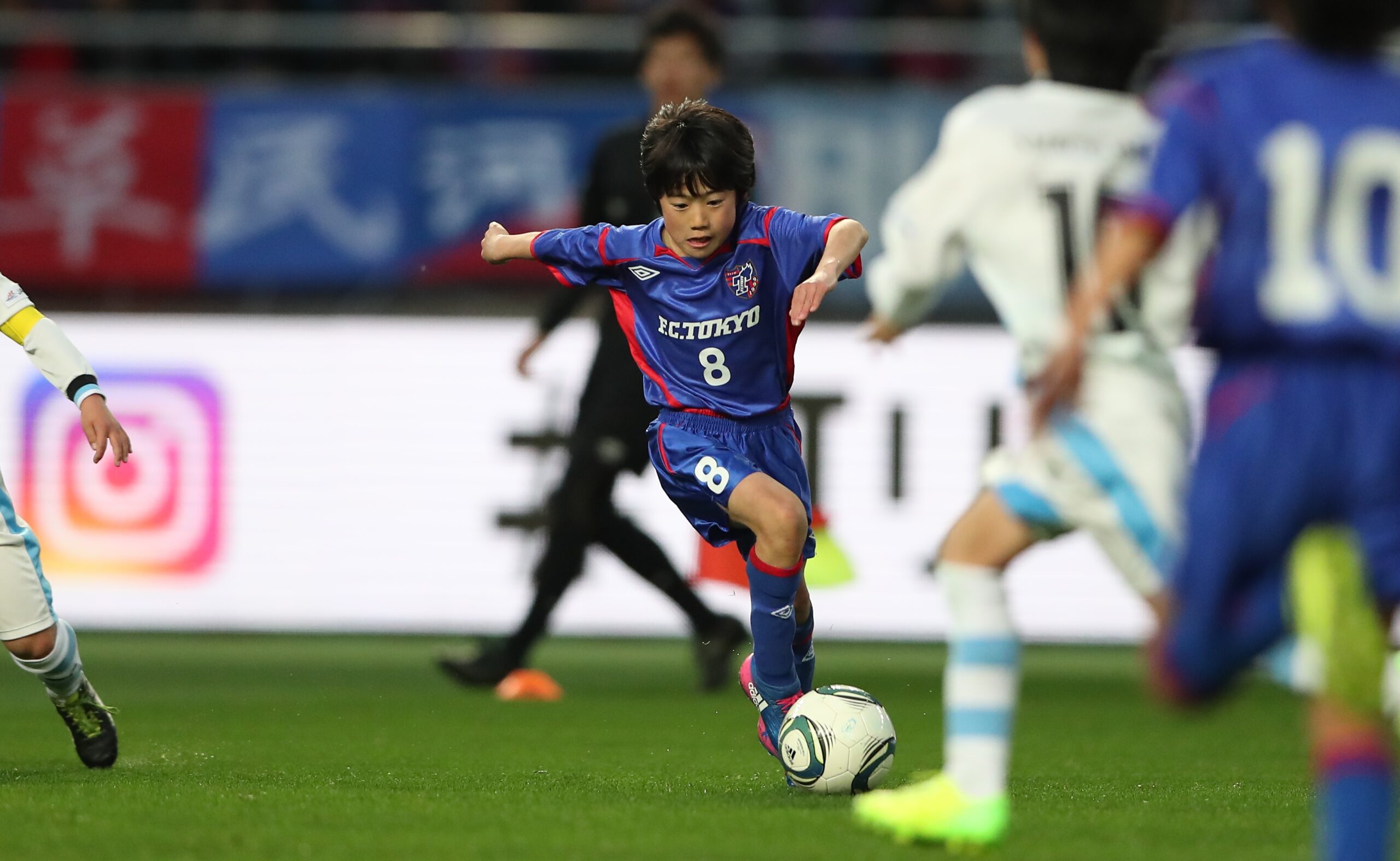 * Player Sato who participated in the Tamagawa “Ko” Clasico (during his time in the FC Tokyo Soccer School Advanced Class)
――Please tell us your impressions of each other's teams.
Ozeki: I feel that the team is well-equipped with players returning from overseas and players who have transferred in. Watching their soccer, they play aggressively, and there are highly skilled and technically proficient players, so I think those players pose a threat in the attacking phase. I believe it will be important who controls the ball in the midfield area.
Sato: There isn’t a major difference in impression compared to last season, but with Konno joining, the wingers are players who can do anything starting from dribbling challenges, making the attackers on both sides a huge threat. The striker also has great power and scoring ability, so I truly think the attacking strength of the three front players is incredible. The midfielders and defenders are also highly skilled, and overall, I get the impression that each individual is part of a very high-level team.
――What kind of play do you want to show in the Tamagawa Clasico?
Sato: Scoring goals is important, but if I focus too much on scoring, I think I won’t be able to show my strengths. So first, I want to bring out my strengths and think about what kind of play I can contribute to the team. I want to aggressively aim for shots and show plays that involve goals.
――How about you, Ozeki?
Ozeki: I also want to show plays that contribute to goals. This is part of the goals I have set for myself this season, so I want to demonstrate results such as goals and assists not only in this match but throughout the season. However, I especially want to show this in the Clasico. Above all, this is a match we must win, so I want to play in a way that contributes to victory.
*Excerpt from the joint press conference held on February 18