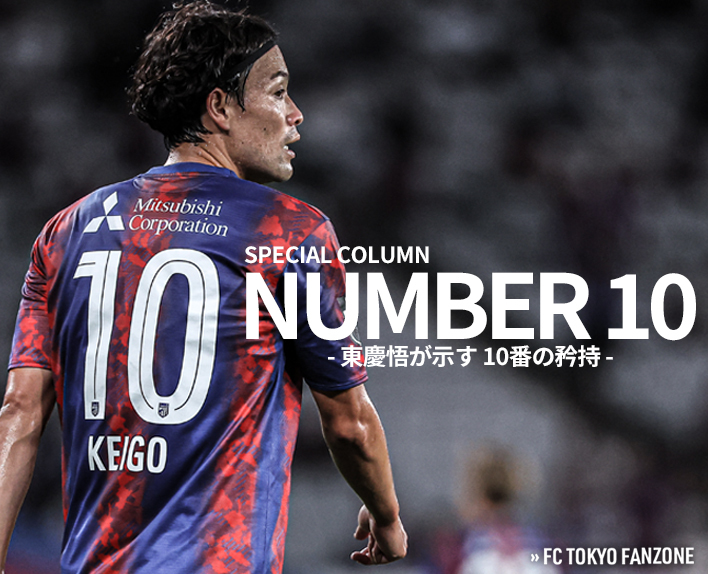


It was before the opening match five years ago. Keigo HIGASHI gave a wry smile and said, "I wasn’t really prepared to be asked two things all of a sudden." First, he was named the successor to the number 10 jersey by Yohei KAJIYAMA, who retired after the 2018 season, and then he was entrusted with the captain's armband by manager Kenta HASEGAWA. Bearing these two heavy responsibilities at once, he said, "Honestly, it’s heavy," and continued as follows.
"I have... a lot of anxieties (laughs). But I want to keep growing together with this team. I hope that becomes a positive kind of pressure. Two birds with one stone? I guess that would be nice."
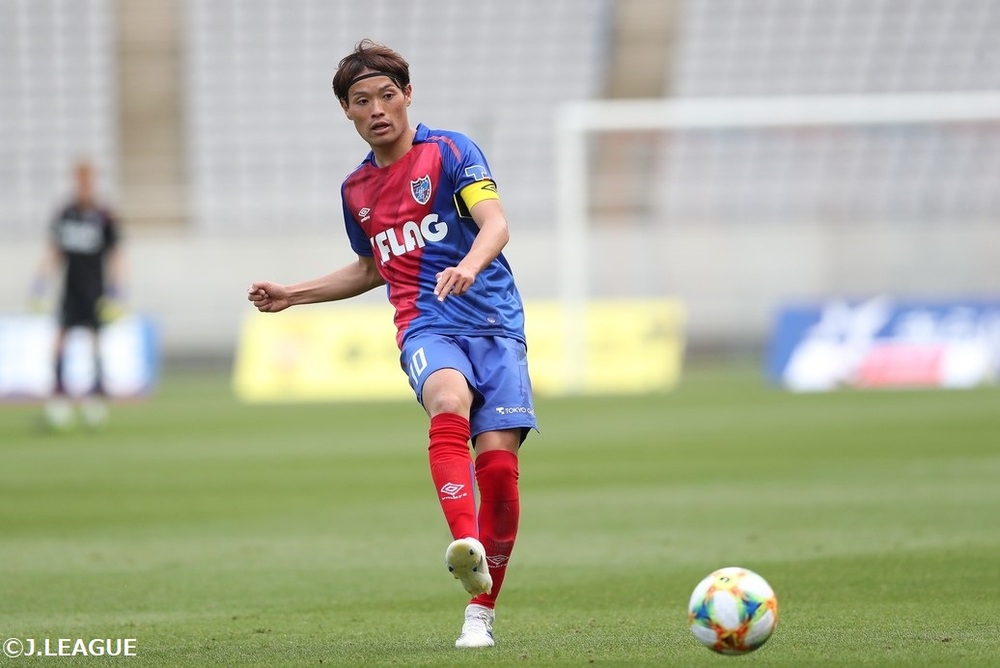
I have often been present when asked about the ideal number 10 or the image of a captain. Each time, I saw him wrinkle his brow, struggling to find an answer. But I also remember that he always prefaced his answers with, "I don't really know." Perhaps he was trying to find his own style through trial and error.
In the 2019 season, Tokyo came the closest to winning the league in the club's history, and in the following season, they achieved their third Levain Cup victory. Year after year, I have strongly thought, 'I want to make this team stronger. I want to win in Tokyo.' Looking back now, I believe that from that point on, Higashi grew to love soccer and Tokyo even more.
It was always like that.
"I want to win with everyone on this team." He kept saying that. I don't know the weight of love, but he always showed it through genuine actions for his teammates, not just words. That was the image of Keigo HIGASHI as the number 10 and captain that I know.
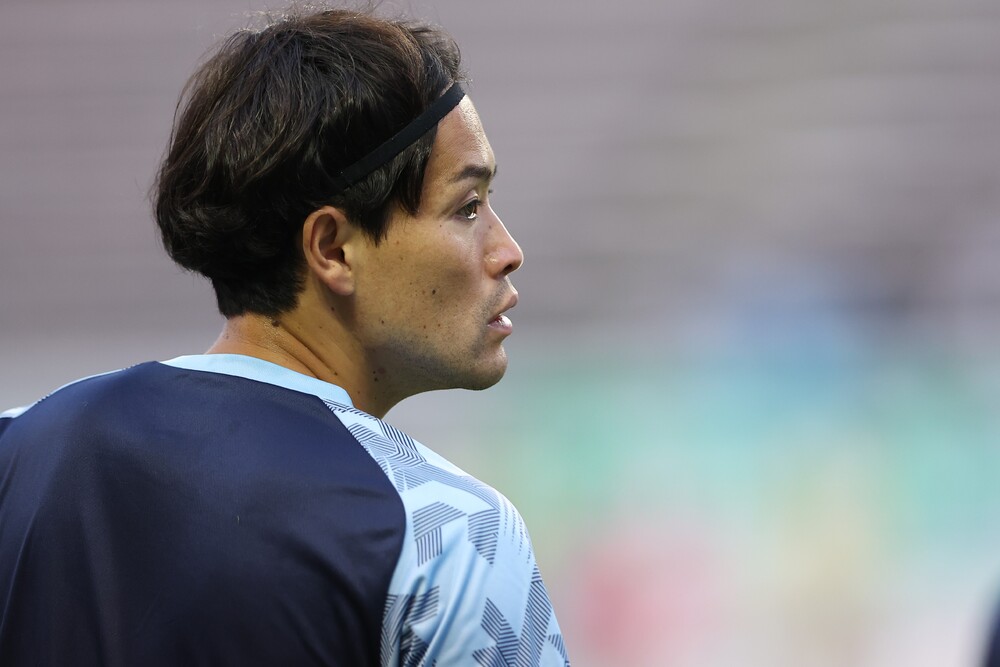
Since the 2022 season, when Higashi handed over the armband, he has often gone through difficult times. This season was no different. Although he made the bench from the opening match, he did not get the chance to start. After suffering a right thigh muscle strain following Sec. 5 of the Meiji Yasuda J1 League, he was away from the squad for about two months, and even when he returned, there was no place for him. He continued to miss out on matches from the bench. He may have felt somewhat sidelined at some point.
"Every season, I aimed for the league championship, so there were frustrations and things I thought about. That's why I wanted them to utilize me better. It's not about whether I get to play in the matches or not. I'm not the type to get discouraged if I can't play. I've gained experience in this world, and I felt there was more I could do. When the team wasn't doing well, I listened to what others had to say and conveyed what I could within my limits. However, being in a position where I am not playing has its limitations. You can't understand the feeling unless you go through the tough times together. It doesn't resonate with the others, and it inevitably feels like I'm speaking from the outside. Honestly, I found that to be difficult."
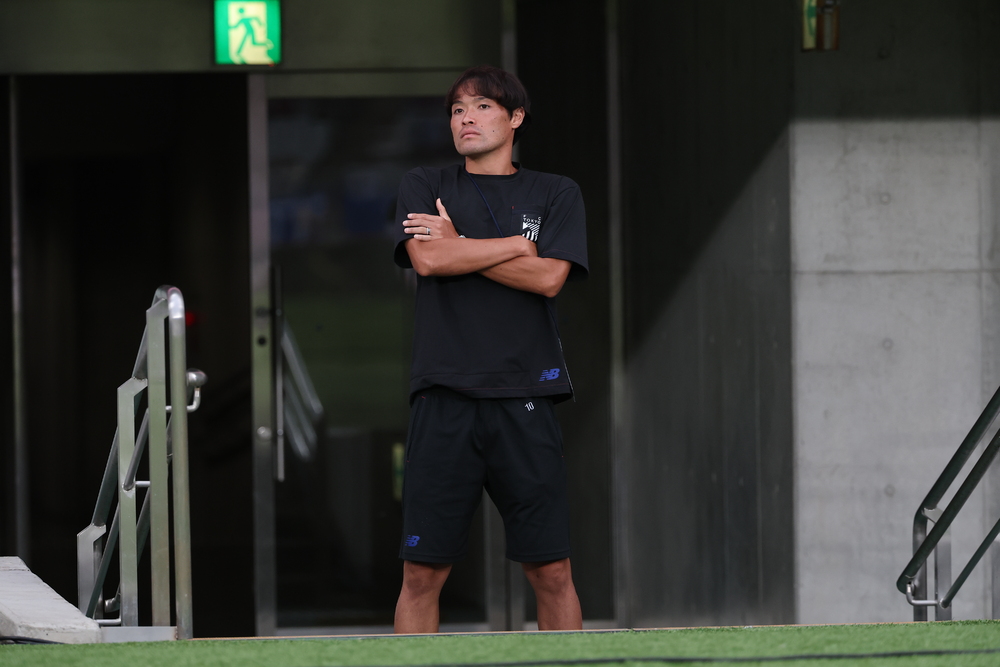
Still, he clenched his fists tightly and gritted his teeth. Even during the summer training sessions under the scorching sun, he did not slack off or complain, fighting on at the age of 34 among the younger players. If he could hold on here, another chance would come. "Someday... again someday," he continued to count the days and waited for his turn.
That period lasted about four months, and on July 20, he made the bench for Sec. 24 against Kashima Antlers.
However, after that, he only warmed the bench for two consecutive matches, and in the rival matches that followed against Kawasaki Frontale and Tokyo Verdy, he was once again pushed out of the squad. The tense thread could have snapped at any moment.
There was someone who watched over Higashi from nearby. After the break following the Kashima match, Takashi Okuhara, who started coaching the top team this season, reached out to him.
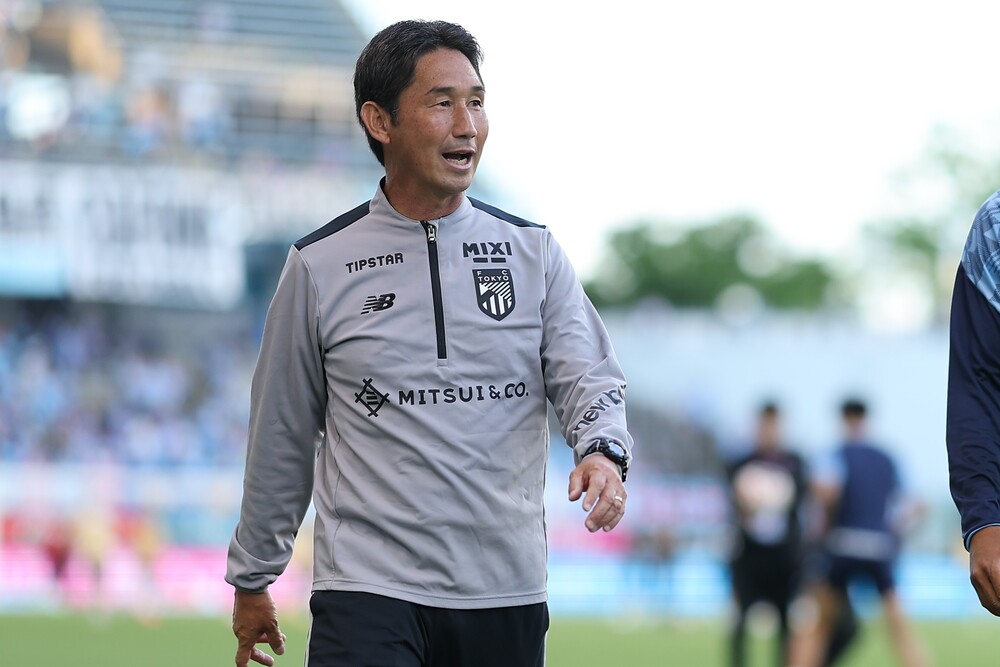
"If I’m not going to be valued any more no matter what I do... At that timing, Okuhara-san called me over and talked with me about various things. I really think that was a huge support."
Okuhara, who wore the blue and red number 10 for the first time during his playing days, said, "I have always thought that I can somewhat understand the pressure of not being able to play wearing the number 10 better than others. Everyone has expectations, and the frustration of people wondering why the number 10 isn't playing can be turned into a fighting spirit. I went through the same, and I have always believed that as long as there is a trigger, Keigo will definitely be fine."
In the later years of his career, Okuhara had a similar experience. He knew how much it could save him just to have someone next to him who understood him. Therefore, he quietly cared for Higashi, understanding that this was not just hindsight, but that game control and the ability to unite the players were required by the team. I have thought that we need Keigo HIGASHI to win, so I have been looking for an opportunity to help.
Okuhara talked and realized that Higashi's limit was near. "He was holding on, barely managing to stay afloat." So he immediately took action and asked coach Peter CKLAMOVSKI, "Keigo has worked so hard, how can he get to play in matches?" The coach replied, "I trust him, and I like him as a player." Okuhara then advised, "If that's the case, I think it will be tough unless he himself understands how to get playing time." He also conveyed the response to Higashi himself, who made his first appearance in about five months in Sec. 28 against Kyoto Sanga F.C. on August 24.
"Even when I thought I played well, for some reason it often didn’t come across. I wondered, what am I doing this for now? It’s tough. When I felt that way, Mr. Okuhara talked to me. That made me happy to know there was someone who understood me."
Next, when he came on as a substitute in the match against Sanfrecce Hiroshima, he dramatically changed what had been a one-sided game. The team rallied from a 3-goal deficit to within one goal, and Higashi reflected on the match saying, "I didn’t do anything special."
"I prepared to make an impact in the time I was given. I fought at key moments and, having observed from the outside, I thought it would be good if I could point out what was lacking and what could be done better. Until then, I had been rushing forward too much, so I switched the play to the opposite side and deliberately mixed in long balls. I had the image that vertical, fast attacks would come alive if done this way, and I was able to show that kind of play in the match."
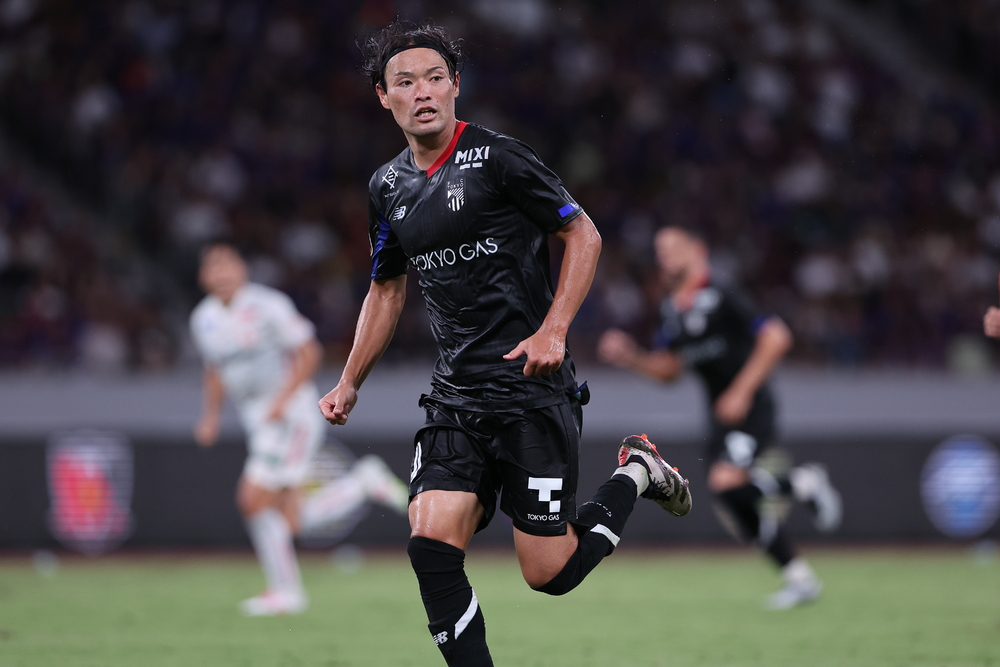
And then, the long-awaited moment arrived. On September 14, in Sec. 31 at the Japan National Stadium against Nagoya Grampus, he finally got his first start of the season. Before the match, Higashi said, "After not playing in so many games, just being able to play is enjoyable," revealing the struggles in his heart.
"My daughter had always asked me, 'Why can't I enter with you, Dad?' Sometimes those words really hit me."
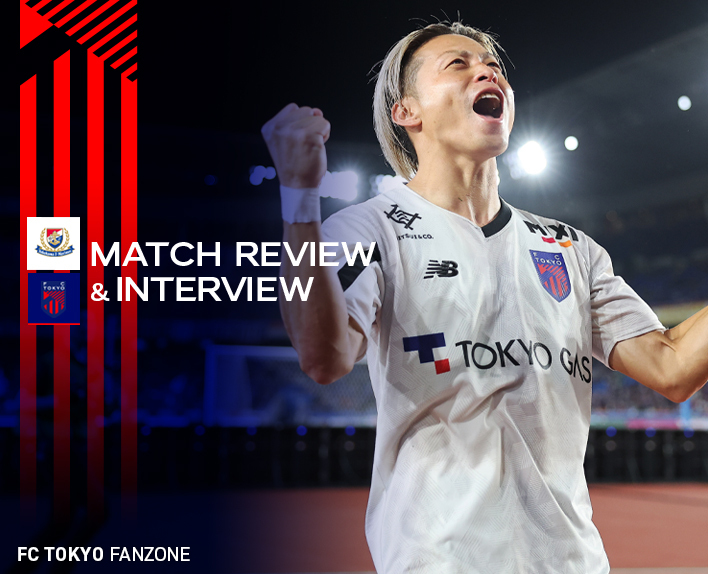
Wearing number 10, he came alive on the pitch, entering while holding his daughter's hand and carrying his son. It was the 13th minute of the first half. From his own half, Ryotaro ARAKI threaded a vertical pass to Teruhito NAKAGAWA up front, who boldly ran toward the goal in sync. Acting as a decoy to create space, he then pushed in the rebound from NAKAGAWA's shot with that momentum.
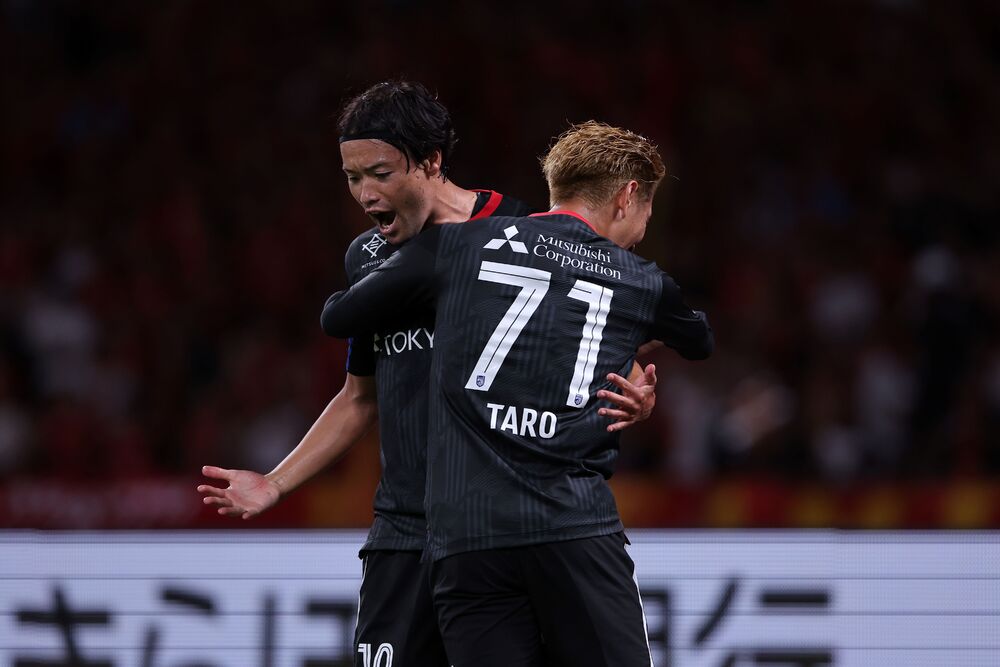
Starting with the opening goal that excited the large crowd gathered at the National, the team achieved a season-high victory with 4 goals. The previously subdued voices were lifted, and they laughed, saying, "The goal was a gift, and it was too good to be true," taking on a father's expression.
"I am most happy that I can enter with my children. However, I wanted to enjoy soccer. I haven't played in so many matches, so just being able to play on such a National stage makes me feel grateful. I want to show a cool side both as a player and as a father. It's not just about the goals, but I wanted the children to see me fighting hard on the pitch."
It was not just about scoring goals. Throughout, there was the pride of a player in his 16th professional season. He promptly adjusted his teammates' positions and continuously encouraged them with his voice. Playing fluidly as if he had grown wings, he kept showing the previously rigid surrounding players, "This is how you should do it. You can do it this way too." He brilliantly united the previously scattered team, opened the door to victory that had been closed for about two months, and brought joy to the blue and red after seven matches.
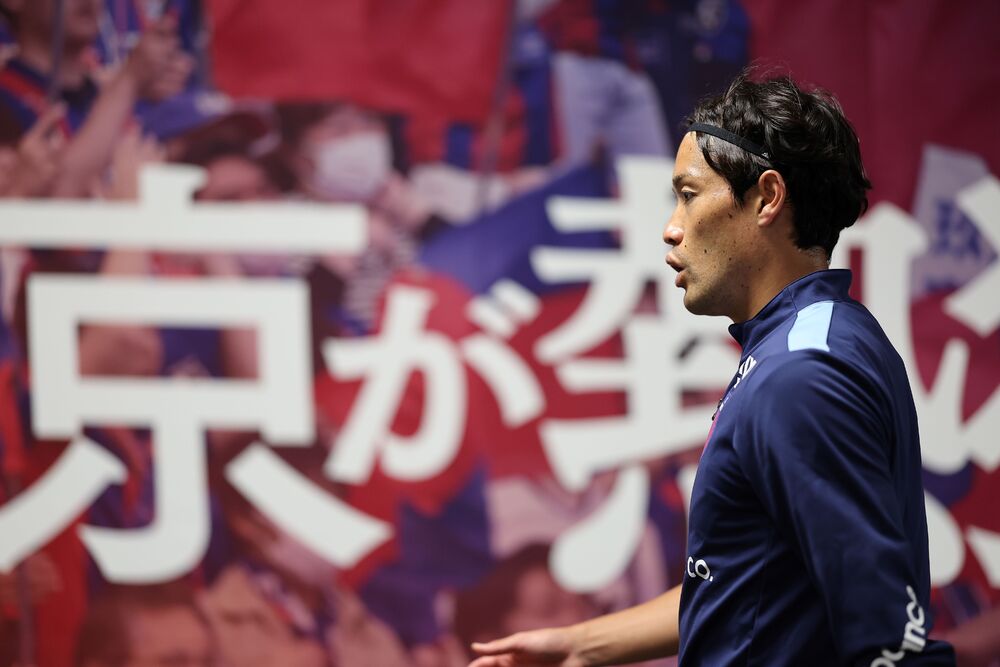
"I don't know everything, and I don't think I'm always right. It's important to do what is required, and it would be great if that goes well. But if it doesn't, we need to think and make judgments based on the situation. I've played in many matches in Tokyo, and I have to give back my experiences and share them. It's not just about words, but also about actions. However, I believe that can only be achieved by playing together. I think I've been able to show that a little."
Triggered by this victory, the team went on to achieve three consecutive wins and returned home to Ajinomoto Stadium. As if energized by Higashi, those around him also improved their performance with each match. Over the past few seasons, there have been no shortage of negative words and heavy criticism. Even so, number 10 himself proved that he is essential to the blue and red. He has always considered the fans and supporters as comrades. Therefore──.
"I don't particularly mind critical words. That's part of soccer, so I want people to say whatever they think. On the contrary, it feels weird to be praised when playing poorly, and it's good to have various opinions. I am not influenced by them even a millimeter. I am truly happy and grateful to those who support us. That said, I don't dwell on negative opinions."
Higashi said, "More importantly, we've been amazing lately," and shifted the conversation forward.
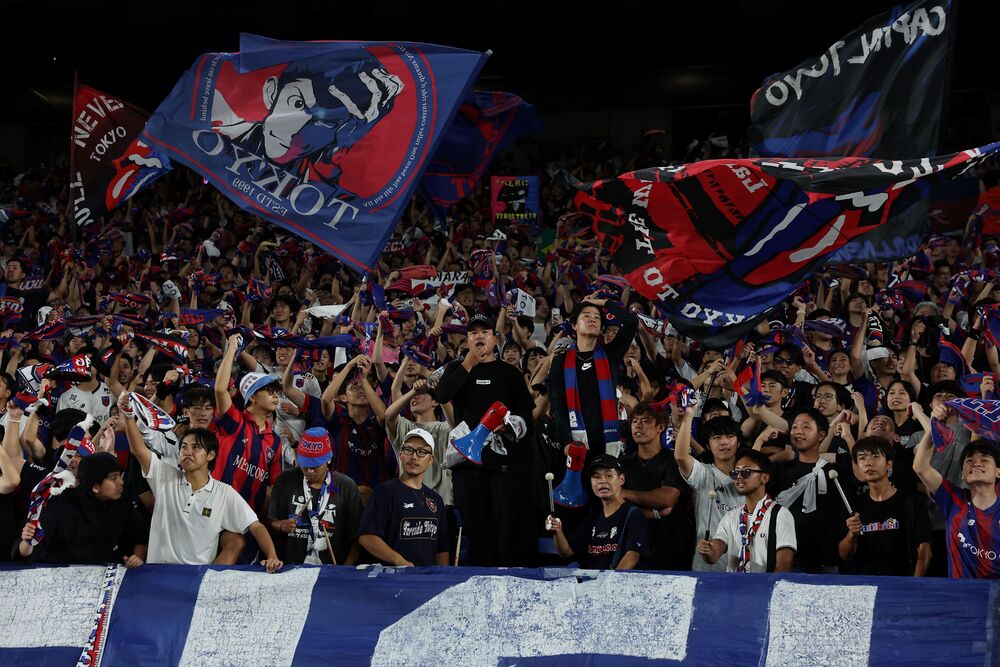
"The fans and supporters have also come together. Their enthusiasm is strong, and that energy reaches the players as well. It's reassuring that they provide that kind of support even at away games. Everyone is responding with more passionate play. It really feels like we're all fighting together, and that's definitely a good thing. Ultimately, we have to do this to become number one. To put it bluntly, if there's even a 1% chance of becoming number one, we have to fight for it. Each match exists for that purpose. There's nothing else. From here on, what we can express in the remaining matches is what matters. Regardless of the opponent or standings, we all have to approach every match in front of us as the most important."
The ideal number 10──. Higashi himself has yet to find the answer.
"I was asked quite a bit when I wore the number 10 during the London Olympics, but honestly, I don't really know. I purely think the number 10 is cool. It has a strong image of a technician or a fantasista, but I'm not just that; I fight and end up covered in mud after the match. However, recently I've come to think that a muddy number 10 is also cool. So, I think that kind of number 10 is good too. I'm not sure if I can live up to the ideals around me, but I intend to play with pride and honor."
No matter how much I felt like giving up, the pride stored in the number 10 on my back always gave me a little push of courage from behind. Okuhara, who supported that back, also narrowed his eyes and said, "I only have trust in Keigo now." The team probably grows stronger by connecting and bonding like those two.
"I thought Mr. Okuhara, who spoke to me during tough times, had a lot of manliness, and I truly believed he was someone I could trust. I don’t want to talk about anything but my true feelings. Because it’s meaningless to pretend or try to look cool. Not just in soccer, but that’s how life is."
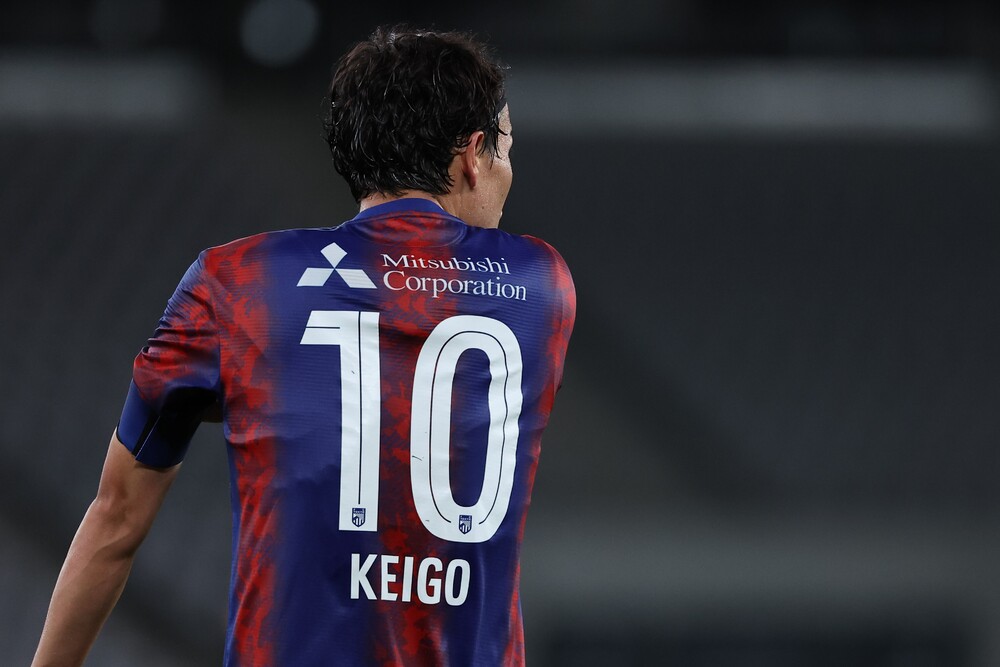
He has lived guided not by good or evil, nor by gain or loss, but by beauty and ugliness. Struggling, he pours out his honest feelings and pursues unseen landscapes. Over the past few seasons, a stronger sense of masculinity has begun to emanate from him.
After all, I can only think of Keigo HIGASHI; the number 10 in blue and red suits him best.
Text by Tadashi BABA (Freelance Writer)