

<Review of the previous match against Vissel Kobe>
The achievement of a major record in J.League history could have easily been overshadowed by the end of the first half.
The match against the top-ranked Vissel Kobe was an away game, yet it got off to a smooth start. It can be said that Tokyo was in better form at the beginning. Their intensity in duels did not fall short of the opponent’s, and their play strongly conveyed vertical momentum and a strong desire to score.
However, as mistakes continued during the build-up, the control of the match slipped to the opponent. Once they gained momentum, it was extremely difficult to stop the leading team's drive. After conceding the opening goal, consecutive goals were allowed in the closing stages of the first half as they tried to regroup. They returned to the locker room trailing by three goals.
How to regroup? That reasoning was more about passion than logic.
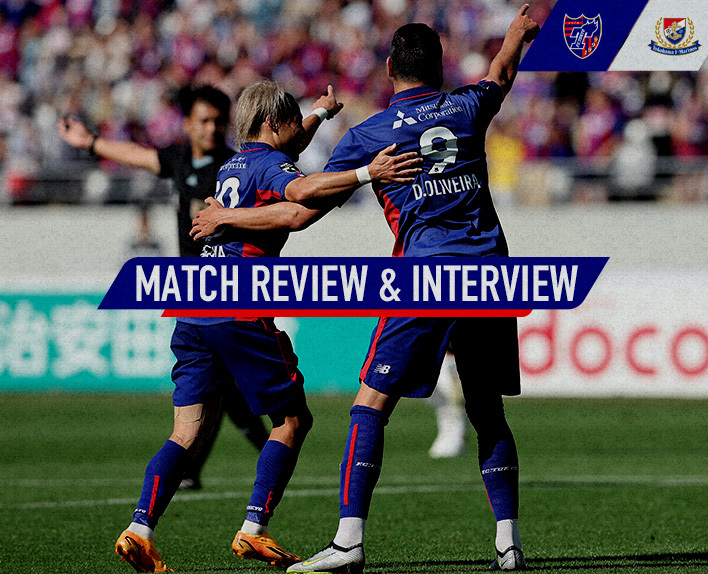
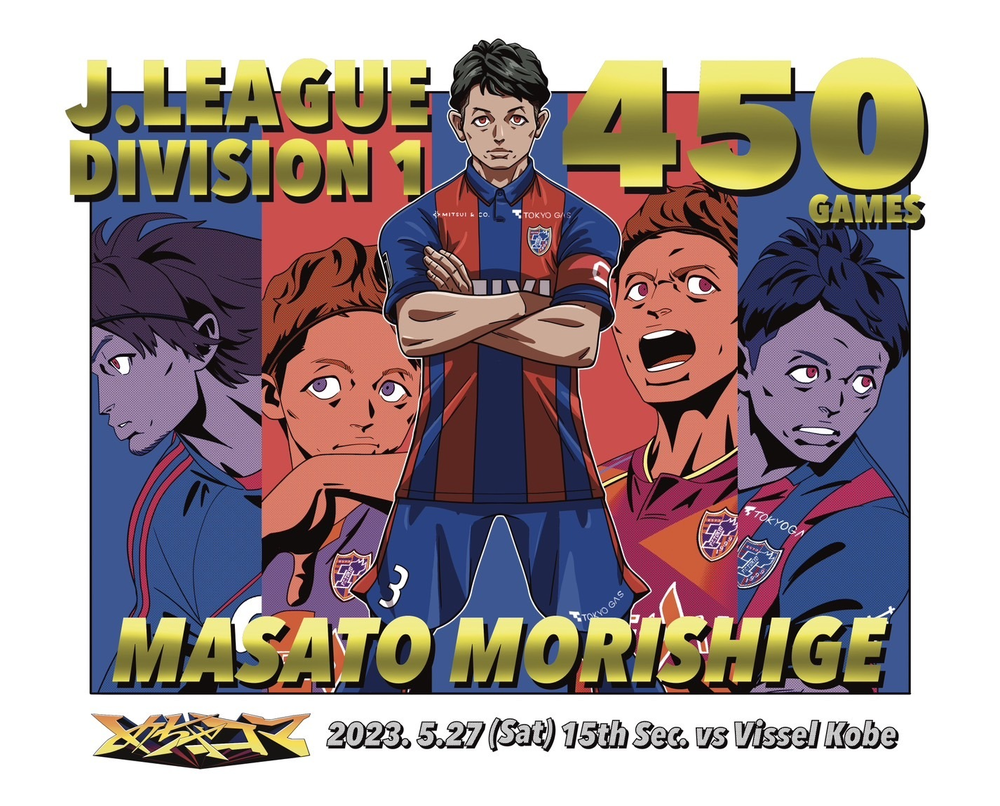
No matter how much you discuss tactics, nothing can change without the will to fight. The captain, who achieved the great milestone of 450 J.League appearances, embodied this through his play. He threw his body into challenges for the ball, repelled the opponent’s long balls, carried the ball forward himself to lift the team, then drew out the opponent before delivering a mid-range pass that once again instilled the team with the desire to attack the goal.
The two goals in the comeback were from penalty kicks, but without the strong will to catch up and overturn the score, they probably wouldn't have even had those opportunities.
"In the second half, we were able to show strength in the challenges for the ball, but I wonder why we couldn't do that from the first half,"
After the match, Masato MORISHIGE spoke about the current state of the team in a stern tone, but his passion had not faded. From the start to the final whistle, for the full 90 minutes, they continued to surpass their opponents in their passion for victory. Returning home for a crucial match against a top-ranked team, we hope the blue and red warriors will be inspired by the fire of passion ignited by their captain.
<Match Preview>
They lost 2-3 away to Vissel Kobe, suffering their first league defeat in three matches. After the game, Takuya AOKI, who came on as a substitute to tighten the midfield, pointed out the defensive issue of conceding consecutive goals during bad phases, saying, "It's not good to concede goals in a row during bad momentum. We have to at least limit it to one goal conceded." Reflecting on the second half when Tokyo showed determination and narrowed the gap to one goal with two penalty kicks, AOKI said, "Those goals were scored with spirit, but from now on, we want to score goals by our own will." The match against the league-leading Kobe was one that confronted them with areas for improvement in both offense and defense.
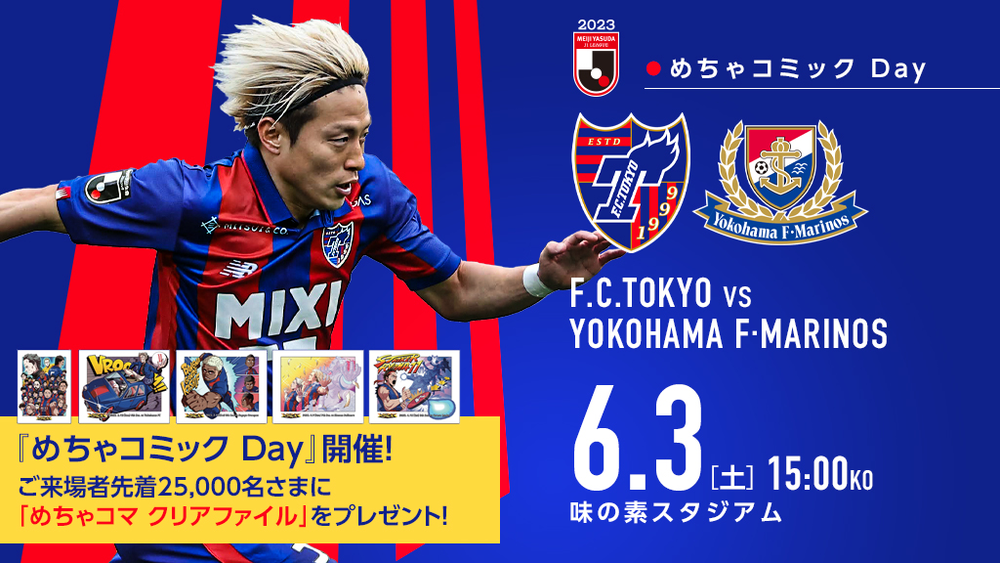
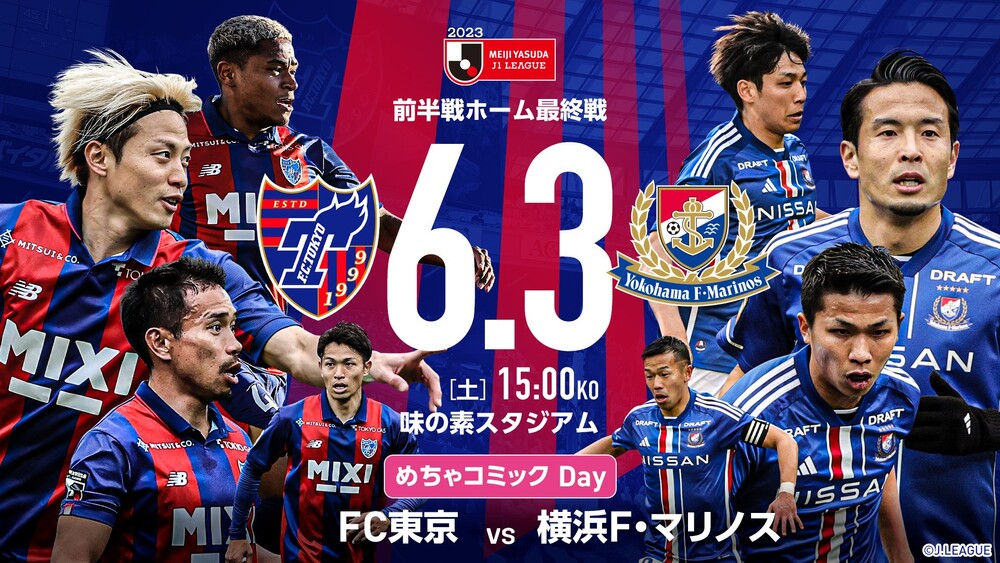
This week's match against Yokohama F.Marinos will likely be a test of how well we have addressed the issues from the Kobe game. Last season's champions continue to earn points this season with their attacking style of play and currently sit second in the league. It will be important for Tokyo to maintain focus and actively take control of the game.
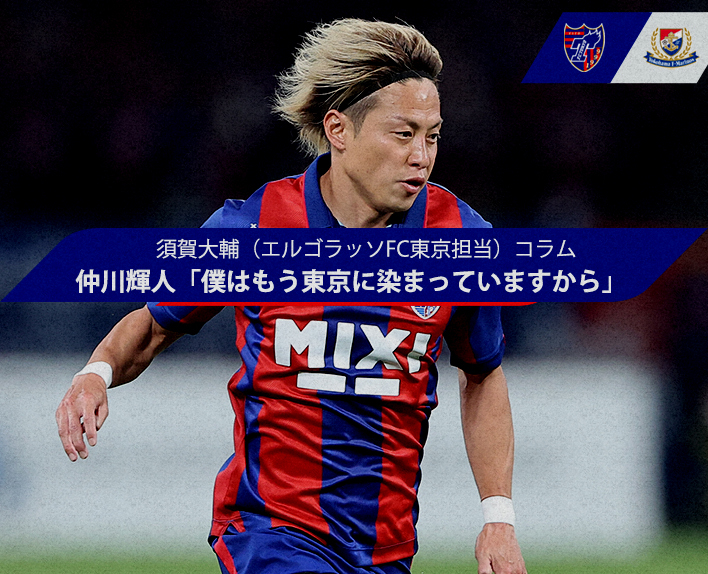
The player who holds strong feelings for this match is Teruhito NAKAGAWA, who played for Yokohama FM until last season. Ahead of facing his former club, NAKAGAWA declared, "Of course, we are going to win." He aims to engage in clean and intense play, taking on a direct challenge for Tokyo.
[Albert PUIG ORTONEDA Interview]
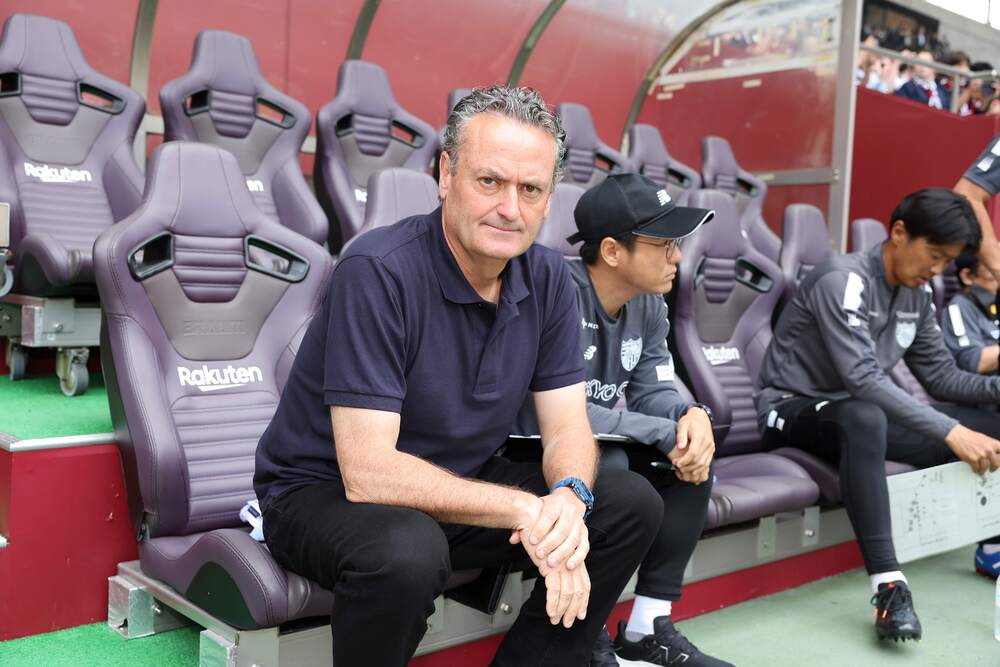
Q. Please share your enthusiasm for this week's match against Yokohama F.Marinos.
A. I believe that Yokohama FM is the highest quality club in the J1 League. They have many high-quality players, and they have been playing with the same style for four or five seasons, showing great continuity. Because of that, I know how difficult it is to compete against Yokohama FM. They play at a fast pace, gain superiority in the midfield, and launch attacks. They entrust the ball to their highly skilled wingers and aim for the goal. Against such an opponent, we must show a fighting spirit and express an attacking style of play that controls the ball. While moving the ball, we want to actively and boldly pursue goals. This week, I feel we have had very fulfilling and good training. I hope we can have a good match tomorrow. In a closely contested game, small events can greatly influence the flow of the match. Which team scores the first goal can significantly change the momentum in a single play.
Q. Regarding the ability to make adjustments during the match, what kind of guidance did Coach Albert PUIG ORTONEDA give to the players?
A. In the previous match against Vissel Kobe, conceding the first goal dealt us a significant psychological blow. In other words, we must not overthink the tactical aspects excessively. When we manage to score in a good way, confidence arises, and from there, even better play tends to emerge. Of course, the opposite pattern is also possible. Regarding the Kobe match, I believe such a negative flow occurred. Therefore, it is important to regain confidence and play. I believe that playing with confidence also leads to fewer mistakes. We must not fear making mistakes. Even if mistakes do happen, it is crucial to not collapse, to get back up, and to continue playing. There may be some connection to Japanese culture and values that cause a fear of mistakes.
Q, Are you saying that you told them to play calmly without fear of making mistakes?
A. I emphasize that each player should play with confidence. It is important for the players to have confidence in their own play, and mistakes in soccer are only a part of the game. Therefore, it is not about thinking that making mistakes is bad, but rather about what kind of actions and play they show after making a mistake that matters.
Q. It seems that the results are greatly influenced by whether the team scores the first goal or concedes it.
A. I think this applies to any club in the J1 League. However, we have a particularly strong impression of this tendency. Of course, we understand that teams that score the first goal in the J1 League have a high winning percentage, and as I mentioned earlier, scoring first has a positive impact on the team. From the perspective of a winner’s mentality, Teruhito NAKAGAWA has a good influence on the team because he is a player who has experienced winning the championship.
Q. What did you say to Kuryu MATSUKI and Naoki KUMATA after their national team duties?
A, I spoke with them briefly. I believe it is extremely difficult to carry the nation on your shoulders and fight as a representative. In that context, I told them that to achieve good results, they need to level up even further from here. Regarding tactics and individual techniques, I think there is not a significant difference compared to players from other countries, but I felt a gap in the mental aspect. This is something I have been continuously telling the players since I came to Japan. I believe that having a strong mentality enables one to play at a high level.
Q, What kind of reaction did you get to your words?
A, I sensed that they were not satisfied with the results this time. Experiences like this are very important. I hope they analyze, improve, and connect it to the next match or tournament.
[Player Interview]
Teruhito NAKAGAWA
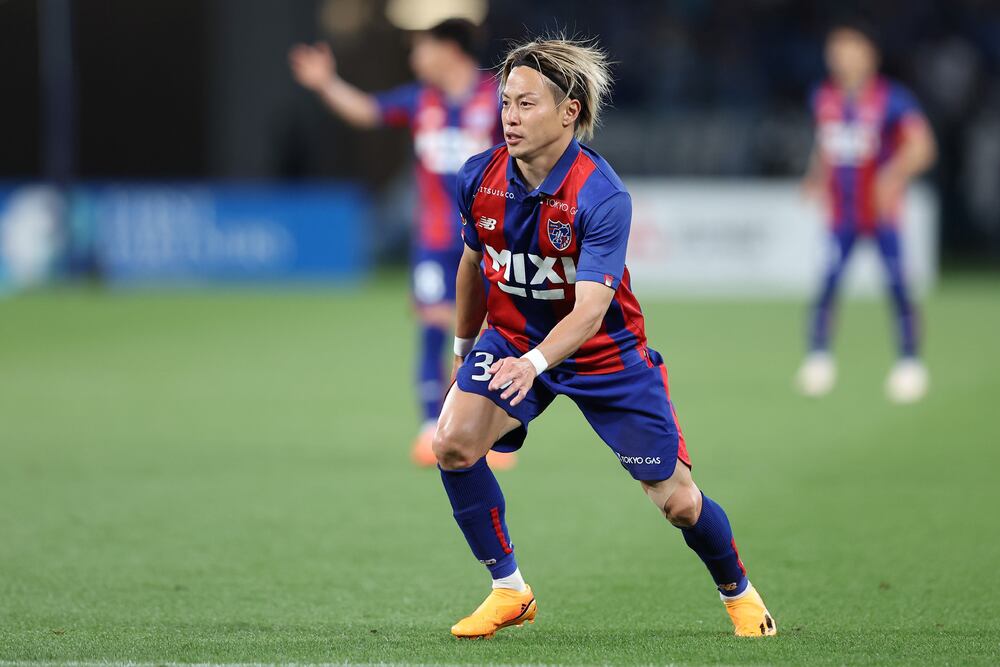
Q. This will be a match against my former club. How do you feel about it now?
A. Of course, we are going to aim for a win, and since we lost the previous match against Vissel Kobe, we absolutely want to avoid consecutive defeats. They are in good form, and personally, since it’s a match against my former club, I am really looking forward to it.
Q. You have not won in your last five matches against Yokohama F.Marinos. How do you plan to overcome them?
A. When I was with Yokohama FM, my impression of Tokyo was that they often played by skillfully breaking through with passes toward the goal, which made it difficult to play against them. I also felt their strength in one-on-one plays and ball contests. (Now, as a member of Tokyo facing Yokohama FM) it is important not to give the opponent any freedom and to continue playing with high intensity. If we allow the opponent to have any leeway in key moments, it will end up like the previous match against Kobe. I want to use the advantage of playing at home and approach the match with a stronger will than the opponent. It is obvious to anyone that Yokohama FM is a good team, and by reviewing past footage, I want to share with the entire team how we should strategize to overcome them.
Q. Yokohama FM’s Miyachi recently returned to the pitch in an official match. Please tell us about facing Miyachi again on the field after he overcame such a serious injury.
A. Including rehabilitation, I think he endured and overcame a very long period of about 300 days. I also saw him playing energetically in the Levain Cup match against Hokkaido Consadole Sapporo, and personally, I am happy about that. Even with such a serious injury, I thought, "He’s really fast," and since he is expected to come on as a substitute, he is one to watch out for. However, I am looking forward to facing Miyachi, who wears number 23, again on the field, and I want us to grow by pushing each other and achieve results. Besides Miyachi, Kida, who has played alongside me for a long time, and Matsubara, who is the same age, are also with Yokohama FM, so I want to show “clean and intense play.”
Q. Is the team’s progress going as Nakagawa imagined?
A. I think there is a significant difference between the good times and the bad times, and that gap is very noticeable. Especially during the bad times, when one thing doesn’t click, it affects the whole team, and I feel fragility and weakness. I believe that maintaining a high level of consistency with only gentle ups and downs is the ideal state, and this is something the entire team is aware of. I also think this is connected to our poor winning percentage in away games. Ultimately, it’s us players on the pitch, and if we don’t focus on ourselves rather than the opponent, the results will change and our weaknesses will show. I want to change that aspect and bring stability to the team.
Q. Is there a sense that the team will shift in a positive direction starting with the match against Yokohama FM?
A. First of all, I think it is very significant to be able to play against Yokohama FM at home. We want to demonstrate the strength that comes from the home advantage. Just because Yokohama FM is an offensively strong team, we should not just sit back; Tokyo’s strengths will not show unless we face the defending champions as challengers. I believe that not showing too much respect will be the key to victory. Ultimately, it comes down to how much mental superiority we can hold.
Q. It seems that the team’s sense of unity is growing day by day.
A. I think the team’s sense of unity is very strong, but there seems to be a bad habit of getting discouraged when conceding a goal. This impression is especially noticeable in away games. Even if we concede one goal, the team must show the attitude of going for two or three goals; otherwise, we cannot accumulate victories. The mental aspect after conceding the first goal greatly influences the outcome, and even if we do concede, if we don’t show the determination to score, it would be unfair to the fans and supporters who cheer for us. I believe we need to demonstrate a stronger commitment to winning.
Q. Lastly, please give a message to the fans and supporters.
A. Our record at Ajinomoto is very good, and all the players feel that it is precisely because of the fans' and supporters' cheers and backing that we can play in such a positive atmosphere. By creating an overall FC Tokyo mood, including the fans and supporters, of "going to defeat the Marinos," it switches on our sense of responsibility and determination to respond accordingly. I expect many supporters will come from Yokohama as well, so I will fight with enthusiasm while enjoying the match. I am also aiming to score, so let’s win and sing “Yuruneba” together.
<Koki TSUKAGAWA>
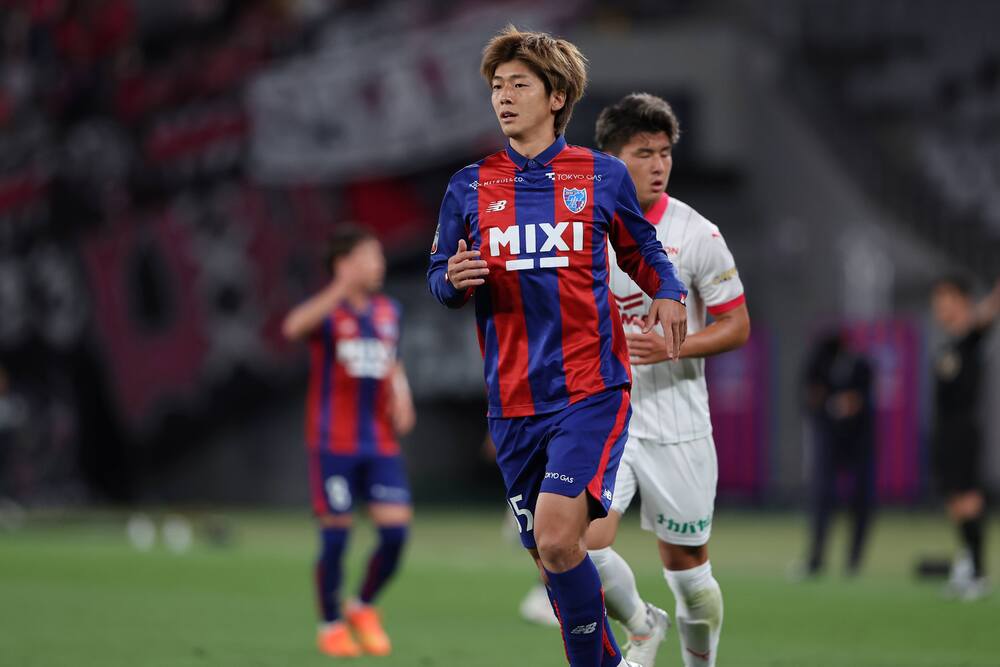
Q. After the match against Vissel Kobe, Coach Albert emphasized the 'fighting spirit.' What will you focus on heading into the match against Yokohama F.Marinos?
A. The coach told us to base our play on the intensity we showed in the recent match against Kawasaki Frontale, aiming to control the ball and secure victory. Since Yokohama FM is our opponent, it is expected that they will have possession of the ball for much of the time, but within that, we want to value the ball and aim for goals through quick attacks. This is something we have been working on in training this week, so I want to express it well as a team.
Q. Speaking of the home match against Yokohama FM, you scored two goals last season. Is there anything you personally keep in mind regarding your compatibility with this opponent?
A. In that match, I was able to score two goals from set pieces. If I get the chance to play in tomorrow's match, I want to strike the ball cleanly. I know that unless I continue to deliver results, I won't be able to take the field, so I intend to actively aim for goals.
Q. Please tell us if there is anything the team has shared regarding facing Yokohama FM.
A. To avoid giving the opponent freedom, I think there will be many plays where we aggressively press on the ball side. After the ball reaches the opponent’s lone forward, it is crucial to fully regain possession, effectively limit their passing lanes, and, against opponents who spread out during their attack, quickly transition to offense once we win the ball. If we give them too much time, they will be able to play facing forward, so responding with coordinated pressing back is also important. This is something we have been working on in training this week, so I want to focus on executing well-coordinated plays as a team.
Q. Would you say this match is a turning point for both the team and Tsukagawa personally to make a comeback from here?
A. I haven’t fully become the core of the team yet, and for me, each match right in front of me is very important. I have a strong desire to seize a good opportunity. Although I play in various positions, I believe that showing results is everything. I want to continue playing with a focus on achieving results. Playing in the positions given by the coach and delivering results connects to my value as a player, and I also think there is experience to be gained from playing in different positions. I believe that everything in soccer is connected, so I want to keep that in mind and do my best.