

Review>
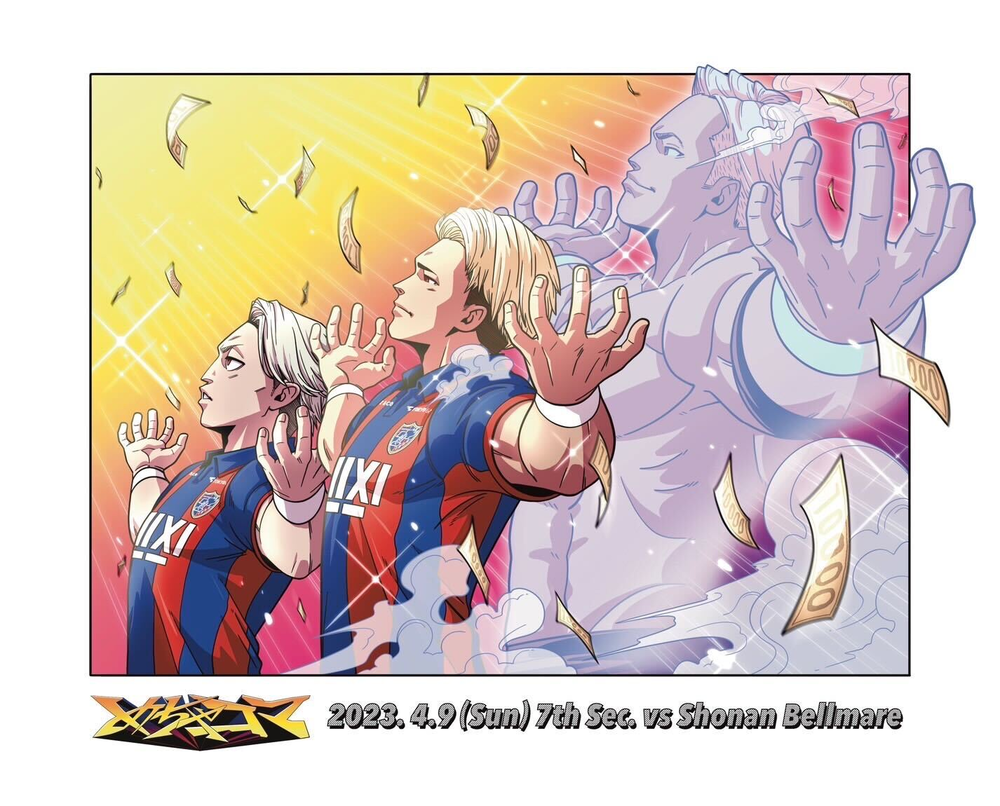
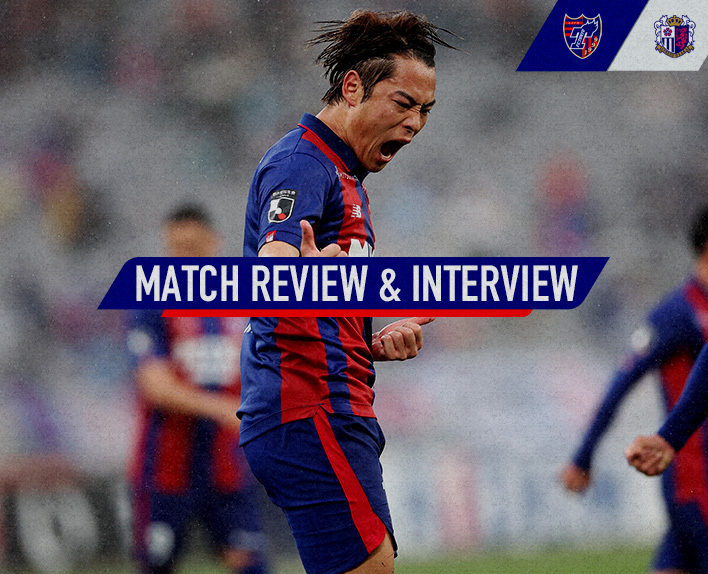
A match in which New Japan Pro-Wrestling's Kazuchika Okada appeared as a guest. The match was titled "Rain of Goals Falls at Ajista!!" based on Okada's catchphrase, and the one who scored the goal was the "Rainmaker of Tokyo".
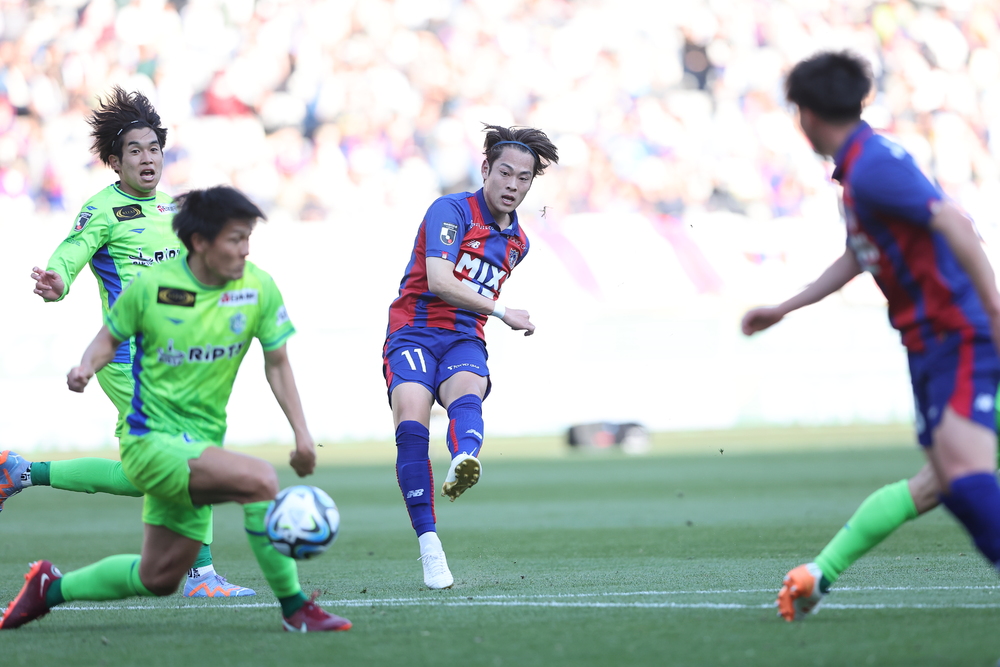
When player Teruhito NAKAGAWA dribbles and confuses the opponent, player Kuryu MATSUKI enters the penalty area at the perfect timing, receives the ball, and carries it to the finish. Even if the net is not shaken on the first attempt, NAKAGAWA, who passed the ball, is tightly packed near the goal, and the player who should win it, wins it.
Tokyo's opening goal was in an ideal form.
There were times when we struggled in the build-up, but we were able to create opportunities in a closely contested match by utilizing individual skills. Although we were initially trailing in the second half, Matsuki player initiated a set-piece chance and led to Henrique TREVISAN's equalizing goal.
Although we couldn't win, it was a big win with 2 goals and 1 important point to change the negative flow for the team that had 2 consecutive losses and no goals in official matches. Whether we can make use of this point will depend on tomorrow's match against Cerezo Osaka.
"The rainmaker of Tokyo" will also make it rain "goals" at Ajinomoto Stadium tomorrow.
<Match Preview>
In the previous match, we drew 2-2 with Shonan Bellmare, but players Hotaka Nakamura, Shuto Abe, and Ryoma Watanabe, who were sidelined due to injury, have returned to the lineup one after another. It is a positive sign for the future that they have showcased their individual strengths. Teruhito Nakagawa, who scored his second goal of the season, also spoke positively about the team's current situation, saying, "In the past few matches, there has been some inconsistency in our play due to changes in the lineup. With the return of injured players, we now have sufficient strength to compete. Each player has a high quality, so we want to polish our combination play and pose a threat to our opponents."
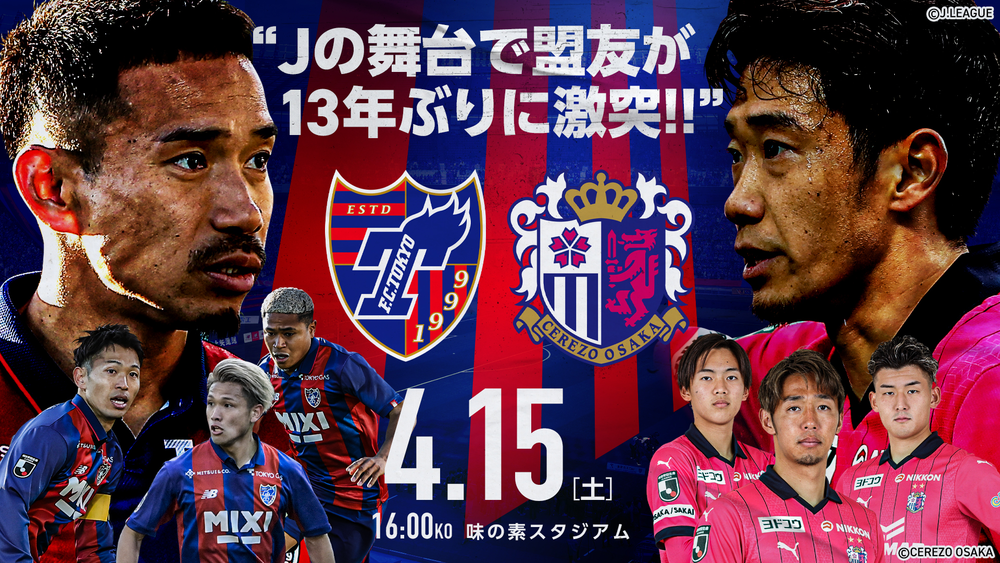
This round, we will face Cerezo Osaka at home. The focus will be on the "friendship showdown" between Shinji Kagawa, who returned to his former club C Osaka after 12 and a half years, and Yuto Nagatomo from Tokyo. Before the match, which will be the first since March 20, 2010 in the J-League, Nagatomo said, "I have been inspired and grown a lot thanks to Shinji. I want to show him that growth right in front of his eyes. However, Tokyo will be the one to win," as he burns with fighting spirit.
A showdown between two individuals who have long supported the Japanese soccer world will take place on the stage of J-League. Both are determined to win, but of course, Tokyo will emerge victorious.
Matchday program here
[Albert PUIG ORTONEDA Interview]
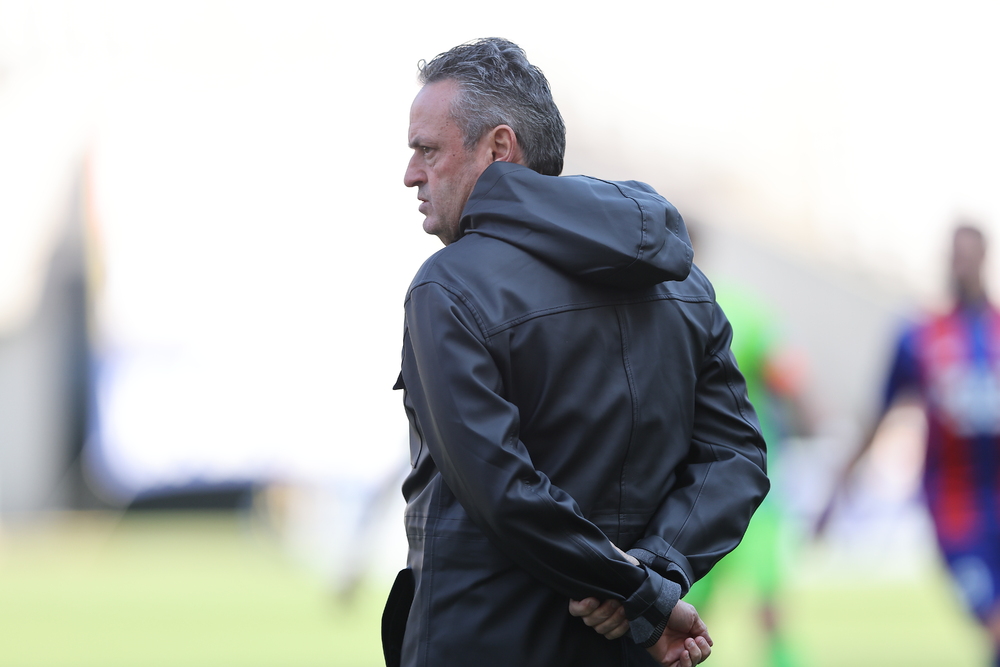
Q: Did the 4-2-3-1 formation work well in the previous match and do you plan to continue using this system in future games?
A: The difference between the 4-3-3 and 4-2-3-1 formations is very slight. There are some minor differences in defensive approach, but we intend to continue using them selectively depending on the situation.
Q, in the previous match against Shonan Bellmare, Shuto ABE player was functioning in the attacking midfield position.
A: I believe it is related to the fact that his technical skills have improved. Until last season, Abe often showed scenes where he would win the ball, but there were also moments when he lost possession. However, now he demonstrates calm play. If asked whether he is a typical attacking midfielder, there are parts where he is not. To me, a typical attacking midfielder is a player who touches the ball for a long time and plays between the lines for extended periods. Regarding Abe, I consider him the type of attacking midfielder who actively bursts into spaces. His movements to break behind the opponent or into open spaces also function as a weapon for the team. Considering the players’ characteristics, making runs behind the defense is effective. Also, if the attacking midfielder focuses too much on offense, there tends to be a division into two separate groups for attack and defense positions. We do not want players to be separated on the pitch; we seek coordination, and to avoid this division, the presence of a high-work-rate attacking midfielder like Abe is necessary.
Q: With the addition of members who have recovered from injuries, I think the coordination has also improved. Did you feel any progress in terms of teamwork during this week's practice?
A: I think it will take a little more time for the players who had been sidelined to regain their match sharpness. In the previous match against Shonan, Ryoma WATANABE, Abe, and Hotaka NAKAMURA returned, but these three players also need a bit more time. There are some other clubs with fewer injured players, but if we had been able to continue fighting with the same members as those clubs, our teamwork would have improved even further. The players who had been out of action have now returned at this timing. We expect them to regain their match rhythm in good form. At the same time, young players are also showing great energy. Of course, we also have high hopes for their growth.
Q, I think that playing between the lines is also important in order to make the most of talented wing players.
A, I believe there are broadly two types of wing players. One type is the speed-based winger who needs space. The other is a winger who can break through situations even in tight spaces. I have the impression that players like the latter type have not been present in this club until now. Kota TAWARATSUMIDA and Ryoma WATANABE fit this type. To make the most of their characteristics, we need to control the midfield well and extend the time we press the opponent. Kota TAWARATSUMIDA is a winger who can break through situations by varying his tempo in tight areas, and the team is required to play in a way that utilizes players like him. The team is progressing step by step, but unfortunately, the long-term absence of midfield players from the frontline has caused the growth pace to somewhat stagnate. In the world of soccer, memory is recognized as something that lasts only a short period. While many people only remember recent events, the team has been growing continuously since last season. I think there was a significant difference compared to last season’s match, such as the opening game against the Urawa Reds. Injuries are unavoidable. From here, we want to reset firmly and promote further growth.
Q: Please tell us what will be brought about by the return of players Watanabe and Abe.
A: Of course, their return is wonderful news, but they also need time to regain their match sharpness. This is not about physical condition, but rather about ball touches expressed on the official match pitch and the ability to read the flow of the game. I believe they are currently in that process.
Q: Have you ever had a match day that coincided with your birthday in your past experiences?
A, I don't think it has happened before, so this is probably the first time. Rather than celebrating my own birthday, I want to celebrate my daughter, who shares the same birthday. She was born on the same day and at the same time as I was.
Q, what kind of game do you expect the Cerezo Osaka match to be tomorrow?
A, Cerezo Osaka has players with technique and attacking power. Especially when facing teams that defend by pulling back, their abilities stand out remarkably. Against such opponents, we must effectively utilize our own strengths. I want the midfield players to especially demonstrate high-intensity play and a sense of speed. If we do not approach the game with a strong awareness of attacking the opponent’s goal, Cerezo Osaka’s weapons will shine brightly, making the match situation difficult. We want to make good use of Tokyo’s players’ characteristics and express the points I mentioned earlier.
[Player Interview]
<Yuto NAGATOMO>
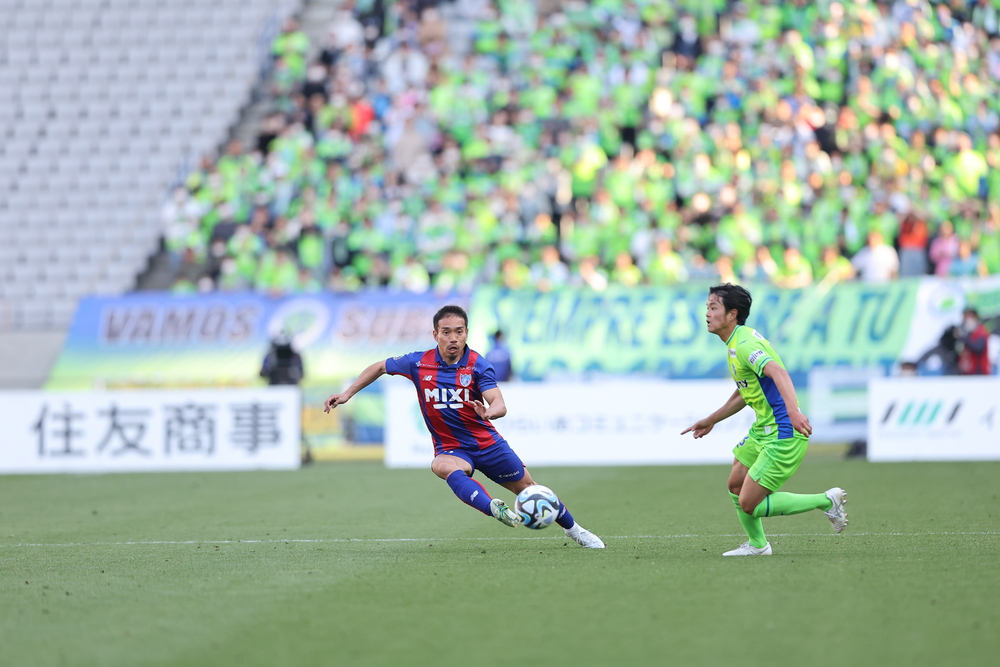
Q, we are also looking forward to a match against Shinji KAGAWA, who plays for Cerezo Osaka, this weekend. It will be the first time in 13 years that we will face each other in the J-League. Please tell us how you feel right now.
A, a recent memorable match against Kagawa was a friendly held in the United States, when we were playing for Manchester United and Inter respectively. Personally, it feels almost like my first time competing on a J-League pitch. Kagawa and I were selected for the Japan national team around the same time and have maintained a friendly relationship. Throughout this journey, I have been greatly inspired by Kagawa and have grown because of it. I want to show him that growth on the field and, of course, I want to win.
Q: What kind of presence is Kagawa for Nagatomo?
A, he is a close friend, a comrade-in-arms, someone with whom I have shared both hardships and joys.
Q, how many years has it been since we last met?
A, I went to see Kagawa after the Qatar World Cup ended.
<Yasuki KIMOTO>
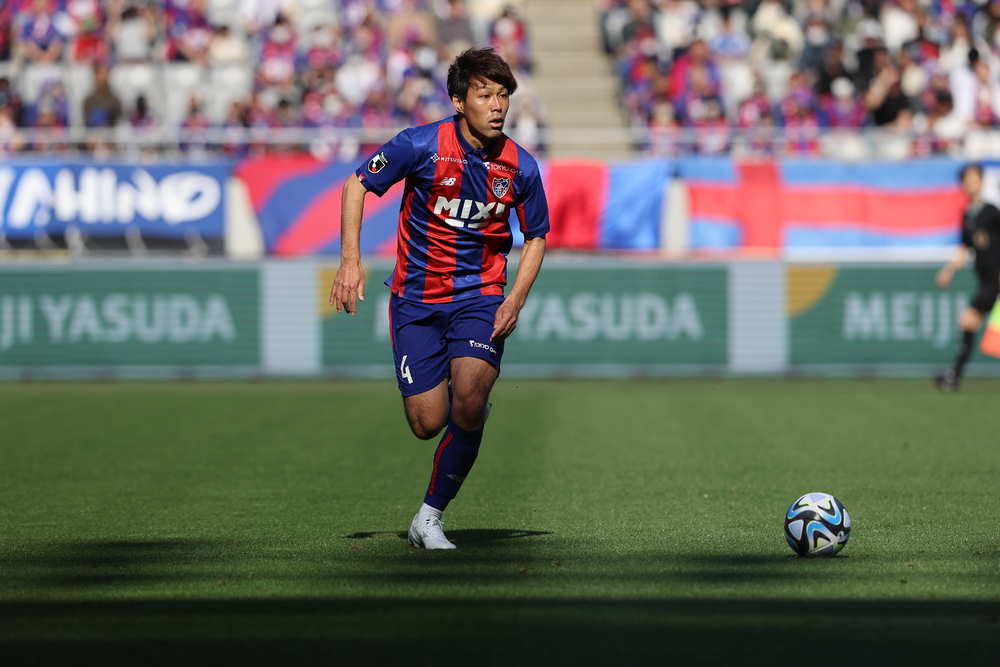
Q, the match against Shonan Bellmare in Sec. 7 ended in a 2-2 draw, and it seemed like a difficult game with many challenging moments. How do you reflect on it?
A, throughout both halves, Shonan honestly outperformed us in terms of what they wanted to do as a team and also in preventing us from doing what we wanted. In that sense, it felt like we managed to catch up and secure 1 point, but since it was a home game and we were aiming for 3 points, there is a feeling of frustration.
Q, Coach Albert PUIG ORTONEDA mentioned that there were challenges in the build-up after the game.
A, not only in the match against Shonan but also this year, there have been difficulties in building up play from the back, and I feel responsible for that. While individual skills are certainly a factor, we also need to make adjustments in terms of team spacing, support, and positioning. Since building up play depends more on the team's positioning than on individuals, I believe we have been able to make corrections in these areas during this week's training, and we have had discussions as well, so I hope things will gradually improve.
Q, certainly, building up is more important than individual skills, it is important to have a unified team consciousness.
A, this also applies to the match against Gamba Osaka in the Levain Cup, and I don't think our quality is low. Considering that Gamba Osaka and Shonan are able to build up well, I believe it is important not only as individuals but also as a team to work effectively together.
Q, in that sense, there may also be an impact of having many injured players in the early stages of the season and not being able to fix the lineup.
A, I think there is at least some impact, but we cannot use that as an excuse, and I believe we have a player roster deep enough to compensate for it. The return of injured players has been a positive, but I do not want to use that as an excuse.
Q, isn't it also a positive aspect that young players are getting a chance as substitutes for injured players?
A, the success of young players also raises the overall level of the team, and since they are the players who will carry Tokyo’s future, the achievements of these young players serve as motivation for us, the veteran players in the middle and above. We believe that one of our roles is to create an environment where these young players can play freely and comfortably, so we need to work on that aspect simultaneously as well.
Q, as an individual player, Kimoto has started in every league match so far. As you enter your second season in Tokyo, are there any aspects that have changed in your awareness?
A, I have more awareness of leading the team than last season. I think I have been able to express the part of leading the team by speaking up firmly, but I feel that I have not been able to show my strengths in terms of performance, and I think I am struggling a bit this season.
Q, what part do you want to further appeal?
A, while I have the role of more firmly establishing the rhythm in the build-up phase, the fact that I haven’t been able to create rhythm from the back is showing in the results, and I have the feeling that this is giving momentum to the opponent. I also feel that we are allowing the opponent to create an atmosphere of “we can do this.” In that sense, if we don’t play and build up in a way that troubles the opponent more, I think it will become tougher going forward.
Q, is there a special feeling when playing against Cerezo Osaka, the former team where you spent 5 seasons?
A, yes. It has been three years since I left Cerezo Osaka, but there is a special feeling when we face them. I am looking forward to it.
Q, we haven't lost at home yet this season, but please give us your enthusiasm for the fans and supporters.
A, the fact that we haven't lost at home is definitely supported by the cheers and atmosphere created by the fans and supporters. I believe that the reason we were able to catch up even in a tough situation in the previous match was because of the home atmosphere. For the Cerezo match as well, I hope we can create a great atmosphere, and I want to deliver a victory without fail, so please keep supporting us.
<Ryoma WATANABE>
Q: Please review the Shonan Bellmare game from last round, when you returned from injury.
A, I was able to play honestly and enjoyably. It had been a long time since I experienced a period of about a month when I couldn’t do anything. I was able to play for 45 minutes feeling grateful for and enjoying being able to play soccer. Regarding the second goal conceded, the timing of losing the ball due to a minor mistake was bad. I think it’s necessary to thoroughly work on that from now on.
Q, in the previous match against Shonan, you played for 45 minutes shortly after returning.
A, I played for longer than originally planned. However, once I’m on the pitch, I just have to give it my all, and if asked, "Can you go?" the answer is yes. I stepped onto the pitch with determination.
Q, how did the team look from the outside?
A, when the team is doing well, the ball moves around without much thought, goals are scored, and I believe we can win. However, I felt that our ability to make corrections when even one problem arises is still insufficient. After my return, I once again realized that I need to think more and play soccer more thoughtfully.
Q: What aspects of the game against Cerezo Osaka in the next match will you focus on?
A, in the match against Shonan, I was also aiming to score. There was a moment when that shot could have gone in. Even as a substitute, if I can pursue it thoroughly, I believe it will lead to goals. This season, I have set a goal to improve my scoring ability, so I will continue to work hard.
Q, what kind of play do you want to show as a team?
A, since the players who had been absent have been returning one after another, I believe there are more things we can do now. Of course, we must win. If we are particular about even the small details such as communication during practice without compromising, I believe the results will follow.
Q: Do you have any specific approaches to change for the better from here?
A: What I can first do myself is to demonstrate good spatial awareness and play without losing possession of the ball. If I don’t lose the ball easily, it will create smooth play and increase opportunities. Since Coach Albert PUIG ORTONEDA also demands that we play without losing the ball easily, I want to play with that awareness in mind.
Q: I don't think we were able to make the start we envisioned, but what will be important from here?
A, I think it will be important to demonstrate through goals and assists.
Q: In a situation where the number of goals and shots is also struggling to increase, how do you want to help the team?
A: I think it is important to finish with a shot. Before tactics, there are more things we can do, and I want to thoroughly pursue the fundamental aspects of soccer.