

<Review of the previous match against Kyoto>
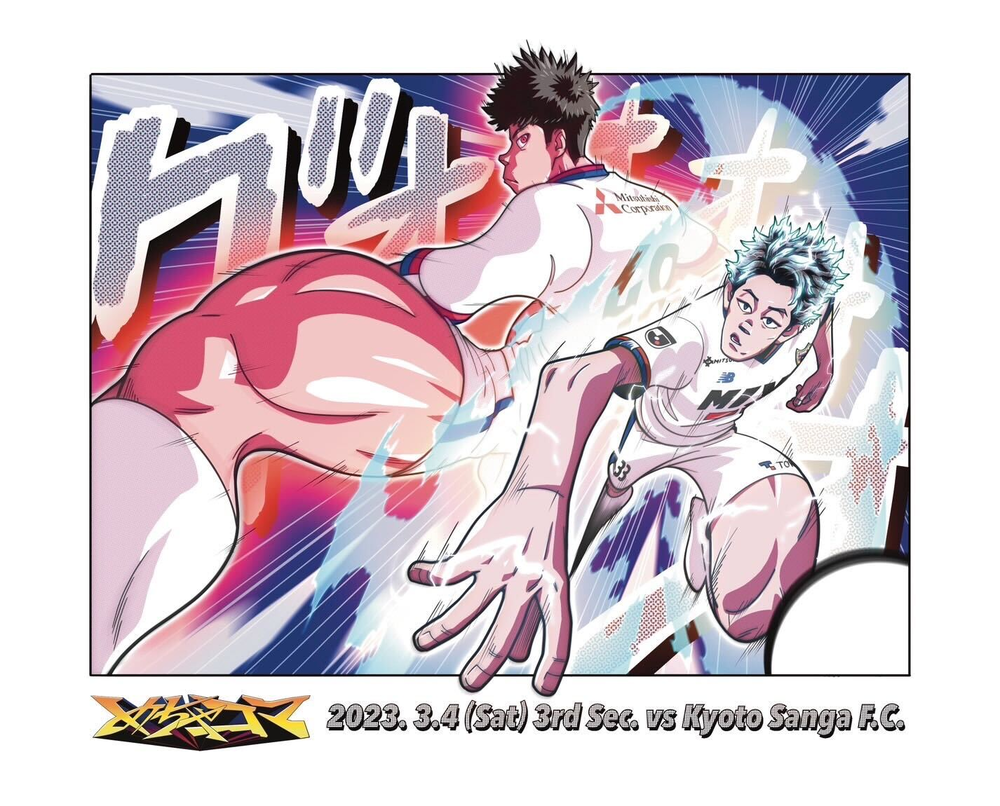
Even in the midst of a tough battle, there were moments when a bright light shone on Tokyo's future.
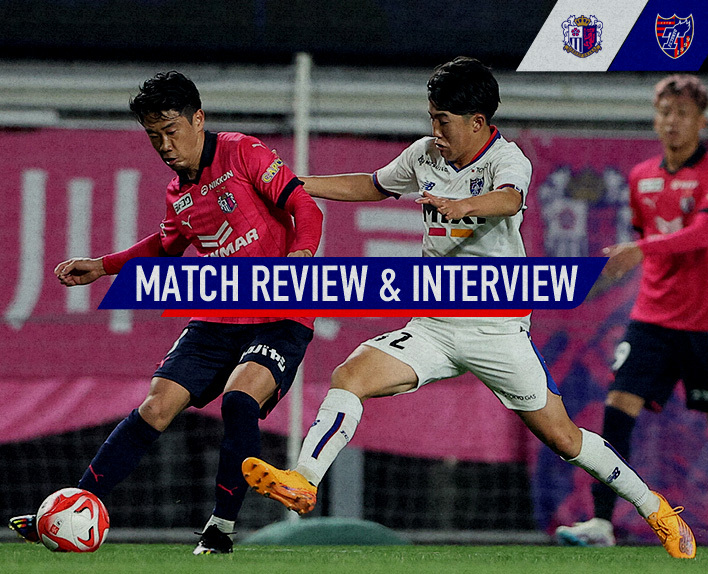
The second match of the away two-game series against Kyoto Sanga F.C. was a tough battle from the beginning. In the 5th minute of the first half, the opponent already scored a goal, but we escaped the difficulty due to a foul decision. We ended the first half in a situation where we were pushed by the opponent's momentum, but managed to withstand their good opportunities with a big save from Jakub SLOWIK.
As the second half began, the game became more open with both teams increasing their counterattacks. However, while Kyoto steadily connected their finishes, Tokyo struggled to create effective chances. This was a complete turnaround from the previous match against Kashiwa Reysol, where Tokyo launched a fierce attack in the second half and struggled to break through the opponent's defense.
The players who revitalized such a team were Kota TAWARATSUMIDA, who was substituted in the 12th minute of the second half, and Yuta ARAI, who was substituted in the 33rd minute of the second half.
Tawaratsumida used his breakthrough ability to cut deep into the opponent's territory and create scenes where he supplied the final pass in front of the goal. Arai also took some time to get into rhythm and adjust to the intensity of the game, but in the end, he was able to deliver a sharp ball into the goal area from a cut-in, creating a chance.
Unable to break open the goal as a result, it was a tough match where we conceded an additional goal in injury time. The frustration of not being able to earn points weighs heavily on our hearts, but the young power to revive the team and turn the game around is the only remaining hope for the future.
A rookie standing on both wings brings joy to Tokyo. That day should not be far away.
<Preview>
The league opening match resulted in a 2-0 victory against Urawa Reds, but there have been no wins in the following three official matches. Achieving "stable play," which coach Albert has set as one of the goals for this season, still presents challenges.
On the other hand, during that time, many players including Ryunosuke SATO, a registered player of FC Tokyo U-18, made their first appearance of the season and took their first step forward.
After losing to Kyoto Sanga F.C. in the previous match, player Tsubasa Terayama punched the pitch. He expressed his feelings at that moment, saying, "Even during the game, the fans and supporters were shouting and cheering for us, so I felt sorry."
When Leon NOZAWA lost 0-1 to Cerezo Osaka in the following Levain Cup match, he covered his face with his uniform. After the game, he expressed his frustration, saying, "I had been building up my skills through voluntary training after practice. So, it's disappointing and frustrating that it didn't lead to results."
Tokyo, which is showing a new face with the rise of young players, will host Yokohama FC this round. The playmaker of Yokohama FC, Hirotaka Mita, grew up in Tokyo's academy and loved the blue and red more than anyone else. Facing an opponent who knows the heat of Ajinomoto Stadium and the strength of Tokyo firsthand, we cannot afford to have a weak fight. From here on, the only thing required is victory in order to ride the updraft.
Matchday program is here
[Albert PUIG ORTONEDA Interview]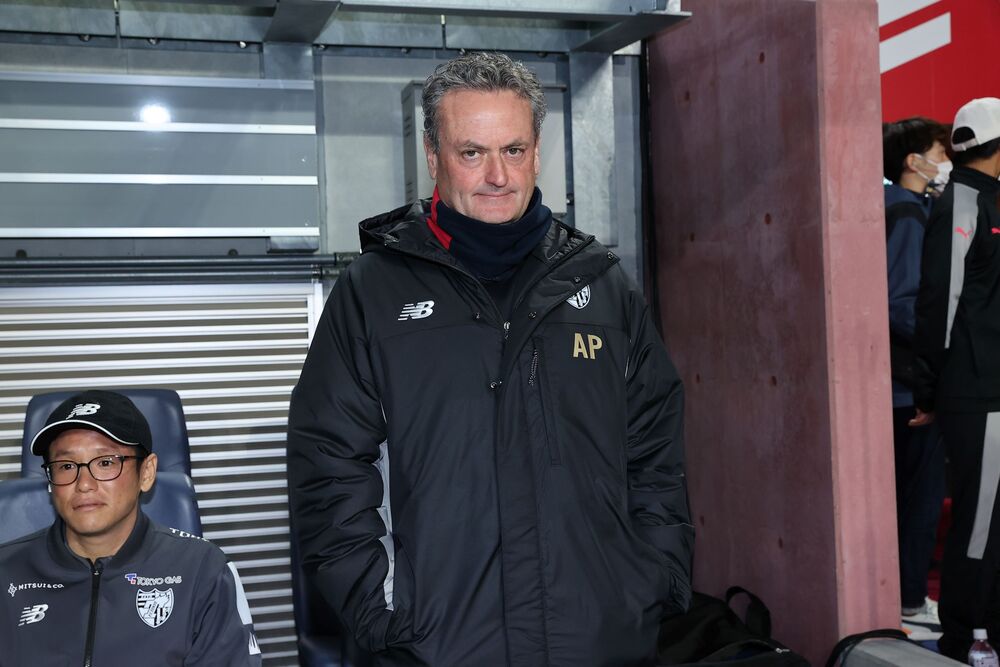
Q: We lost to Cerezo Osaka in the Levain Cup, but I think the performance was good. How do you want to connect it to tomorrow's Yokohama FC match?
A: The positive point from the Cerezo match was that we created about eight clear chances. Although our ball possession rate was significantly lower, the areas where the opponent held the ball were not dangerous zones. In that sense, I am not concerned about the ball possession rate. As for improvements, while we were able to create chances, we needed to maintain possession a bit more and control the game ourselves.
In Niigata, we were more focused on maintaining possession of the ball. I think what we are working on now in Tokyo is of a higher difficulty. It is indeed difficult to maintain the balance between keeping possession and moving forward quickly. However, I have a strong feeling that we are definitely moving in a good direction, and I am not worried. It is also good news for us that the young players performed well in the Levain Cup. Based on their performance, they have proven that they are players worthy of being given opportunities in the league matches as well.
It is also a positive point for us that several players who had not been given many playing opportunities, such as Shuhei TOKUMOTO, Taishi Brandon NOZAWA, and Seiji KIMURA, showed good performances. That is why I felt a certain anger about losing the match. On the other hand, I also felt satisfied. It was a match where I could truly feel that Tokyo’s future is bright.
Q, with the wider range of options for bench members, the scope for tactical changes in the second half has expanded, which has become a positive element for the coach, hasn't it?
A: It leads to being able to accelerate well not only from the second half but also from the start. The rule allowing five substitutions definitely has a big impact. I believe there are scenarios where the game dramatically changes during the long final 30 minutes. It is still fresh in our memory that players like Ryoma WATANABE, Shuto ABE, and Koki TSUKAGAWA, who came on as substitutes in the second half, dramatically changed the flow of the game. It is very unfortunate that Watanabe, Abe, and Kuryu MATSUKI are absent, but the players showed good performances in the Levain Cup. Of course, having more options for the bench members is a positive, and I think it is good news that the level of competition for positions within the team has risen. Players like Kota TAWARATSUMIDA, Tsubasa TERAYAMA, and Yuta ARAI, among other young players, have proven that they have the level to perform well even in league matches. MATSUKI and Kumada are still only 19 and 18 years old, and we look forward to their success as well. Tokyo has many young players on the roster. We will continue to encourage their growth and hope they will develop into players who will carry Tokyo’s future.
Q: How do you want player Kota TAWARATSUMIDA to use his clear weapon, dribbling?
I believe that players Tawara and Arai are doing the plays that we have been asking of them since day one. Up front, especially on the sides, I tell the players who take on one-on-one situations to play boldly and to keep going even if they fail. I have been telling them since day one that if they don't do that, they won't get any play opportunities. It's not that I intend to use young players just because I like them. However, I want to support young players who have a hungry spirit and can express that clearly. That is why I ask young players to have a hungry spirit. I only ask them to play boldly with courage and a hungry spirit. I think both of them are doing well, and including Terayama, they are moving in a good direction. They make me want to encourage their growth. If young players genuinely want to grow and make an impact, I am ready to support them. For players in their mid to late 20s, I expect high performance. For foreign players, I expect them to show a difference in their play.
Q: What are you looking for in terms of tactics?
A, learning defensive tactics is simple. Player Tawaratsumida has a great weapon. I just tell him to make good use of his one-on-one situations. If there is no defensive support coming in a clear one-on-one situation, then he should keep challenging aggressively. If he doesn’t take on the challenge despite delayed covering, then we don’t need such a player. Because it’s a one-on-one situation, he should take on the challenge, and if he loses the ball, naturally the coach on the bench will be shouting. He has to endure that. But do it. Even if I, the coach, am angry, he should just brush it off and keep going. That is what I expect from him, and I believe he is doing it.
[Player Interview]
<Hotaka NAKAMURA>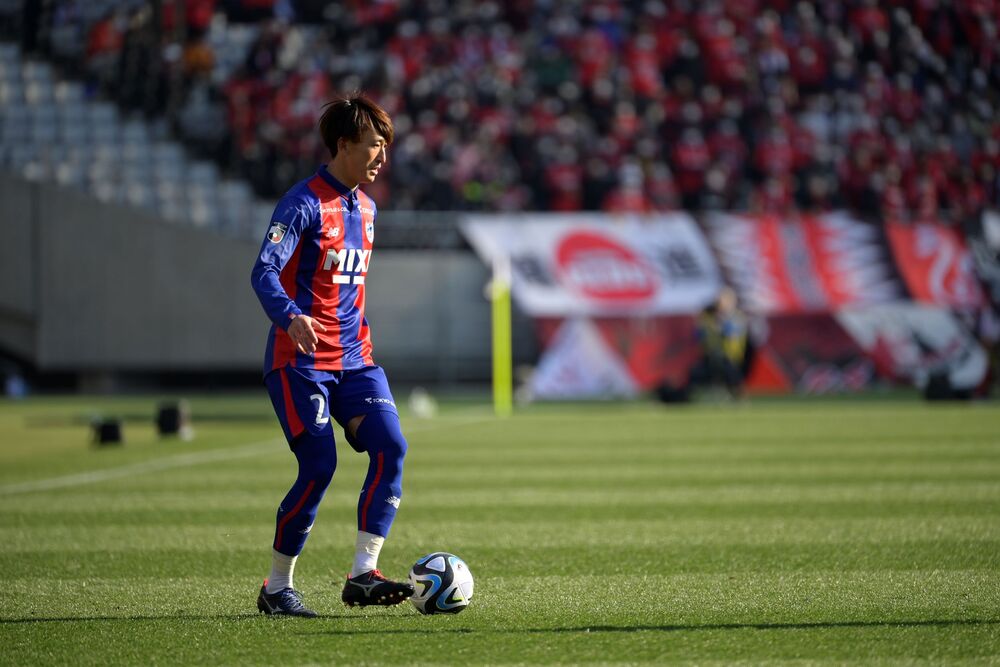
Q, please reflect on the Levain Cup match against Cerezo Osaka.
A, There is absolutely no change in motivation depending on the tournament.I was only thinking about giving my all in the match against C Osaka, without considering the league matches. In the Levain Cup, the members changed significantly, so we hardly had time to unify our intentions or confirm tactics. I thought it would be a difficult match, but player Higashi took the lead, and I believe we were able to fight without losing focus. Especially in the first half, there were times when we were under pressure, but I think we all defended well and created a good flow for ourselves. Regarding the goals conceded, there are areas where I need to reflect as well. Even if we can get to the shooting stage, if we don't score a goal in the first half, it can lead to such a development. C Osaka definitely secured that one goal. I realized once again that football is about taking goals. I felt that both as an individual and as a team, we need to pursue this further.
Q, what did you have in mind when you put on the captain's armband?
A, it was my first time ever wearing the captain's armband in an official match, including all my life. I thought it would be impossible to force myself to act like a captain and speak out, so I focused on playing as usual. Especially in the second half, there were many times when we were under heavy attack, and the team had to endure difficult moments; everyone was getting tired and our formation was stretched out. Wearing the captain's armband made me realize once again the importance of making even small adjustments with a single word from the captain during tough times and leading the team. The presence of players Morishige, Diego, and Higashi felt truly reassuring. I believe they have gone through many hardships, but they continue to lead Tokyo now, and I felt their greatness once again.
Q: How do you feel about facing players who have transferred from Tokyo at Yokohama FC?
A, I think having two players who know us, like Hirotaka MITA and Takumi NAKAMURA, is a huge threat. They are actually key players for Yokohama FC, so it makes things difficult. Currently, we have lost two consecutive official matches. Although we are in a tough situation with injured players, I don’t want to use that as an excuse, and especially in times like these, the players on the pitch need to firmly show their fighting spirit.
Q: What do you think of the presence of Takumi NAKAMURA?
A, as a teammate who competed for the same position, I truly respect him. I think his playing style is completely opposite to mine, and I studied and learned by watching his play every day during practice. I believe NAKAMURA also observed my strengths, and we each have weapons that the other does not possess. Every day was very stimulating, and I practiced daily with the strong desire not to lose the position battle. Having such a player as an opponent makes me even more determined not to lose. First and foremost, I want to do my best so that the team can win.
Q, there is also a place to show how much we have grown during the time we have been apart.
A: I don't really think about it much. I know that Takumi NAKAMURA is very skilled. Having gone through the J2 League and returned to the J1 League, even if he has changed, I wouldn't be surprised. I know he is that great of a player. Therefore, there is a part of me that can only be convinced by winning. However, I want to play without overthinking that.
Q: How do you feel about every game this season having a considerable amount of intensity?
A: This year, I absolutely have the feeling that I don’t want to run away from anything. I definitely don’t want to lose to the opponent in front of me. I also don’t want to run away from the weak side of myself, and I want to fight with determination. However, as a result, I was sent off in the match against Kashiwa. Both Nagatomo and Morishige spoke to me, saying that it is important to always keep passion and composure coexisting. I truly experienced that firsthand, and it was a really valuable lesson. I caused a lot of trouble for the team, but I believe I must never waste this experience. Being able to turn that experience into growth by the second matchday has helped me develop further. That said, I absolutely don’t want to change my passionate play, and I definitely don’t want to change my fighting spirit. I want to keep my head cool while keeping my heart burning as I do my best.
Q: What is the motivation to play with intensity this season?
A: Until now, even though I thought I was playing with confidence, I actually lacked it, and my weak side would show at the crucial moments. With that mentality, there’s no way to reach the top; I was constantly told by Nagatomo that I lacked that fierce intensity. This season, I want to completely eliminate my lack of confidence and negative thoughts and play with my feelings fully on display. Nagatomo will also be playing this season, but I have no intention of giving up a single starting spot to him. I truly believe you need that level of determination.
Q, that feeling is also reflected in wearing the number 2 on your back, isn't it?
A: The number 2 jersey has been worn by many great predecessors and carries a very heavy significance. There is also pressure that comes with it. Until now, I wore number 37 because I didn’t want to bear that pressure. However, with that mentality, I realized I couldn’t reach the stage I ultimately want to arrive at unless I become a strong player who can push back against it. So, I made the decision with determination to wear number 2. I believe that is now reflected in my mindset.
Q: When did you receive comments from Nagatomo about the "intense feeling"?
A, I have been told that since last season. Nagatomo has been playing continuously as a right side back, and I was using that as an excuse to say I couldn’t do it anymore and was running away. Nagatomo saw right through that. When Nagatomo was deciding whether to retire after the World Cup, I was wondering what I would do if he really retired. It was a frustrating time, but once it was decided he would continue, I felt I had to perform to the extent that Nagatomo could say, "I’m leaving it to you now." When I decided to play in Tokyo this season, I signed with that kind of determination. Recently, he told me, "You’ve finally started to burn with passion." I am truly grateful. I want to show even more of that intense feeling.
<Keigo HIGASHI>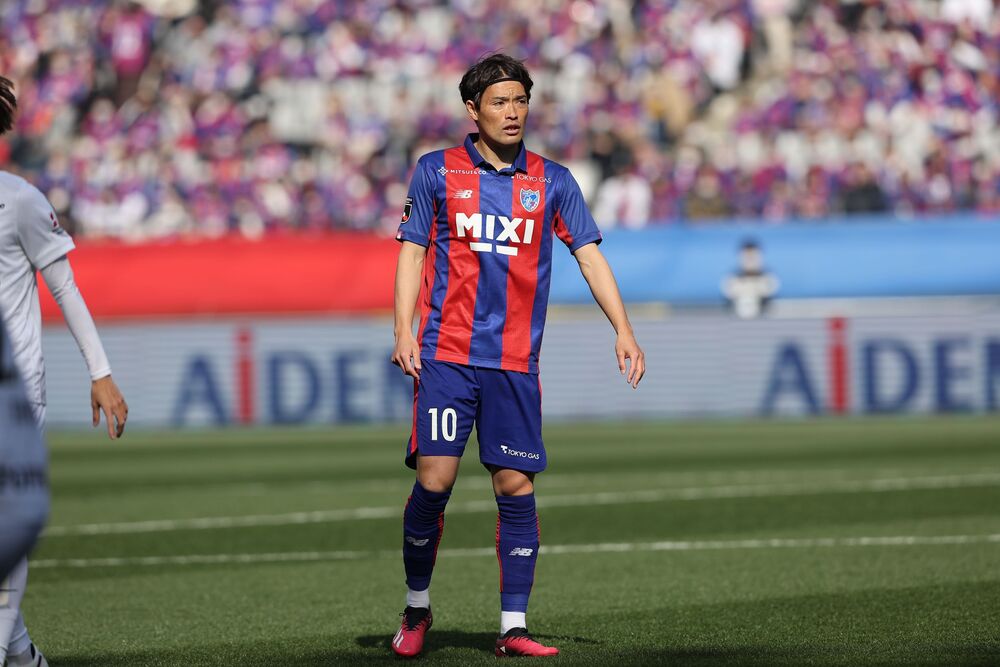
Congratulations on playing 350 games in the J1 League, Q.
A, thank you very much.
Q: Please give us your thoughts on the season so far after completing four matches.
A: We started the season with a win against Urawa in the opening match, a draw against Kashiwa, and a loss away to Kyoto, so it’s not a start I would call good form. I think it’s important to clearly identify our issues and aim higher while making improvements. Right now, we have some injured players, and Matsuki is away with the national team, so things feel a bit hectic. We want to overcome this together as a team somehow.
Q: In the second season under the coaching of Albert PUIG ORTONEDA, Tokyo player continues to play in the anchor position. Have there been any changes in mindset in the second season?
A, we must continue what we built up last season into this season. It’s not only about the style of football we aim for, but also a season where we need to focus on the competitive aspects, the final quality, and the crucial moments. I believe that I, along with the team, need to thoroughly pursue these points. Along with improving the team, I want to clear these aspects one by one.
Q: The opposing team has also come to understand that Tokyo is good at keeping possession of the ball, so their defensive pressure has become stronger. Do you feel the changes in the opponent's play?
A: The opponents also play their own style of soccer. I think we have faced teams that come at us aggressively from the front and opponents who apply high-intensity pressure. Of course, there are matchups that suit us better or worse, but we have to do what we can. Not only the style but also the final details are important in every match. After three games, I have come to realize once again that this is the key.
Q, how do you approach practice?
A, Personally, I really enjoy the regular practices and matches. I am able to approach them with that feeling, and I want to keep doing so throughout the entire season. I believe that when this leads to victories, the enjoyable aspects will expand even more, and I want to make it that kind of season.
Q, I would like to ask you about achieving 350 appearances in the J1 League. First, please give us your honest impression.
A: I don't really feel it yet, but when I look back, the memory of my first appearance still remains. My first appearance was during my time at Oita Trinita, in an away match against Urawa at Saitama Stadium. Since then, reaching 350 appearances has felt like it went by in no time. There have been many stories beyond just the matches that have brought me this far. I want to express my gratitude to everyone involved. I have come to truly understand the importance of my family’s presence, and I am sincerely thankful to the fans, supporters, players, and coaches. I couldn’t have come this far alone, and moving forward, I want to continue working hard so that, with the support of these people, I can keep appearing in more matches.
Q: Do you have any particularly memorable matches out of the 350 games?
A, I definitely think it’s the first match I played. Even if someone asked me if I remember the 75th match, I certainly don’t. There are milestones like the 100th and 200th matches, but the first match I played as a professional left a strong impression. If I had forgotten how I felt at that time, I wouldn’t be here now. I believe the 300th and 350th matches serve as milestones to recall those feelings. Being told I’ve appeared in 350 matches makes me think it’s good to remember that very first match once again.
Q: If you were to mention a memorable match in Tokyo, what would it be?
A, There are so many that it's difficult to choose. Of course, I am happy about the matches we won, but the matches we lost have also left a strong impression on me.
Q: The J1 League only has 34 games in a season, so even if you play every game for 10 years, you won't reach 350 games. Considering that, I think it's an amazing record. Do you have any reasons or secrets for being able to consistently play in matches?
A: I don't think there is really a secret. I have prepared and taken care of myself for every match. I believe it would have been impossible to reach 350 appearances in the J1 League by my own strength alone, and though it may sound strange coming from me, I think it’s an incredible record. There is no doubt that I have come this far thanks to the support of many people, and I truly feel that. As long as my body can move and my spirit holds, I want to keep going as a soccer player.
Q: Recently, I think the young players in Tokyo have been standing out. If there is anything you would like the young players to pay attention to based on your experience of playing in 350 matches, please let us know.
A: Rather than words, I would be happy if they could see the way I always act at the clubhouse and feel something from it. I want them to watch and sense that. I'm not doing anything special, but I believe that doing the ordinary things every day has led to where I am now. Even if just one or two people can feel something from what I do and connect it to their future, I would be very happy.
Q: From this season, vocal support has been allowed in all seats. In the opening match, approximately 40,000 fans and supporters entered, and Ajinomoto Stadium was enveloped in a good atmosphere after a long time. Do you feel like you have returned to the sense of the 2019 season before the coronavirus?
A: From the opening, a really great atmosphere was created, and many fans and supporters came rushing even to away games. I felt once again that it gives us power. Since it had become normal to have no cheers, I thought that having vocal support felt refreshing. After all, I feel that playing matches in such an atmosphere is the best for soccer and sports. I believe that cheers bring out good plays, and I want even more to be brought out. For the sake of those who support us, I want to play with even more effort.