

Review of the previous match against Urawa

The difference in victory or defeat was due to the brilliance of the strategy.
Stadiums are now allowed to have 100% capacity and vocal support from all seats has been permitted, bringing back the "voice" to the J-League which has been restricted due to the impact of the COVID-19 pandemic.
Tokyo's opening game was held at home. Over 38,000 spectators gathered at Ajinomoto Stadium, where they were allowed to express their emotions by cheering, shouting, and showing their excitement, creating an electrifying atmosphere that is characteristic of professional soccer matches.
In the first half, Tokyo showed a posture of holding the ball, but they cut off the flow due to a simple mistake before reaching the finish. They struggled to get into rhythm, but around 30 minutes into the first half, they started to launch an offensive with coordinated pressing in the front line and short counters after winning the ball.
At halftime, the game turned around with high expectations for the second half. Coach Albert made a move. He substituted Shuto ABE for Keigo HIGASHI and made changes to the midfield lineup. This was one of his brilliant tactics.
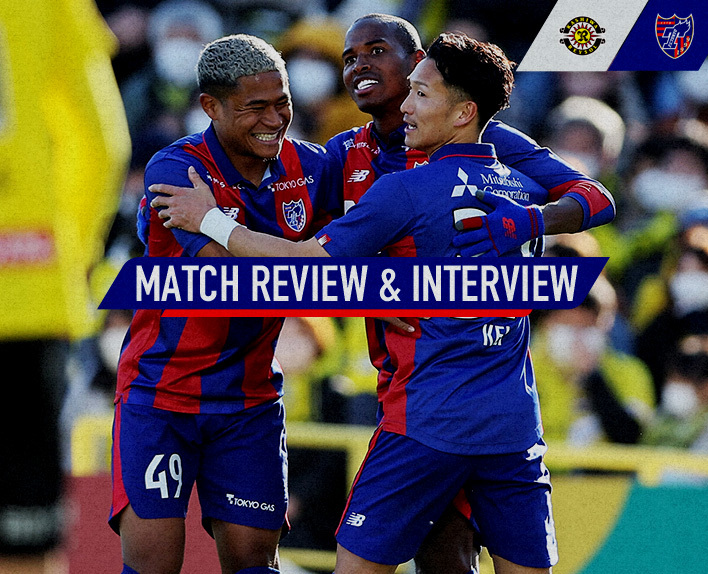
From the beginning of the second half, player Shuto ABE repeatedly made runs into the side space of the penalty area, called the pocket, to create chances. In the 21st minute of the second half, ABE received a pass from player Kashif BANGNAGANDE on the left side and made a sharp turn to evade the defender and deliver a cross from the pocket. Player Kei KOIZUMI couldn't make contact with the ball, but it deflected off an opponent and went into the goal. Tokyo took the lead in an unexpected way.
Then, coach Albert Puig Ortoneda immediately sends out his second arrow. In the 24th minute of the second half, he replaces Teruhito Nakagawa, who had a close shot hit the crossbar in his debut match in Tokyo, with Ryoma Watanabe.
And six minutes later, the substitution strategy worked perfectly. Adailton player and Diego OLIVEIRA player connected the ball from the right side throw-in, and Diego player made the last pass to the pocket in front of the left corner of the penalty area. In response to this, Watanabe player quickly adjusted and scored an additional goal.
Two of the two substitute cards that were put in were involved in the goal, and the cleverness of Coach Albert's strategy brought victory. At the same time, the second half, in which they held the ball in the opponent's territory by avoiding the press from Urawa Reds' front line, showed the continuation and maturity of the "playing soccer with the ball" style (Coach Albert) that has been ongoing since last season.
<Match Preview>
Last season, the two matches against Kashiwa Reysol left contrasting impressions.
The first half of the match played at home at Ajinomoto Stadium was a struggle, as the opponent pressed from the front with a man-to-man marking, making it difficult to advance the ball. In attack, they were unable to show much promise and as the game approached its end, they conceded a goal from a corner kick in additional time. It was ruled as a handball with the support of VAR and the match ended in a draw, leaving a bitter taste.
On the other hand, the second half of the game played at the away ground, SANKYO FRONTIER Kashiwa Stadium, commonly known as "Hitachidai," had a completely opposite development.
Maintain an exquisite position and distance against opponents who come with fierce pressing from the start, and neutralize them with a combination of precise passing and changes in pace. Not only neutralize, but also advance the ball, take advantage of the opponent's backline with build-up play from our own half, and take the lead from the first half.
In the second half, they aimed for the opponent's back who came forward to counterattack and scored goals with simple attacks. In the second half, they allowed 3 goals to Kashiwa who was chasing them, and it turned into a shootout, but in the end, they scored 6 goals and won 6-3. Kashif BANGNAGANDE scored his first professional goal and Kuryu MATSUKI marked his second professional goal, showing the emergence of young talent and bringing a bright future to Tokyo.
What kind of impression will this season's match leave?
In the previous match, Kashiwa took the lead in the opening game at home. However, Gamba Osaka, who picked up the pace in the second half, turned the game around and maintained the lead until additional time. In the end, player Hosoya was fouled inside the penalty area and won a penalty kick, which he successfully converted himself as the kicker, equalizing the score just before the end of the match.
Pressing from the front line, picking up the opponent's panicked and inaccurate pass sent to the front line, and launching a counter to quickly carry the ball to the goal and finish. Kashiwa is thoroughly sticking to their style and has been polishing their accuracy since last season.
The key for Tokyo is how calmly they can move the ball and evade pressure against opponents who approach with increased intensity, saying "we won't be defeated". It is important not only to evade pressure, but also to intentionally draw out the opponent, use space, and completely break through to shake the net.
Last season, we struggled against opponents with strong physicality and quick pressing. However, after a fulfilling preseason, when we think about tomorrow's match, we can imagine the blue and red team moving the ball with confidence, leaving behind our weaknesses.
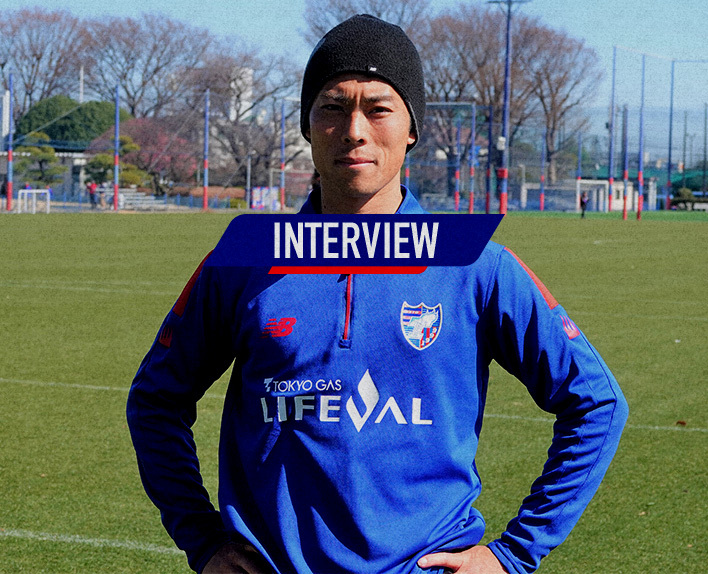
[Albert PUIG ORTONEDA Interview]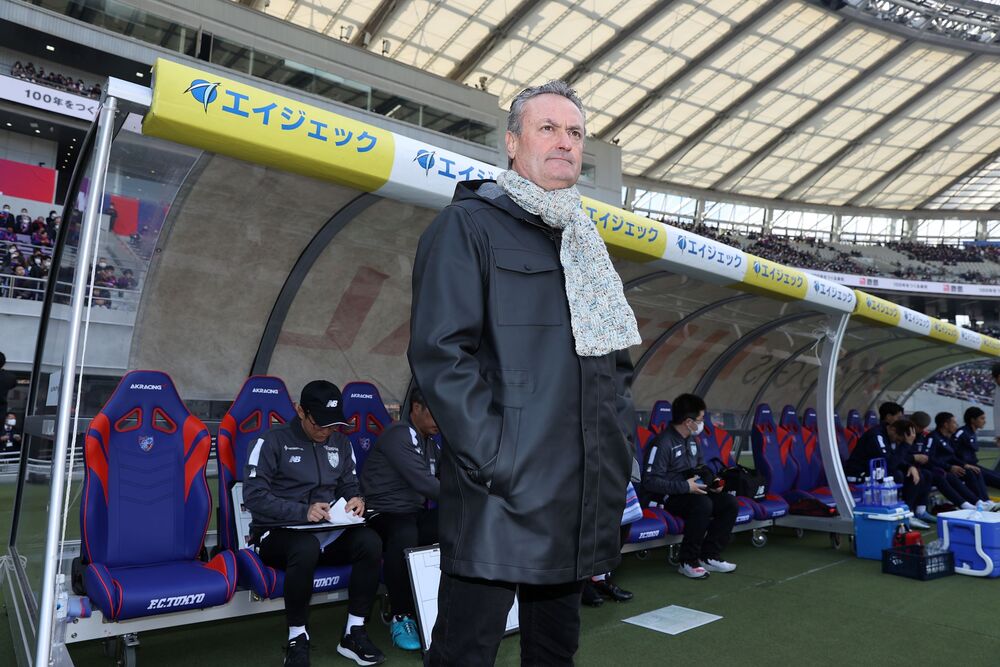
Q: How will you take care of the absent players like Kuryu MATSUKI?
A: To compete at a high level in every tournament, we need to prepare a team with greater depth. Since I don't think we have that, we can only hope for the success of our young players. Young players must seize these kinds of opportunities. Every player starts their professional career when they are young. To survive in the professional world, I believe they must make the most of the chances given to them at a young age. The team is maturing steadily. In that sense, I believe they will overcome this situation.
Q, do you think you were able to attack actively during the camp? Even in the opening game, do you think you were able to make adjustments during the match when things didn't go well and create a good form? How confident are you?
A: We cannot always dominate the match. We want to continue using the quick attacks toward the goal that have been our weapon so far. Last season was the first year of a style change, but in most matches, we were able to maintain a higher ball possession rate than our opponents. The only match where we had lower possession was probably the one against Urawa. However, in this season’s opening match against Urawa, we were able to surpass them in overall possession. The style I expect from Tokyo is a unique one, aiming to be a team that can attack using the ball effectively along with various other weapons. Last season, the most emphasized point was conveying that “the ball is important” and instilling that idea within the team. The season has just begun, but we are gradually starting to push the opponent back firmly and continue our attacks. Fast attacks that exploit the space behind the opponent’s defensive line are also one of our weapons, and we want to keep that option available going forward.
Q: What are the important points in the Kashiwa match?
A. I think it comes down to our own play. If we can properly express good play, I believe our chances of winning will increase. However, matches have various developments. There will be good plays from the opponent during the game, and there will also be dangerous situations arising from our mistakes. In order to seize the flow and dominate the match, it is important that we ourselves play with solid confidence.
Q: How do you feel about using young players?
A, I hope tomorrow's match will be an opportunity to give young players a chance. Whether they possess mental strength will determine if they can continue to succeed as professional players in the future. I believe that young Japanese players are well trained in both technique and tactics. However, unless Japanese soccer as a whole fully understands that mental strength is indispensable for thriving in the professional world, further growth will be difficult. I only ask two things from young players: first, bold play; second, mental strength.
Q: Is the presence of veteran players such as Nagatomo, Morishige, and Higashi important for the growth of young players?
A: It is one of the important points of the team. I believe that how much the veteran players contribute to creating a good atmosphere both on and off the pitch is one of the secrets to this team's strength. When players become veterans, I think they generally fall into two types. One type is players who want those around them to adapt so that they themselves can play more comfortably. The second type is players who, while performing well as players themselves, also put energy into encouraging the growth of other players, especially young players.
Q, I was talking to Nagatomo before the start of the practice.
A, Nagatomo is the soul of Tokyo. He is truly a great role model. Even when he is on the bench, he fights alongside the team as if he were running all over the pitch. Nagatomo and the other players are all veterans who take joy in and encourage the growth of the young players at Tokyo. On the other hand, it is unfortunately true in the soccer world that some players negatively affect those around them in order to play for themselves. We have the great Nagatomo. I believe he is an important figure for the team, the club, and the future ahead.
[Player Interview]
<Yasuki KIMOTO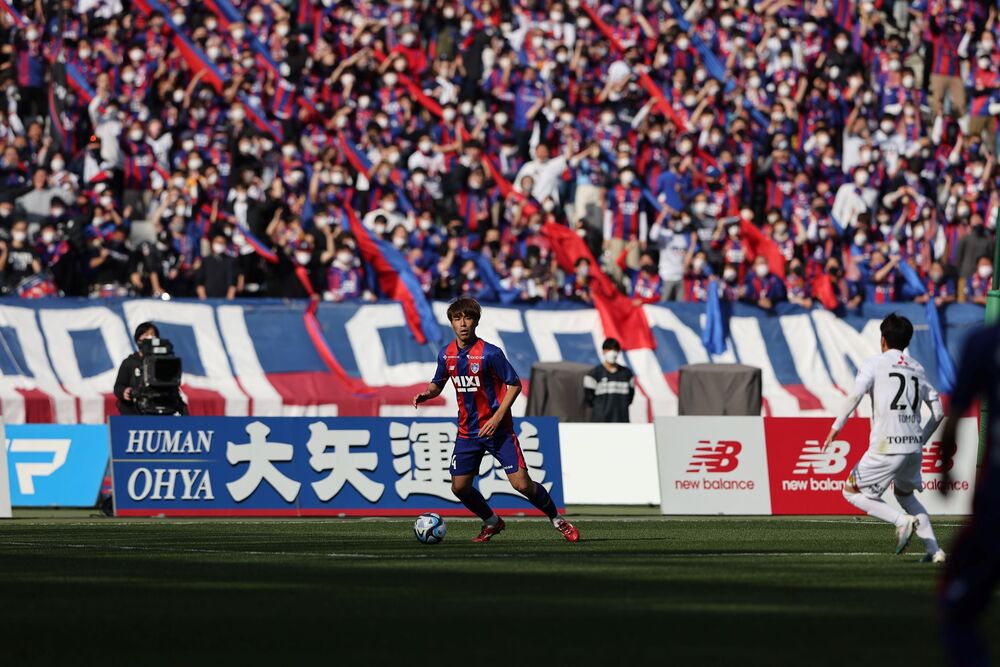
Q: What was the factor behind winning the opening match in a good form?
A, Each player was able to prepare well for the opening match. Regarding the match itself, there were periods in the first half when we struggled against the opponent’s press, but even during those difficult times, we played patiently without conceding any goals, which I believe led to the goals scored in the second half. Every single player truly fought hard, and in terms of content, I think the patience shown in the first half is a point of growth compared to last season.
Q, it was a game in which 100% vocal support was given. How was it?
A, the atmosphere was fantastic. The cheers helped us give our last ounce of strength, and playing amid the fans' and supporters' voices is also a goal for professional soccer players. I am grateful for this environment. It was great to be able to play the match in such a wonderful atmosphere.
Q: Did you have a good impression of the away game against Kashiwa last season, where you won by a large margin?
A: We were able to win by a large margin, so I have a good impression, but as defenders, we conceded three goals. If we can keep a clean sheet like in the opening match, I believe the forwards will definitely score, and if we can maintain that, we will be able to accumulate 3 points. As a player in the back, while focusing on keeping a clean sheet, I also want to bring out more of my own characteristics in the attacking aspect.
Q: What is your impression of Kashiwa and what kind of measures do you want to take as a team?
A, based on last season's impression, I think the game will develop with us maintaining possession of the ball. I want to deliver good balls from the center back to the front line, and since the opponent's strength is their sharp counterattacks, we want to stay focused for the full 90 minutes in both offense and defense, playing in coordination along the defensive line.
Q, there were goals scored by invading the pocket and possessing the ball as the coach desired in the opening match, and I think it was the result of what we have built up in the previous season and during the camp.
A, we have all been working on invading the pocket since practice. Seeing it come to fruition in the opening match gives us confidence. In that sense, I believe it proved that what we have been doing was not wrong. I expect countermeasures will be taken from now on, but we want to continue playing the same style of soccer. We also identified some issues during the match, so I hope we can all improve together starting from practice.
Q: It was the first game for Kimoto to change his jersey number to 4. How did you feel about it? Please also tell us about the chemistry you had with Henrique.
A: Regarding the jersey number, I wasn't conscious of it during the match, but I want to play in a way that makes the viewers feel that my play and presence as a player have changed even a little. The center-back partnership with Henrique has played several matches since last season, and I feel that we bring out the best in each other. Since many of those matches had both good results and quality content, I had no worries at all and think it went well.
Q: What kind of play is Kimoto expected to make?
A, I was the oldest in the defensive line, and the staff also expects me to show leadership and to communicate vocally from the back. It is also a personal challenge for me, but I want to consciously speak up. I want to make a stronger presence in the defense area.
Q, please share your enthusiasm with the fans and supporters as we prepare for the Kashiwa match.
A: Although it is an away game, we will definitely deliver a victory, so we hope many fans and supporters will come. For those who cannot attend, please cheer us on via DAZN as well.
<Kashif BANGNAGANDE>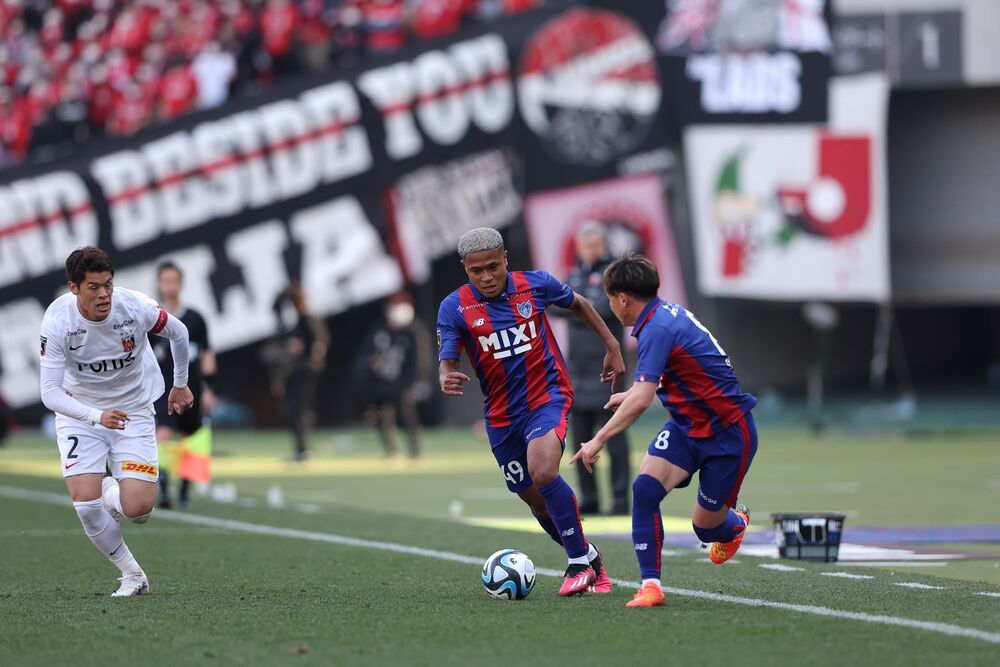
Q: Did you participate in the opening game with a bold attack, and do you want to continue doing so in the Kashiwa game?
A, I want to participate in the attack while managing risks carefully. In the previous match, there were some dangerous moments because I advanced too far forward, so I hope to correct that.
Q, did you choose to play in a high position knowing that space would be created in the Urawa match?
A: It was expected that Urawa would target the space created when I moved up to the front line. Within that context, I think I could have managed the risks better. I feel it is necessary to play with a good balance between offense and defense.
Q: Do you aim for specific areas when crossing during the match? How does it feel?
A: This season, I am more conscious of looking inside when delivering crosses. Although it hasn't led to goals yet, I want to aggressively pursue results. In last season's away match against Kashiwa, I was able to score my first J1 goal, which is a good memory, but in the second half, I couldn't play as I wanted and was involved in conceding a goal. There are good players up front, so I hope to participate in the attack while properly handling crosses and other situations.
Q: I think we were able to have a successful experience taking the space on the side of the penalty area, called the "pocket," in the opening match.
A, in the Urawa match, I was able to use the pocket that we had built up through practice. I think it was a game where both the team and I personally felt a good sense of confidence. I want to increase the number of times we use it in upcoming matches as well.
Q: I heard that after carrying the ball to the pocket, we are free to make our own judgment and aim for the goal.
A: After using the pocket, I have been working on various ideas since practice. I believe that if we keep applying them more and more in matches, the number of goals will increase, and I think we are moving in a good direction.
Q, do you want to be involved in scoring?
A: I feel that my repertoire of movements in front of the goal is increasing, and I have various patterns in my mind. After that, the result is what matters, and I think it depends on how much I can connect those movements to scoring goals.
Q: What was the content of the message that Nagatomo shouted out from the bench?
A: I was told that my positioning during defense and my attacking are in good shape, so I should keep it up. I am always taught the timing for making fine positional adjustments. During the match, I can only see from my own perspective, so receiving advice from Nagatomo, who has more experience than me in the same position, helped me make actual adjustments that led to successful plays. I am truly grateful.
Q: Yuto Nagatomo said that it is also stimulating for him when Kashiwa Reysol player Yoshifumi Kashiwa grows. Do you often receive encouragement from him?
A, I am grateful to receive encouragement regularly. Nagatomo's presence is truly inspiring, so I want us to continue pushing each other to improve.