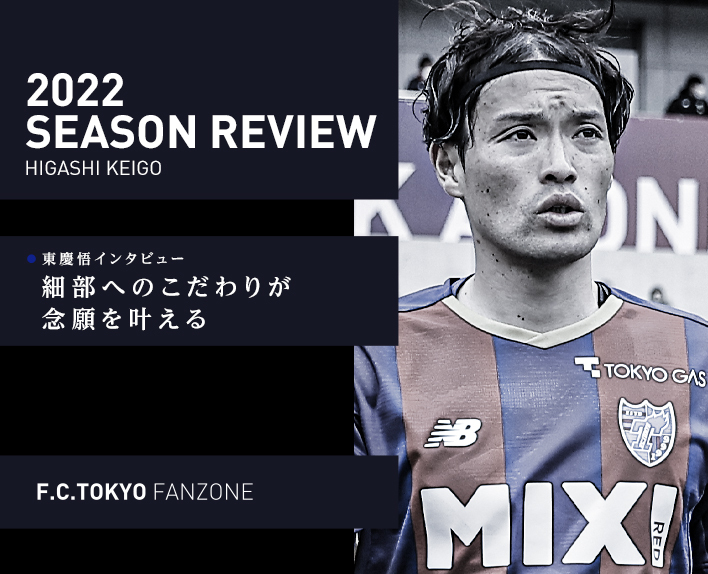


In Tokyo, which has embarked on a transformation, Higashi was unable to increase his playing time in the first half of the season. The turning point came in the second half when he was deployed in the anchor position. As coach Puig Ortoneda works to instill his envisioned style in the team, Higashi played a significant role in an unfamiliar position. As he finishes his 10th season in Tokyo, what does the man feel about this season of change and what does he envision for the future?
View from the new territory anchor
Q, in recent years, Keigo HIGASHI has repeatedly emphasized his desire to win and stated that winning is his top priority.
A, You have to put that as the basic premise because this is the professional world. I believe the direction we Tokyo are aiming for is not wrong, and we will continue with it from next season onward, but I also think further work on building our style will be necessary.
Q, Did you feel a change in your style during your first year as coach under Albert, different from your time as coach under Kenta Hasegawa (current Nagoya Grampus coach)?
A, I think the style is completely different now. Of course, this is not about which style is right or wrong. One thing is certain: since 2022, what we aim for has started to change, and we are in the midst of challenging new things. Undoubtedly, compared to the first half of the season, the team as a whole has had more time to settle on the ball, and I believe the so-called possession rate has also increased. What the coach aims for is to firmly maintain possession of the ball, and he also says, "The best defense is a good offense," so there were matches where the style we aim for clearly showed in the team's performance. However, it is still unstable.
Q, the development of being able to carry the ball forward through player Higashi, the anchor, has definitely increased.
A, of course, the opponent's positioning and system match-up differ in every match, and it is a position that is greatly affected by those factors. However, the opportunities to carry the ball smoothly have definitely increased. The challenge for next season is the accuracy of attacks once we enter the opponent's territory. I believe it is about how to break through the so-called "final third" area leading up to the opponent's goal. Naturally, in playing soccer, breaking through this area is the most difficult theme.
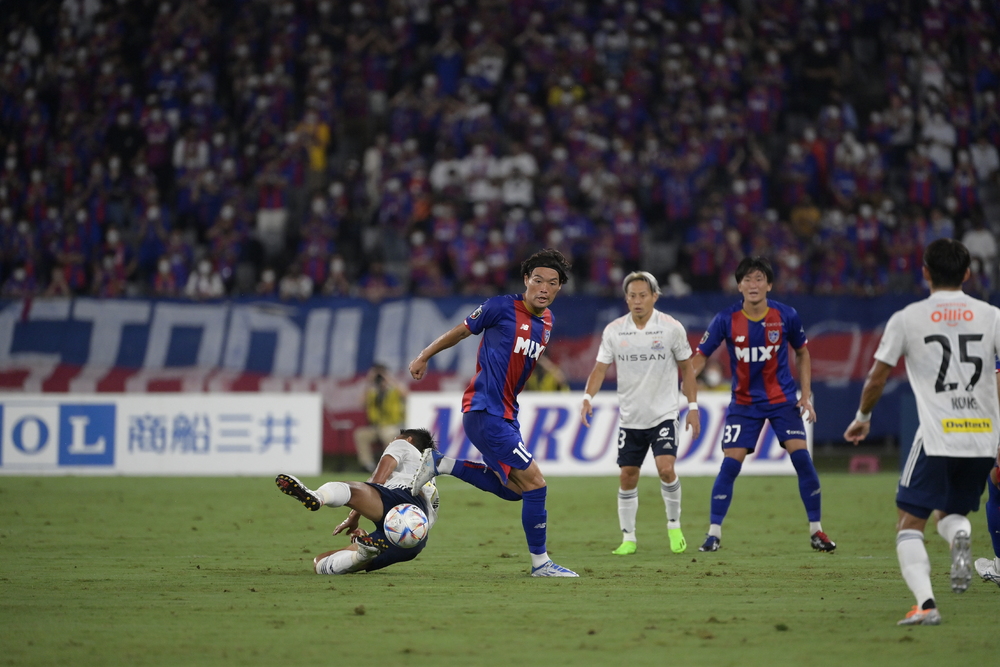
Q, this season, when he started playing as an anchor, East player said, "When I was young, I was a top player. In terms of meaning, the anchor is similar to being connected to the surrounding allies in all directions."
A, Above all, the anchor touches the ball more often and interacts with various players during play. I naturally like that kind of play itself. When I was playing as an attacking midfielder, I was the type to receive the ball a lot, and creating rhythm was also part of my job. As an attacking midfielder, you also need to make forward runs. Additionally, you incorporate decoy movements to create opportunities for your teammates. Those kinds of movements don’t exist for an anchor, right? Instead, I approached the anchor role with the image of using awareness and power more on the defensive side.
Q, Julian, the current anchor player, doesn't have many opportunities to be involved in playing in high areas. When watching the previous attack, do you have a perspective like "If it were me, I would attack like this"?
A, yes, there are times when I watch the game and see it that way even while playing. Honestly, playing soccer, that area (in front of the opponent's goal) is the most enjoyable. The spectators also have the highest expectations for what kind of play will emerge in that area. The position and role I am playing now are part of the process leading up to scoring a goal. Personally, I find that fresh and interesting in its own way. Certainly, when I played as an attacking midfielder, I wasn’t the type to score around 10 goals a season, but I was good at movements that allowed my teammates to score and at creating chances. Watching the players currently deployed in Tokyo’s attacking positions, I think it would make the soccer more interesting if they showed more of those kinds of movements.
Q, it feels like my field of vision and awareness has expanded beyond my own territory in this new territory called "anchor".
A, I am able to see things with an open perspective, and I have increasingly been able to view the team objectively in a positive way. Conversely, for example, when playing as an anchor and in defensive situations, being able to read where the opposing player wants to pass or where they want to move has been a personal discovery. Regarding defense, a big part is being able to sense the opponent’s emotions and feelings. I defend while thinking, "So, you came there, you want to pass there," (laughs).
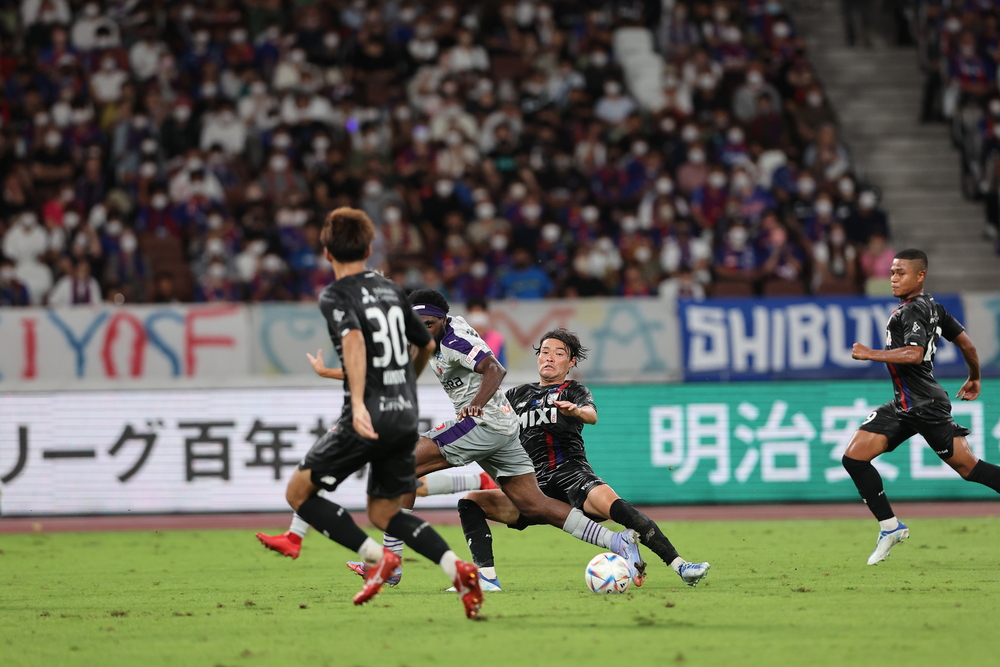
Keigo HIGASHI and Tokyo from now on
Q, I came to FC Tokyo in 2013, so it's been 10 years. How do you feel about the end of your career? Of course, I still want you to keep playing (laughs).
A, I want to play at the forefront for as long as I can. For me right now, playing to aim for titles with Tokyo is the priority. At the same time, the club that nurtured me, Oita Trinita, is truly special, and I am extremely grateful to them. Of course, I also have unchanging gratitude toward Omiya Ardija, but my feelings for Oita, where I started my career as a soccer player, are strong. This is because the battle with Tokyo is the most important thing for me at the moment, and I want everyone to understand that as well. There’s no point in lying here, so I spoke honestly. This is just my personal feeling, and whether I return to Oita at the end depends on the club’s circumstances, so I don’t know how that will turn out. The three years in the youth team and my first and second years as a professional — now, as I grow older, I realize once again how incredibly important that period was.
Q, What do you want to achieve here, East player, in this ongoing challenge, so as not to make Tokyo fans and supporters too lonely (laughs)?
A, There is only the league title. We won the Levain Cup, but I think the club, the players, and the fans and supporters are now focused solely on that (winning the league).
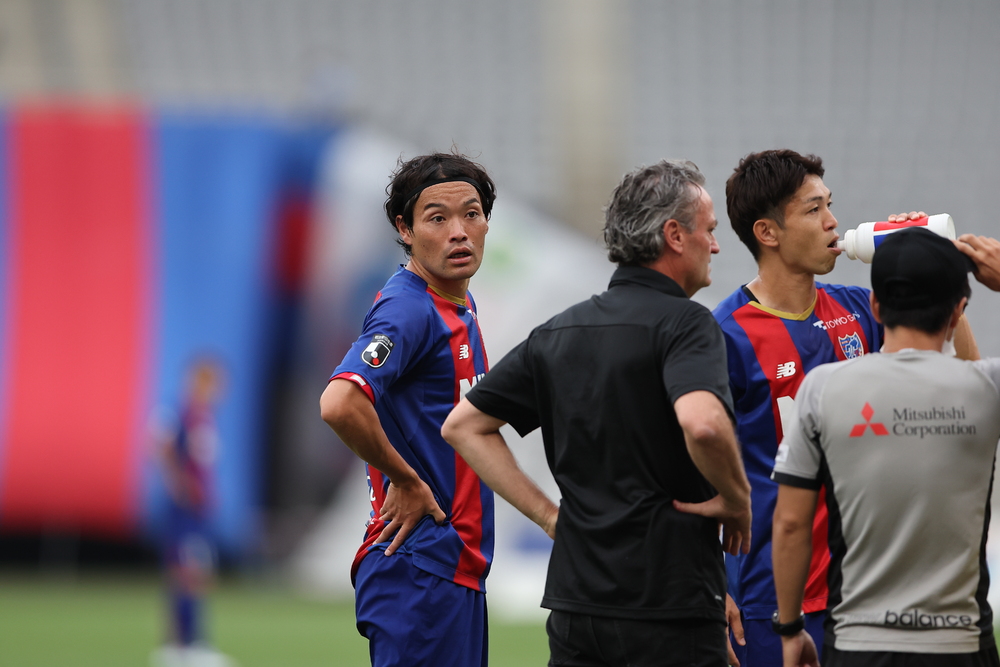
Q, I want to realistically win and dominate the league with Tokyo's current football style and way of fighting. How does player Higashi perceive this?
A, what I think while playing is that the football styles during the Massimo FICCADENTI era, Kenji's era, and now under Albert PUIG ORTONEDA are naturally different, and it is only right that coaches have various styles. That said, what ultimately decides the outcome is the attention to fine details. No matter what direction or style you have, if you keep conceding from a single set piece or lack concentration in critical moments, you will never keep winning. I believe it’s a matter of that level. There are many football styles, but to aim for the championship, the obsession with those details is something every team absolutely must have. That is a part each player must thoroughly pursue. I feel that Kawasaki Frontale and Yokohama F.Marinos also fight not only with an outwardly aggressive stance and flair but with meticulous attention to detail at decisive moments. There can be no lapses. I think that transforms into mental toughness. Style is important. But what decides the match and the result is not just that.
Q, East player is responsible for conveying that to the team.
A, young players often find it difficult to reach that level of awareness. I was the same myself. If every team could easily do that, then everyone would have experienced winning the championship. But over the past few years, I have deeply felt the harshness and fear of the decisive moments in matches. I want to play at that level and dimension again. The title race, that is. This connects to what Kenta-san said about "being particular about the details." Without that, you can't win by just building a style. How to increase the number of players who raise their individual awareness. When thinking about winning the championship, I believe the current awareness of Tokyo's players is still insufficient.
Q, Kenji's sensitive experiences from his era are also alive in the player himself, and the team must also inherit that.
A, that's right. During Kenta's era, despite being so particular about the details, we couldn't win the league. Of course, perhaps our attention to detail was still insufficient, but all the more reason, if we aim for the championship from here on, the young players need to have a sense of urgency, and if the team’s atmosphere aligns, it will become a good team, a strong team. That's what I think.
Q, although player Higashi is no longer the captain, his eye for soccer and competition remains unchanged regardless of his title.
A, I really want to win. In the past, it was enough if my own play was good. Now, I play to win. So I expect the same from those around me. Playing soccer to win—that is my greatest motivation. Honestly, the style doesn’t matter at all (laughs). Winning with Tokyo—that’s the only truth.
Q, now, Keigo HIGASHI's victory celebration is exhilarating. It's because he thirsts for victory.
A, the taste of a single victory is intense. Accordingly, the damage from a loss is also huge. To win the championship, it is a matter of accumulating one victory after another. In the 2019 season, we couldn’t reach the top with just one win. It all comes down to one play, attention to detail. I believe that’s the essence.
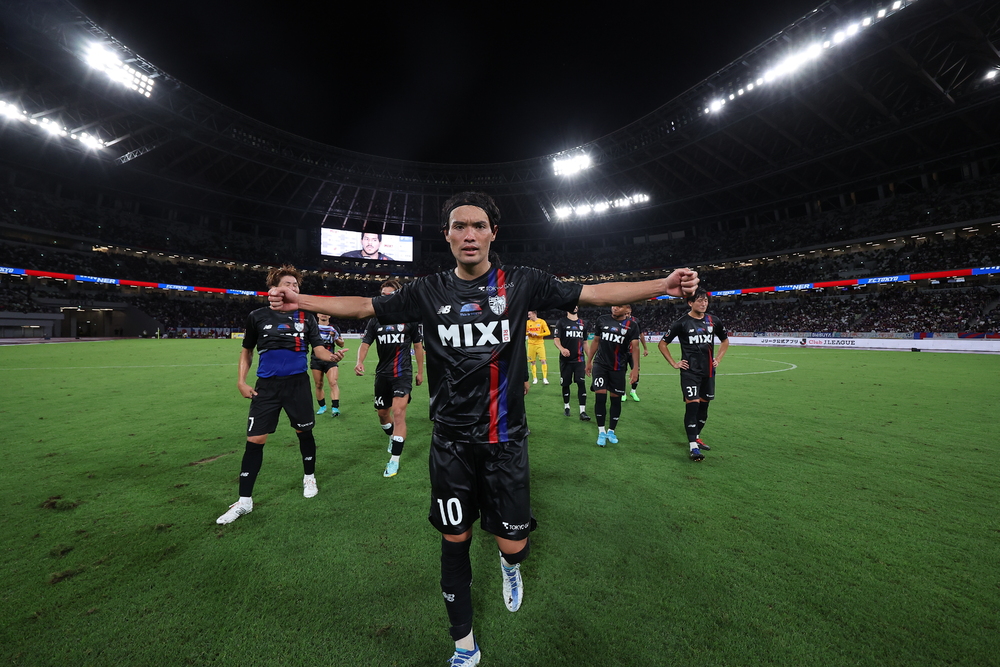
Text by Jun NISHIKAWA (Ergorasso)