

<Match Review>
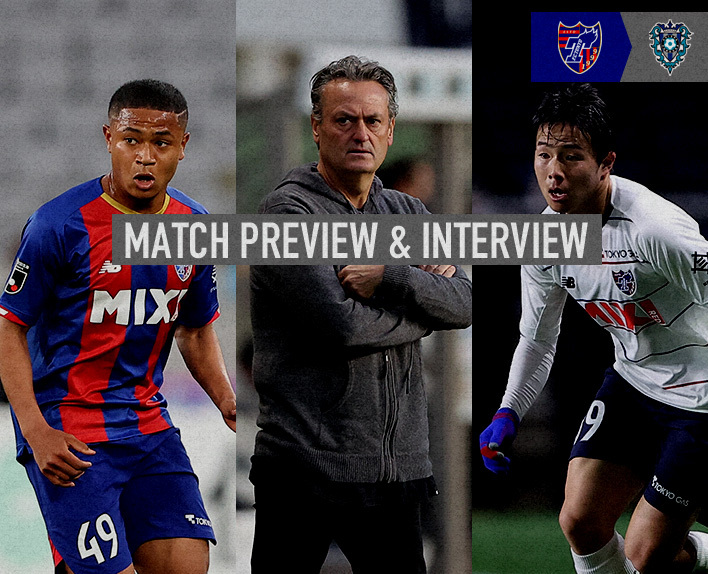
This season's Levain Cup has already been eliminated in the group stage, and today's match was the final match. The home team, Ajinomoto Stadium, will face Avispa Fukuoka, who are looking for 3 points to advance to the playoffs. They have faced each other twice this season, with Tokyo losing both times. For Tokyo, this will be a match where they want to repay their debt at home.
As coach Albert PUIG ORTONEDA has stated, in this match, young players and players with limited playing time in the league were lined up in the starting lineup. Kojiro YASUDA made his first professional start. Renta HIGASHI and Naoki KUMATA, who are registered as U-18 players, also started, and Kanta DOI was included in the squad for the first time as a substitute. Yuta ARAI, who is set to join the team next season, also made the squad for the first time since the match against Júbilo Iwata on March 15th.
As the game progressed with both teams sharing possession of the ball, Tokyo gradually pushed their opponents back after the 25th minute of the first half. Towards the end of the first half, they were able to maintain possession in the vital area and launch a thick attack, also recovering second balls. However, they were unable to finish their chances and the game remained 0-0 at halftime.
Tokyo continues to dominate possession in the second half. They are struggling to break through the opponent's defensive block as they push forward. In the 26th minute of the second half, they create a chance from a set piece. Renta HIGASHI heads in a corner kick from the left side, but the shot is saved by the opponent's goalkeeper. Tokyo continues to push forward without giving the opponent a chance to counterattack, constantly moving the ball and searching for a way to score. In the final minutes, Hirotaka MITA breaks through into the penalty area, but is unable to find the back of the net. The game ends in a 0-0 tie.
Although we were unable to achieve victory, the young players expressed the team's playing style firmly, and the veteran players supported them to boost their performance. As we strengthen our unity as a team, we continued to take control of the game and constantly threatened the goal, which will be a positive factor for the league. This was a match where we gained confidence as we prepare for the upcoming match against Kashiwa Reysol in just two days.
[Albert PUIG ORTONEDA Interview]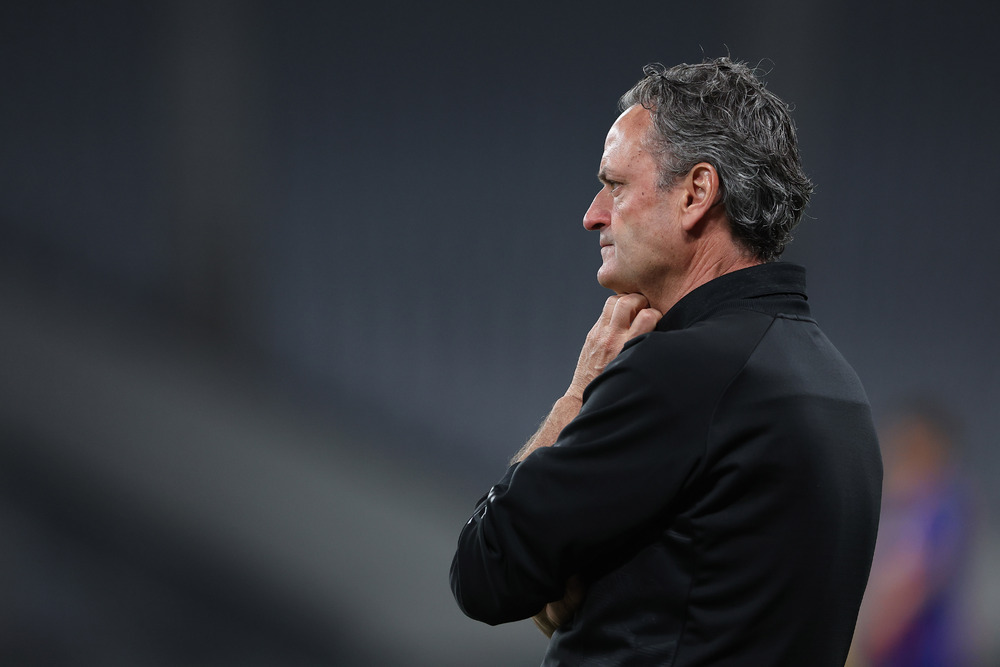
Q: please review the game.
A: Today, I would like to reflect on the growth of our young players in particular. In the first 10 to 15 minutes, the young players struggled to get used to the pace of the game, resulting in a hectic period. Although the opponent did not create any chances, I believe we were not able to play the way we expected. When we repeatedly lose the ball easily in unnecessary situations, we cannot perform the play we expect. Naturally, in the attacking zone close to the opponent’s goal, bold plays that take risks are required. However, until we approach that zone, we must play more accurately and cautiously.
Since Mori Shige was on the pitch for the first time in a while, and there was also a 17-year-old player playing alongside him, it is natural that the team had difficulty finding its rhythm at the start of the match in that sense as well. Additionally, there was an intention to try Keigo HIGASHI as a defensive midfielder.
Due to various reasons, we were unable to build up from the back in a good way for the first 10-15 minutes. However, I think the game progressed in a different way after that. We were able to create two clear chances in just the first half. And I think we showed good play at various points at the tempo we expected. Mori Shige, who returned from injury, was planned to play for only 45 minutes to regain his match fitness, so he was substituted at halftime. I think it was a good performance for 45 minutes, and it led to his next appearance.
There were several dangerous players on the bench for Fukuoka. In order to support 17-year-old Renta HIGASHI when these dangerous players were brought on in the second half, the center back was changed to three. It is still difficult for a 17-year-old center back to face Lukian. Therefore, the system was changed to three center backs in order to cover any mistakes that may occur. However, the system is not particularly important. What is most important is the playing style, and I think we were able to express ourselves well even with a change in position. I think the young players were able to adapt well to the changing situation. We were able to create some chances in the second half and even had some opportunities for a penalty kick. Of course, this is not criticizing the referee.
In the second half, there was a long period of time when three 17-year-old players were on the pitch at the same time. I think Fukuoka had many key players in the team. It is worth noting that the young players, who are 17 years old, boldly demonstrated their individuality against tough opponents. In that sense, I am proud of the young players who were on the pitch. Additionally, veterans Keigo Higashi, Hikaru Mita, and Jun Kodama deserve recognition for supporting the young players' bold play.
I think it was a game where we could highly appreciate that our academy is able to develop players well. I had a similar situation when I was the academy director at FC Barcelona. If there are talented players among the young players, we must give them a chance. As long as I am at FC Tokyo, I want to give opportunities to talented young players.
Q, please evaluate Keigo HIGASHI as an anchor player.
A, he played well. Of course, I think he is a player with attacking strengths, and I also believe he can contribute defensively. Watching his play in training, I appreciated not only his technical skills with the ball at his feet but also his ability to distribute the ball effectively. He can also contribute defensively in aerial duels. Another strength is his good positioning. For these various reasons, I wanted to try him as a defensive midfielder, and I think that test went well. You could say that we have gained an additional option for the defensive midfield position.
I also told him directly that our defensive midfielder’s role is not so much to run himself, but to make Shuto ABE and Kuryu MATSUKI in front of him run and maintain balance. The defensive midfielder behind the inside halves is a player who can provide the team with pausa (calmness). In that sense, I think players like Aoki and Keigo HIGASHI have such strengths. I believe Keigo HIGASHI as a defensive midfielder today deserves a good score.
Q, what kind of attitude do you want to see from young players in the future, now that the Levain Cup, which has given young players a chance, is over?
A, I want to continue looking for opportunities to give young players chances. It will become difficult to boldly give many chances to young players in league matches. However, training with the top team and participating in training matches set by the top team are also excellent opportunities to promote growth. In that way, I want to keep giving chances to young players and encourage their development.
The Levain Cup is not guaranteed to have 10 games at first. It is a format where teams play 6 games in the group stage and then advance to the playoffs. When advancing, many coaches may choose to use more experienced players rather than young players in order to aim for a higher position. In that sense, even if young players get more chances when advancing, it is not necessarily the case.
It was a good question, so I came up with a good idea. For example, as an improvement plan for the Levain Cup, how about having the group stage played by more teams? And, what about adding a rule that at least 5 U-23 players must be used as starters? Japan does not have a reserve league. In that sense, I think it is necessary to promote the growth of young players.
[Player Interview]
<Keigo HIGASHI>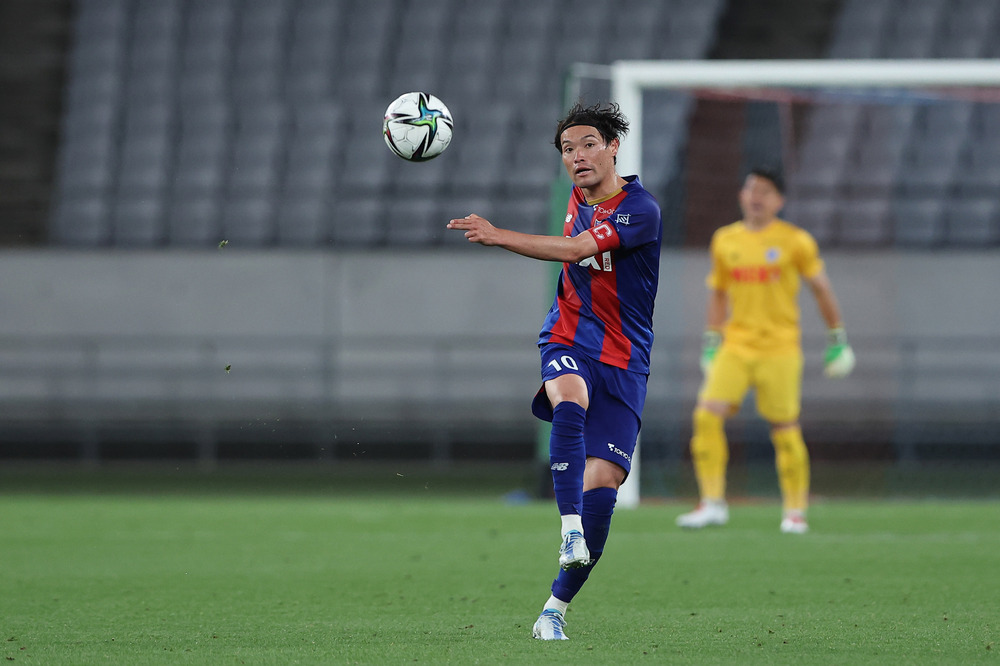
Q: You played as a defensive midfielder, what were the expectations from the coach when you entered the game?
A: First of all, more than the position itself, I was asked to lead the team since there were many young players. Rather than detailed instructions, I was told to be mindful of maintaining positional balance as much as possible.
I think that during the league matches, you were playing as the center, paying attention to both the front and the back, while the members and formations were changing, for the entire 90 minutes.
A: Today was my first time starting as a defensive midfielder, and while there are challenges, I want to bring out my strengths no matter what position I play, and fight hard to help the team win.
Q, where do you want to further improve as an individual from here?
A: I believe I can deliver decisive passes even as a defensive midfielder, and I consider that one of my strengths. Defensively, since I am not originally a defensive player, I think I need to further improve my intensity and crisis awareness. I am 32 years old this year, but I still want to grow and get better. With the new coach, I am learning many things, so I want to absorb more and, when the next opportunity comes, play in a way that contributes to the team's victory.
Q, how did you feel playing as a defensive midfielder?
A, it is a position with a major role in risk management and ball recovery, and I think I was able to do that several times. Besides that, I want to adjust my positioning while playing and improve my reading of the game through practice.
In terms of distribution, I believe it is a position that creates team circulation by improving the accuracy of kicks and vertical passes. There were parts I could do well and parts I couldn’t, but I think it was good to be able to play as a defensive midfielder for 90 minutes. My condition is good, and I have been able to perform well in practice, so I want to continue and meet the coach’s expectations.
Q, I think it can also be a hint for other players that if you have the ball in a good state while the ball is moving well, it is also good to make a vertical pass.
A, even when the opponent forms a block to defend, you have to make vertical passes to break down the block, so I think it is a necessary play for defensive midfielders to make the most of those around them. Also, regardless of position, as a team, we want to increase the number of scenes where we can break through more with combinations.
Q: U-18 player Kumada made his professional debut as a starter, and there are many young players playing. Are there any areas for improvement?
A, I haven't been able to practice together especially with the U-18 players, but I think he is a player who can show his strengths if he can distribute the ball well, so it is important for those around him to support and bring out his potential.
Manato SHINADA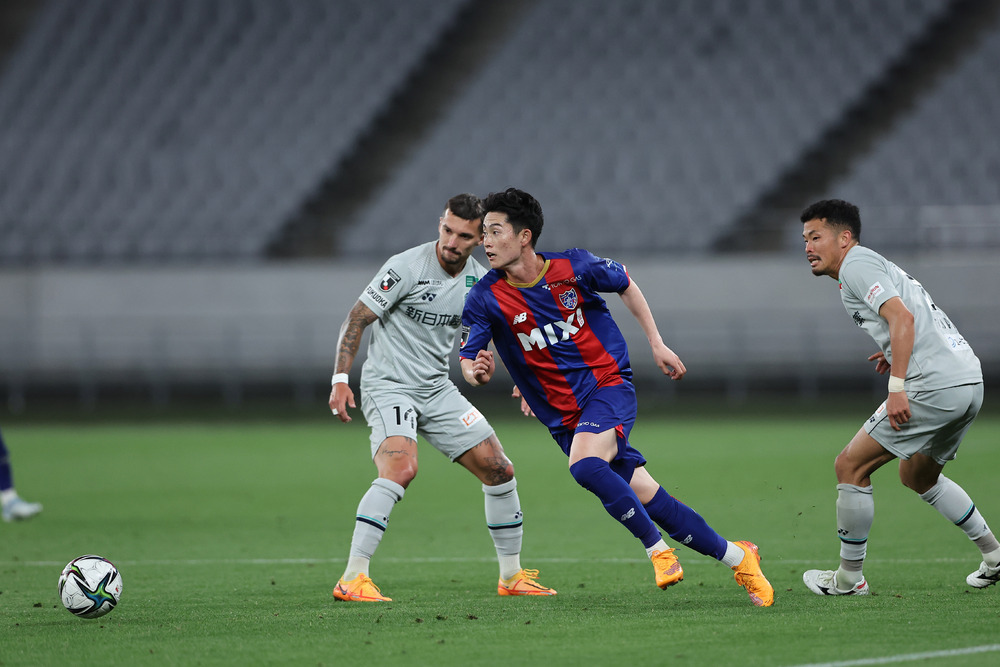
Q: Coach Albert has referred to the Levain Cup as a place for nurturing young players. What requests did the coach have for player Shinaida in today's match?
A: In the pre-match meeting, the instructions given to Watanabe and myself as inside halves were, 'Run as many kilometers as you can,' and for the young players, there were two directives: 'Play boldly.'
Q: I always have the image of calmly distributing the ball, but today I felt there were many dynamic plays. How did it feel?
A: In the first half, there was a scene that could be called the best chance of the day, from carrying the ball myself to taking a shot, and I am frustrated that I couldn't score there. I believe that if I don't produce results, I won't be selected for J1 League matches. However, since I had been imagining and playing that kind of play even in practice matches until now, I think it was good that I was able to express it in one form.
Q, did you get the feeling of being an inside half in today's game?
A: Coach Albert's method involves certain agreements, so I was playing while thinking about them. However, as I was told before the match, I entered the game with the mindset that young players should play boldly and freely. I think I was able to show good qualities both in the connecting parts and in advancing forward.
Q: Did you have the consciousness to bring together yourself in the midst of many players who were U-18 graduates or academy players?
A: I thought today was my last chance, so I didn’t have the composure to really organize the team, but it was easier to play.
Q: Please tell us about your mindset going into today's match, as we could see your passionate play right from the start of the game.
A, I hadn’t been able to get involved in matches much until now, so I approached this game with the mindset that if I couldn’t perform here, there wouldn’t be a next time. I made sure to prepare mentally and wanted to leave my mark statistically, and I think I was able to show a bit of my play.
Q, I didn't lose my motivation until the end.
A, As long as I am wearing the FC Tokyo emblem, that is the minimum requirement, and since I have been entrusted with the number 18 since last season, I wanted to achieve results both individually and as a team, keeping those aspects in mind.
<Renta HIGASHI>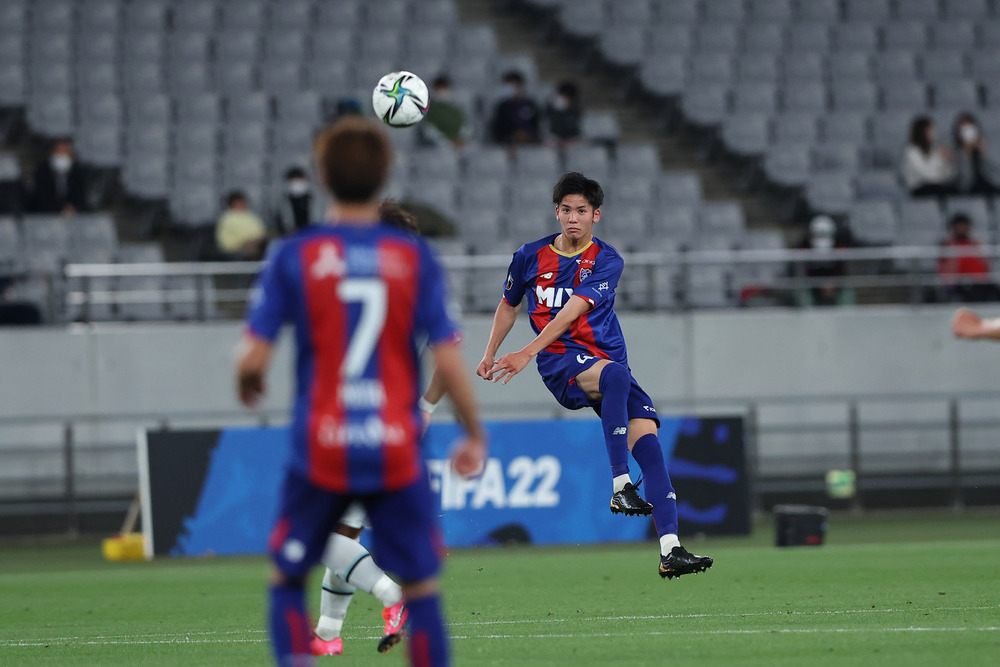
Q, how was it playing for 90 minutes in a professional match?
A, today I was able to play alongside Morishige, whom I admire, and it became the biggest experience for me so far. Morishige has competed on the world stage, so I wanted to learn even the finer details from him. I have been carefully watching and learning from his play during practice, but today I was able to experience up close his top-class play, such as drawing the opponent in and then switching the play to the opposite side, which was really great.
I was really bad in the first half. I made a lot of passing mistakes, but players Higashi, Mita, and Morishige encouraged me a lot, so I was able to switch my mindset in the second half, play well, and finish the match, which was good. From a corner kick in the second half, Mita delivered a great ball, but I couldn't finish it, so if I had scored there, I think we could have won. Finishing chances cleanly remains a challenge for me today.
Q, How was it to play in front of many fans and supporters at Ajinomoto Stadium?
A, today my mother came to watch the match. I am always fired up, but in that sense, it was a special feeling different from usual, and it was the first time I was able to show myself standing at Ajinomoto Stadium. She is my biggest supporter, so I played with all my might to meet her expectations.
Q: How do you feel about your performance so far this season and what are the challenges you have faced?
A, the number of challenges has gradually increased, and I have been able to address some of them, but I still fall short in the professional world, and there are areas where I can't compete even at the U-18 level. I am grateful for this valuable experience, so I need to clearly identify my challenges and raise my awareness starting from training.
Q, now that the Levain Cup is over, how do you feel about the upcoming league matches?
A, With players like Morishige and Kimoto, and Henrique also returning, I need to build up enough strength to be able to join them. I am still far from their level, but like in today’s match, I want to absorb and steal the plays of Morishige, make them my own, increase those instances, and my goal is to surpass them someday. I want to work hard so that I can become not just an admirer but a rival.
<Naoki KUMATA>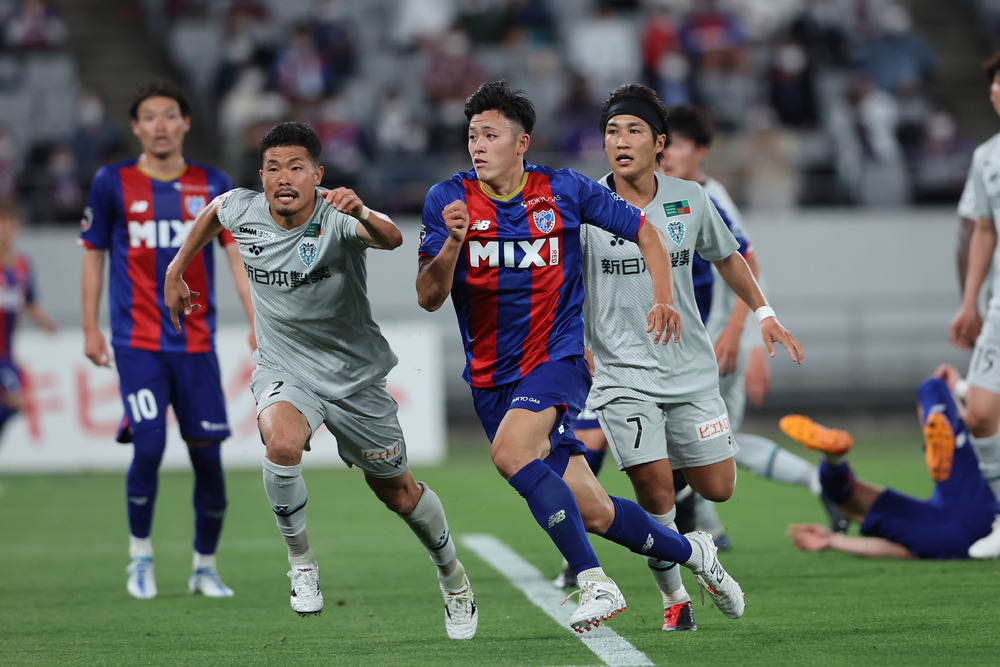
Q, this was your first start in the top team. Please reflect on the game.
A, I knew it would be a tough match, but personally, I was aiming for a result. Of course, it's frustrating that we couldn't win, but what I regret the most is not being able to score, and that leaves me with lingering regrets.
Q, please tell us your impressions of playing at Ajinomoto Stadium for the first time.
A, Many fans and supporters came, which truly gave me strength and created an environment where it was easy to play.
Q: Has playing for the top team for a long time today made your future goals more realistic?
A, I don’t think about that kind of thing; from now on, I want to continue approaching training and matches with 100% effort and aim to reach this stage again.
Q: Did you find any challenges for the future after experiencing today's match?
A, The intensity was completely different from matches at the U-18 level. So, getting used to this intensity is important, and I want to make use of this experience to be able to lead the team at the U-18 level.