

<Match Review>
In April, FC Tokyo has been playing a tight schedule of 7 matches in 2 weeks. In the first three matches against AFC Champions League teams, they have a record of 1 win, 1 draw, and 1 loss. On the 13th, they will face Shonan Bellmare in the Levain Cup, and then play their 5th consecutive match against Hokkaido Consadole Sapporo in the J1 League.
Tokyo, who has been changing their starting lineup in every game during this consecutive match schedule. In this match, Yasuki KIMOTO, who avoided the Urawa Reds game, returned and Ryoya OGAWA, who scored his first goal of the season in the match against Shonan on the 13th, returned to the starting lineup as the left back. The composition of the three midfielders remains unchanged, with Kensuke NAGAI starting as the right winger and Ryoma WATANABE starting as the left winger.
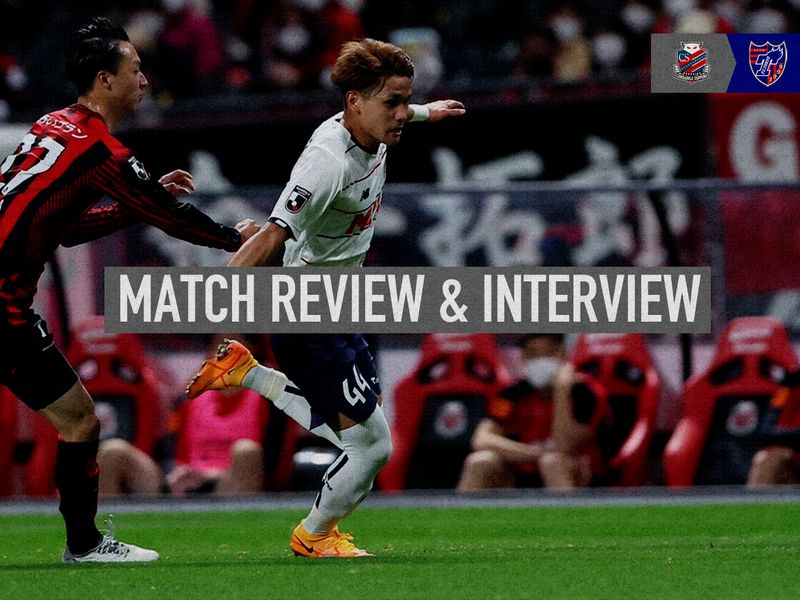
From the start, Sapporo maintained possession of the ball, including the goalkeeper, while Tokyo applied pressure from the front. However, they continued to be pushed back and struggled to break through. Even when they regained possession, they often lost the ball quickly due to miscommunication and the opponent's strong physical presence, making it difficult to find their rhythm. Nevertheless, despite not being able to maintain possession, Tokyo managed to exploit the space behind the forward-pressing Sapporo and created opportunities to penetrate the opponent's penalty area with direct play. Although they couldn't control the game effectively, they maintained the intensity of their pressing and responded without getting frustrated, preventing the opponent from finishing. The increase in ball possession began towards the end of the first half. They utilized a mix of short and long passes to spread the pitch and attempted to penetrate towards the opponent's goal from the sides. However, they couldn't find effective attacking options from the flanks, and as a next step, they aimed for the space behind the opponent, but this also did not lead to any decisive scenes, and the match went into halftime without any clear opportunities.
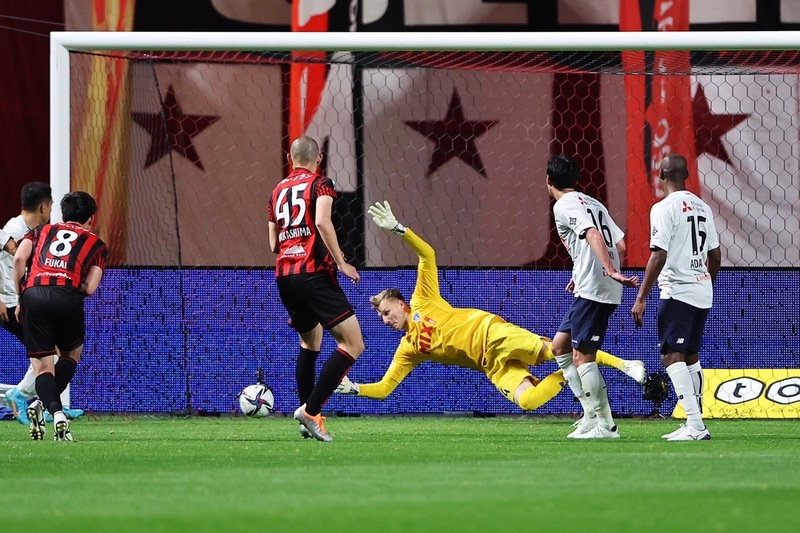
Tokyo, wanting to find its rhythm, rearranged the left and right wings, placing Nagai on the left and Watanabe on the right. In the 5th minute of the second half, Nagai broke into the space on the left side and carried the ball deep into the opponent's territory. He supplied a last pass aimed at the opposite side, but it was caught by the opponent's goalkeeper right in front of Watanabe, who had entered the goal area from the right side. As the second half progressed, Tokyo maintained possession of the ball, gradually entering the opponent's territory while fending off their press. To invigorate the attack, Adailton was brought on in the 13th minute of the second half to replace Nagai. Adailton became the switch for defense from the front line, disrupting the opponent's buildup and recovering the ball in midfield, leading to more opportunities for secondary and tertiary attacks in the second half. Although there was a period where the opponent was given no chance to counterattack, in the 27th minute of the second half, they managed to hold on near the goal line, and Aoki took a shot from a position close to the goal on the right, but it was deflected by Jakub Slowik. In the 31st minute of the second half, Kazuya Konno was brought on to replace Watanabe in an effort to further invigorate the attack.
In the 34th minute of the second half, there was a dangerous situation from a set piece. A corner kick from the left was headed towards the goal, but player Slowik made a saving play and then reacted quickly to stop the loose ball, making a big save right on the goal line. In the 40th minute of the second half, player Konno started the play and player Abe Shuto made a run down the right side, sending a fast cross into the box, but it narrowly missed connecting with anyone. In the 42nd minute of the second half, player Adailton on the left side sent a cross into the box for player Diego Oliveira, but his header just missed to the right of the goal. In the 44th minute of the second half, player Adailton dribbled into the left side of the penalty area and drew out the goalkeeper, sending a final pass into the box for player Matsuki Kuryu to slide and try to connect with, but it narrowly missed.
Tokyo took the lead in the second half, but they were unable to capitalize on their chances in the end and the game ended in a 0-0 draw for the second consecutive match. Next match, they will return to their home ground, Ajinomoto Stadium, and face Nagoya Grampus in just 3 days.
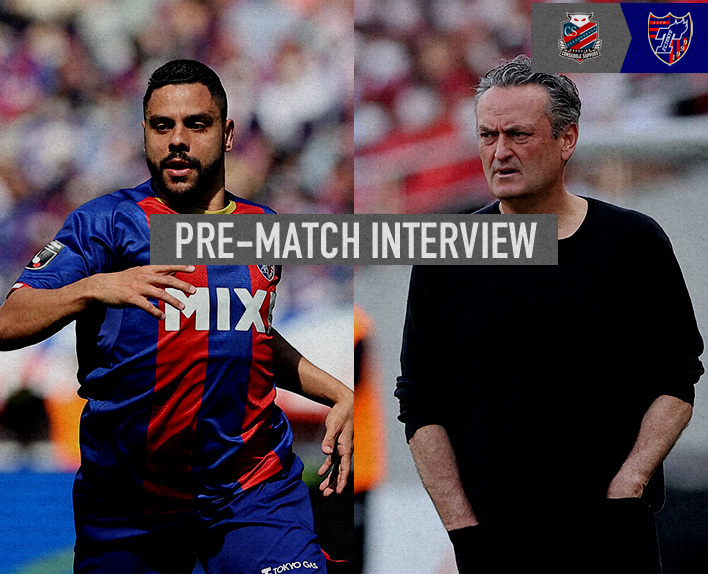
[Albert PUIG ORTONEDA Interview]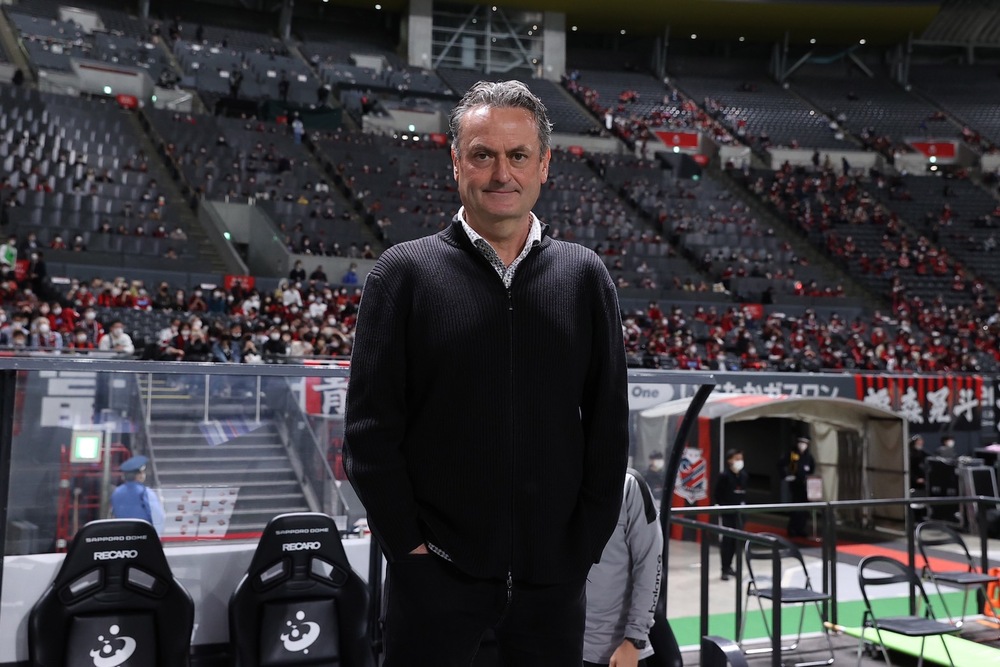
Q: please review the game.
A: I think for those who watched the game today, it was a very exciting match where both teams played aggressively. Both teams applied aggressive high pressing and fought offensively. There were periods during the match when we dominated, and there were also times when we were dominated. In the second half, both we and Sapporo had decisive chances. Since the outcome of soccer is determined by whether or not you can score goals, some people might think that, judging only by the 0-0 result, both sides played passively. However, I believe the only thing missing today was the goals.
I am very happy with the players' fighting spirit. As the games go on, the team has improved in dominating the matches. This team has only been started for about 3 months. I think it is worth evaluating how much it has grown in such a short period of time. The players are dedicated to winning every game and I am very satisfied and appreciative of their attitude.
Also, I would like to commend the opposing team. I am proud to have been able to compete against Coach Petrovic. It has only been a short time since I became a professional football team coach. I am still in the process of learning, so it is important to continue learning.
And I would also like to express my gratitude to the FC Tokyo fans and supporters who came to cheer us on. The Sapporo fans and supporters also applauded us, so I would like to take this opportunity to convey my thanks. Whether in Sapporo or Niigata, I feel that many people living in the northern part of Japan are kind-hearted.
Q, is it a negative result to have two consecutive goalless draws?
A, of course, the outcome of soccer depends on whether the ball hits the back of the net. Last season, when I was coaching Niigata, there were many matches where we dominated the game but struggled to score goals.
In today's match, if either team scored a goal in the early stages of the game, it was a match that ended in a tie, for example, 3-3.
As a coach, I focus on the number of decisive chances created rather than the number of goals scored, or how many decisive chances were allowed by the opposing team. For example, today we allowed Sapporo to create 2 or 3 decisive chances, but that is not a significant number, so I am relieved. I believe we also created 4 or 5 decisive chances ourselves. I view that aspect very positively.
I think it is difficult to snatch a victory in a match here in Sapporo. I appreciate the attitude of fighting for the win throughout the 90 minutes. In that sense, I view today's match positively. FC Tokyo never plays in a timid manner against any team.
Q: Player Matsuki is from Muroran City, Hokkaido. Please tell us about his recent performance and today's evaluation.
A: He probably grew that much because he had good meals in Hokkaido (laughs). He is still 18 years old. He is a player who has just recently entered the professional world after playing at the high school level. I think the difference in level is very large.
What are his strengths? I think it's the part that many Japanese players lack. His strong mentality, his determination to win, that's his strength.
I think Sapporo's young Nakajima player also has a wonderful mentality. Could it be that the air in Hokkaido creates a strong mentality?
The difference between European and Japanese players lies there, I think. It's not a difference in technical level. To compete at a high level in Europe, you need a winner's mentality, a mentality that is dedicated to victory, a strong mentality. I think it is highly commendable that 18-year-old Kuse already possesses that.
However, there are still areas that need improvement. For example, learning to have moments of calm play during matches is something he still needs to work on. He also needs to improve on not losing the ball easily. Nevertheless, he continues to challenge himself even after making mistakes. That is his wonderful quality. I believe that is proof of his strong mentality. It is only by having such a strong mentality that one can play at a high level. For example, Yuto NAGATOMO is also a player with a strong mentality. I think having a mentality like his is Kuse’s weapon.
[Player Interview]
<Jakub SLOWIK Player>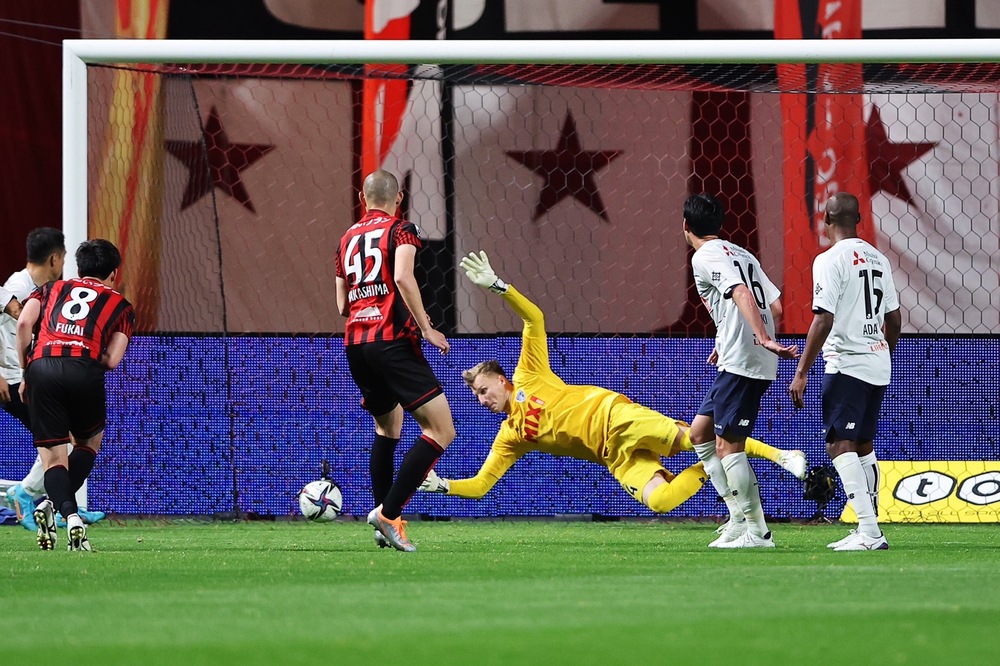
Q, there were also some big saves, but how do you evaluate today's match?
A, I think it was a tough game against a difficult opponent like Sapporo. It was my first experience playing at the Sapporo Dome, and it was not easy because it was a different environment from our usual stadium. However, looking on the bright side, bringing back 1 point is very significant for the team. Ideally, we wanted to win, but I want to return to Tokyo with a positive outlook on earning 1 point.
Q, it was a scoreless draw for two consecutive matches, but in other words, we managed to keep a clean sheet for two matches in a row. What do you think about that?
A, my role is to firmly protect the goal, so in that sense, I think it was good to keep a clean sheet. However, the clean sheet was not something I achieved alone; it was thanks to the cooperation of the defensive players. At the same time, I want to continue playing in a way that expresses our playing style as the starting point of our attack.
I think keeping a clean sheet is a wonderful achievement. However, winning would have been a very happy result for us. We are glad to be able to take home one point against a tough opponent like Sapporo, at the challenging venue of the Sapporo Dome.
Q, I think the defense was also active, where do you feel was good?
A, what was good about us was that the entire team worked in unison to defend from the front line. If even one person is missing, the defense cannot be built, so I believe that the good defense was a result of everyone concentrating and starting from Diego at the front line. While keeping what went well this time, I want to try within the team to improve what we couldn’t do and prepare to bring about better results.
Q: How do you prepare while having consecutive matches without any preparation period?
A, Although there isn't much time, it is important to properly switch gears and rest the body to recover. During meetings, deepening mutual understanding of the team tactics becomes crucial, and it is also important to carefully maintain condition while further ingraining the team tactics. Lastly, I want to sincerely express my gratitude because many fans and supporters came all the way to Hokkaido to cheer us on, which was an encouragement both for me and the team.
<Kuryu MATSUKI>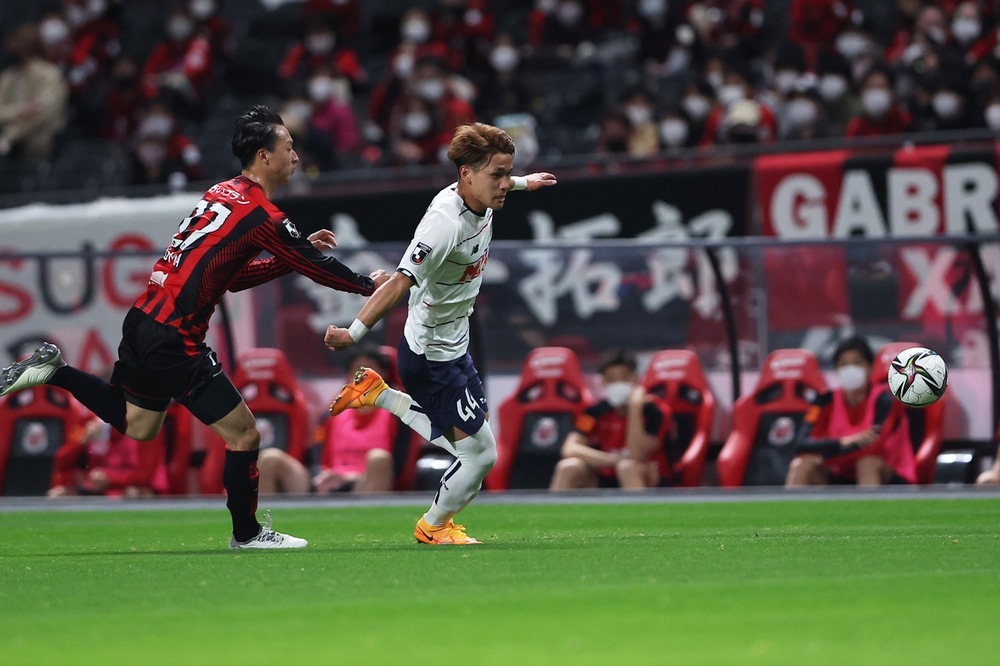
Q: There were also some close scenes at the end. Please reflect on today's game.
A: I haven't been able to score up to this point, and since I was aiming to contribute to the team with goals, the final scene was a bit sloppy and didn't lead to a score. However, from here on, I want to keep pushing myself to score more and more. I'm always aiming for the goal, so in situations where I can take a shot, I don't want to choose not to shoot and halt my growth. With the help of the senior players around me, I want to aggressively keep aiming for goals.
Q, it seems that Matsuki is able to organize his role and play.
A: The senior players around me have told me that I am free to play as I like on the pitch. I try to be proactive with my strengths such as stamina, hard work, and ball recovery. Since I am not a particularly skillful player myself, I want to aim for goals in a gritty, determined manner.
Q, today's match was the first official game in Hokkaido.
A, I approached the game just like any other match. However, since my parents came to watch today, I wanted to achieve a good result to repay them, but that will have to wait until next time.
Q: How was it to compete against player Nakajima, who is from the same generation as you?
A, I think we will continue to compete fiercely against each other in the future, and I believe we had a good match today.
Q: It has been two months since the opening. How do you feel about your own growth?
A, I also participated in the U-21 national team’s Dubai Cup and felt that there are many expectations from those around me, so I think I have been able to focus on moving toward the goal and thinking about what more I can do to contribute to the team.
Q, after the match, player Miyazawa was exchanging jerseys.
A: He may not remember, but when I was in elementary school, player Miyazawa came to my local team, and I had the chance to take a photo with him. I admired the stage where Miyazawa plays, so I’m glad I could play soccer together with that senior.
<Shuto ABE>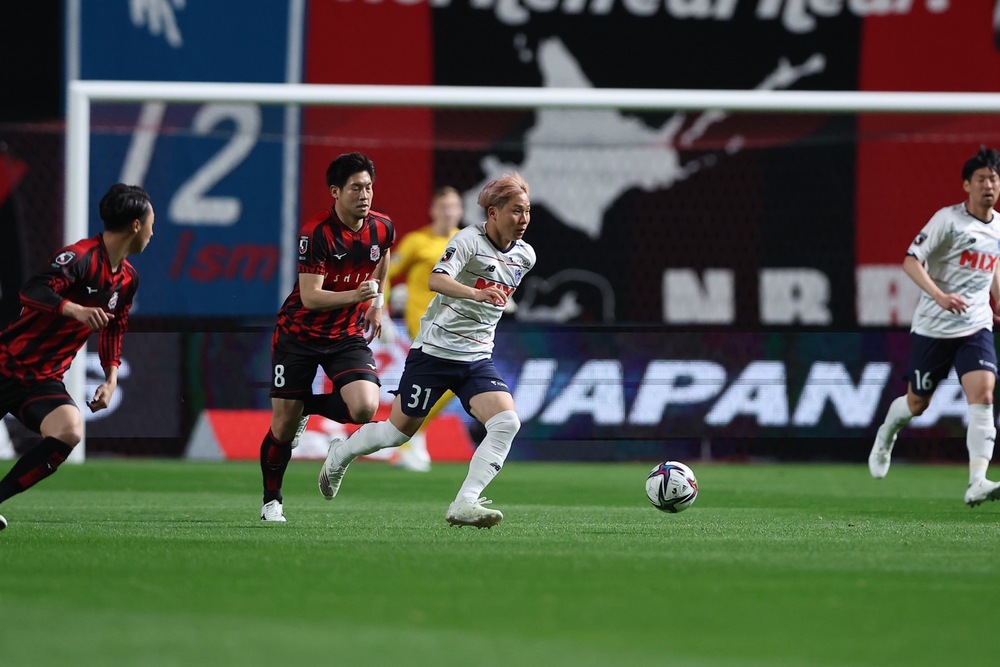
Q, how was the reflection of the 90 minutes?
A, we ultimately secured 1 point with a draw, but there were moments we needed to finish. It was a match where I felt we needed to create more chances.
Q: How did you feel about the opponent's attempt to cross from the side?
A, while Sapporo launched their unique attacks, we were able to defend tactically under the coach's guidance. Although they managed to send in crosses towards the end, we had enough players in position, so I believe our defense was solid.
Q: What kind of adjustments did you make in the second half, even though the game was evenly balanced?
A, the coach told us that the space behind the opponent's three-back would open up. Either I or Kuryu MATSUKI was thinking of making a run from the second line, and in the second half, there were several occasions where we broke through and created chances. However, I want to increase the number of those opportunities even more.
Q, I think we were able to create a good opportunity with the attack after taking the ball from Player Abe.
A, winning the ball and competing for every ball is one of my strengths, so I believe I must not lose in those situations. If I can win there against the opponent, it will create opportunities. I also think it comes down to the mental aspect, so I want to play with full commitment.
Q, how are you preparing for the next Nagoya match?
A, it will be a series of matches with only three days in between, but we will prepare well and, since the next game is at home, we want to play so that we can deliver 3 points to our fans and supporters.
<Takuya AOKI>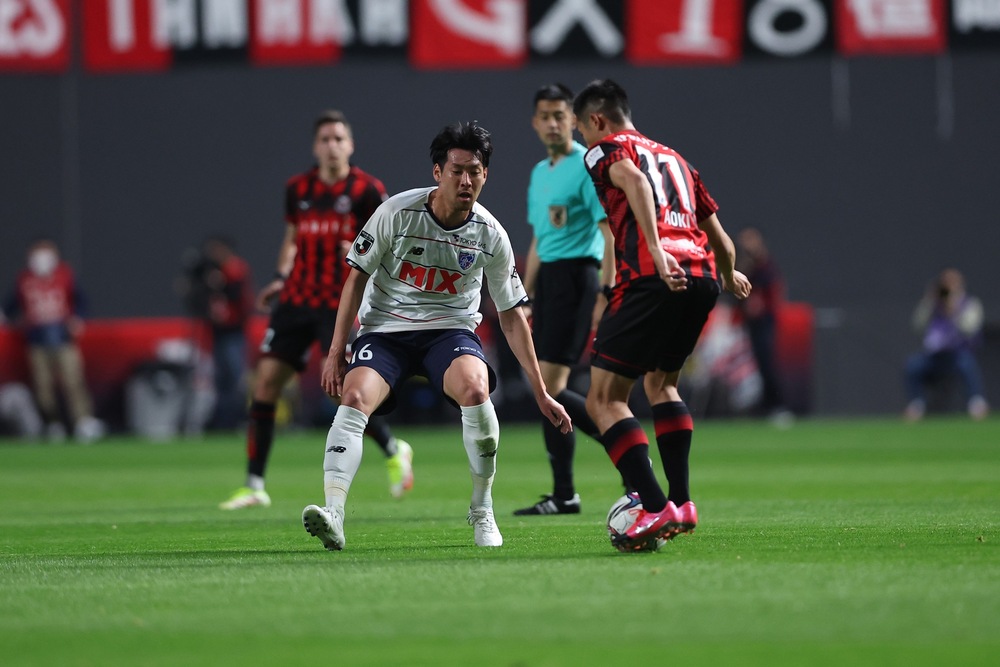
Q, it was a fierce match. Please reflect on the game.
A, I think it was a match where there were many moments when mistakes from both sides turned into chances.
Q, the matches against Coach PETROVIC always seem to be intense.
A, yes. I thought the key would be how patiently and calmly we could play without getting frustrated.
Q, I think the three midfielders had a lot of movement today as well. How was their relationship today?
A, I think all three were able to slide at good timing. I also believe we managed to make necessary adjustments during the match, so I want to continue without breaking this relationship.
Q, I think you are always conscious of being the starting point of offense and defense. How was your play in that aspect today?
A, since the opponent played man-to-man, there were not many opportunities to touch the ball, but I focused more on risk management after making mistakes and played with that in mind.
Q: The consecutive matches are still ongoing. Please share your enthusiasm for the home match against Nagoya, which we will face in three days.
A, since it is a home game and we have been drawing consecutively, we are in a situation where we need a victory. We want to unify our intentions firmly and approach the match with that mindset.
<Diego OLIVEIRA player>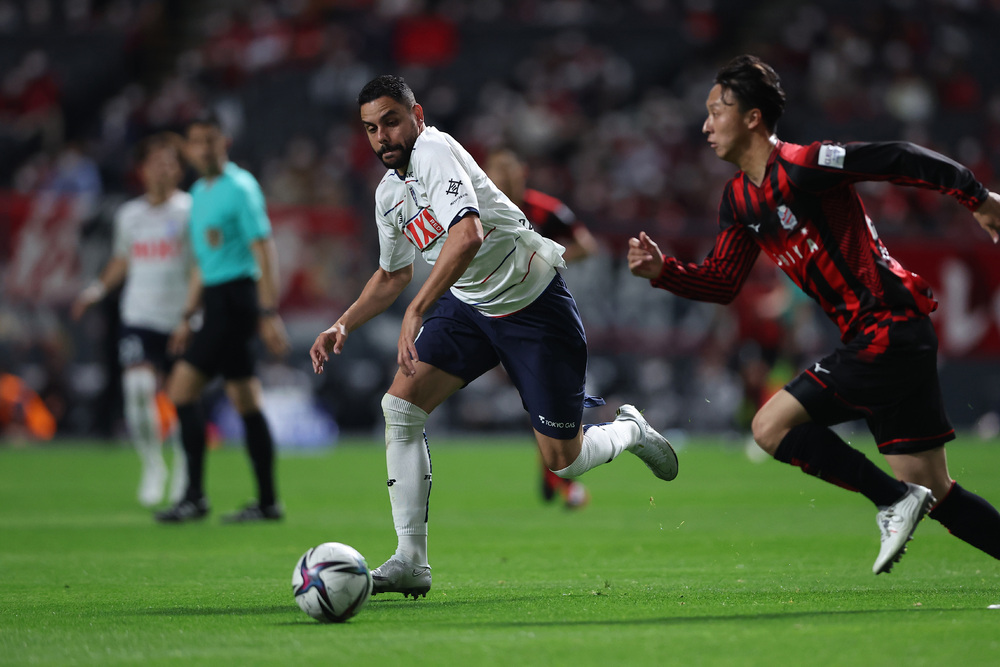
Q: Today's opponent played with a 3-back formation. Did you find it difficult to play against?
A, whether it was a 3-back or 4-back formation, I didn't particularly worry about it and just played. It was more difficult to play in an away venue.
Q, we were performing strong defense from the front line.
A: The high-intensity defense from the front line, which was the coach's objective, was also a key theme, so I believe we were able to follow the coach's instructions. After winning the ball, I wanted to score in the attack phase. It's unfortunate that it did not lead to a goal.
Q, I think he was creating chances by breaking through from behind.
A, since the opponent was playing with a 3-back formation, there was space behind them, so I was conscious of breaking through behind their defense.
Q, how was the coordination of the front line?
A, there were difficulties when the season started, but as time passed, I recognize that things have gradually improved. I believe it will continue to get better from here on.
Q: What goals do you have in mind for the next match as you continue to possess the ball?
A, we are able to maintain possession, but not being able to score goals is something we need to address. In soccer, even if you don’t have possession, you can still win by scoring goals, so while playing our style of soccer, we want to make sure we connect that to scoring goals effectively.