The 12 days spent in Shiraoi Town, Hokkaido, became a time to strengthen the core structure of the team. Steadily, piling up what one can do in the present. Those were the initial days of that process.
The 2026/27 season, transitioning to the new autumn-spring system, began with about a week at the Kodaira Ground after the team’s start, and from July 14, the team held its first-ever camp in Shiraoi Town, Hokkaido. The schedule in the northern land was centered around training matches, dedicating time to conditioning and integrating new players. Head coach Rikizo Matsuhashi expressed his impressions as follows.
“Even though we weren’t in perfect condition, perhaps due to the season, the body moved well. While gradually increasing intensity during training in Tokyo, I think we were able to achieve the goal of reaching 100 percent here to some extent. It went by in the blink of an eye, but if we consider this camp as something conducted with awareness of the two weeks after returning to Tokyo before the season opener, I feel a good sense of accomplishment.”
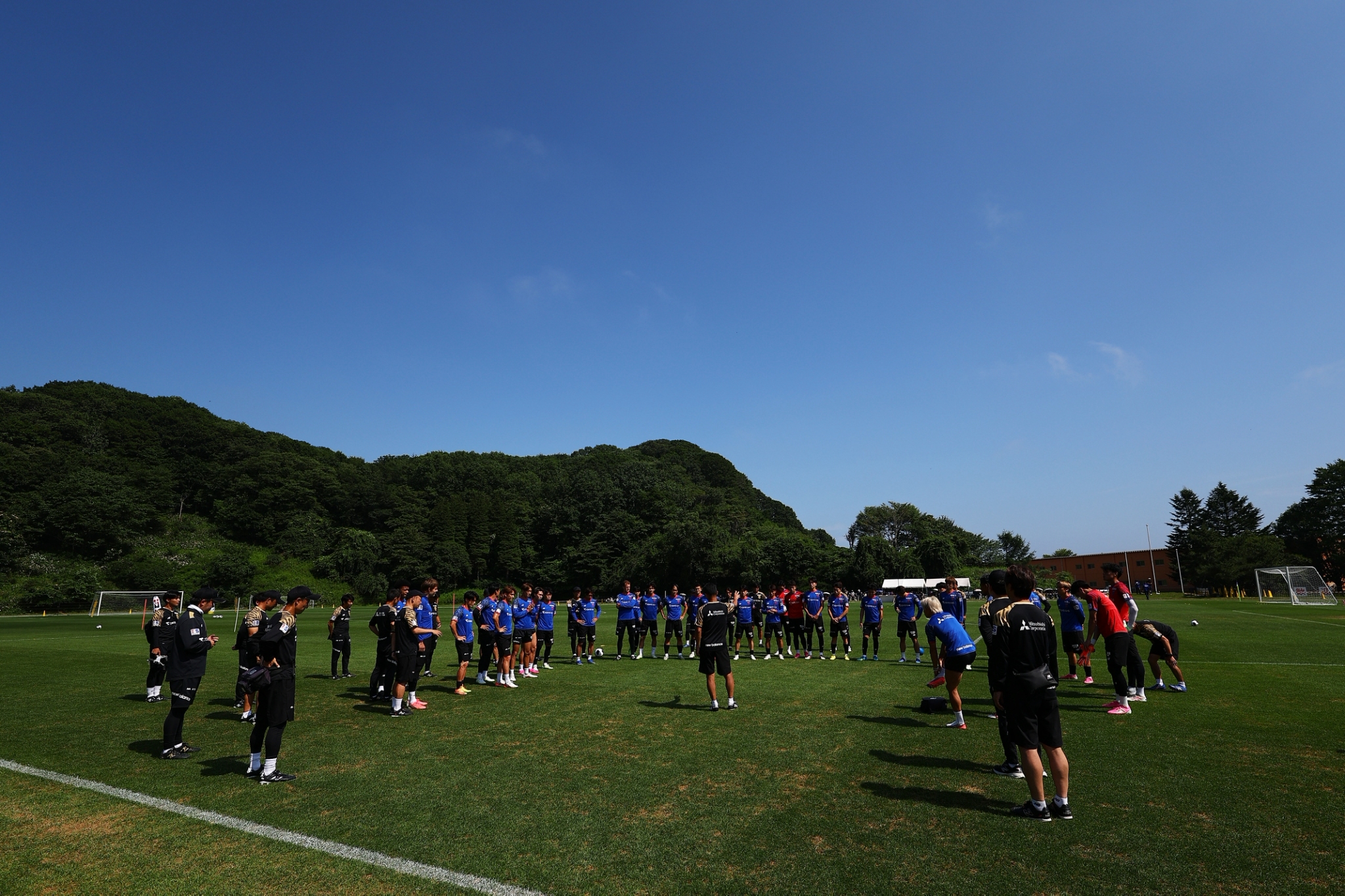
Also, within the limited time, training that leveraged the challenges of the Meiji Yasuda J1 Century Vision League was conducted with a focused theme. Offensively, the team worked on breaking down the sides after pressing forward, and particularly devoted time to shooting practice from crosses. The coach shook his head saying, "Not yet," and continued as follows.
“The needle swings in a good way, but I think the key is how we can actually utilize that in real games. The players put their full effort into what they believe is ‘this,’ so I think we had good reactions, good challenges, and good results all at the same time. As expected, every team prepares countermeasures for the central zone, which is our lifeline. Assuming that, we need to expand various variations and the range of our attacks. By steadily building on this little by little, I believe it will definitely lead to something good. It’s difficult to achieve this with just the camp, so this was an introductory phase throughout the season. I was able to convey the message to everyone, and I think they understand to some extent the picture I have in my mind. There are still many areas that need fine-tuning and renewal, so I want to work on those throughout the season.”
In defense, the team reaffirmed their commitments for each area, including high pressing, middle block, and dealing with crosses. They have been repeating these drills to ingrain them into their bodies. The awareness of the honed high press and transitions is high, and even in practice, the standards seem to have risen a notch. Coach Matsuhashi looks ahead, saying, "It is difficult to maintain this for 90 minutes in an actual game. Since the opponent’s system and methods vary, I believe that by continuing to train on this, it will become our own."
In the first external match of the season, a practice game against Montedio Yamagata, there were long periods where offense and defense clicked and the team dominated the opponent. However, despite creating many scoring opportunities, goals remained elusive, and the total score over three 45-minute periods was a 1-2 loss. In the third period, where many academy players participated, they played a half-court game against professionals but conceded the winning goal due to a brief lapse. The result was contrary to the dominant performance on the field.
After the match, the words that came from the coach were, "There isn’t a single player here who doesn’t feel frustrated, right?"
"The more I watched the third match, the more interesting it became, but you have to win against opponents like this if you want to carve out your own path. The club has its own philosophy and ideals, which is reflected in the composition of this camp’s members. The result of the three matches is a loss. It’s not ‘this is fine for this timing,’ but in the league, we must earn 3 points. Let’s think about how to get 3 points in every league game."
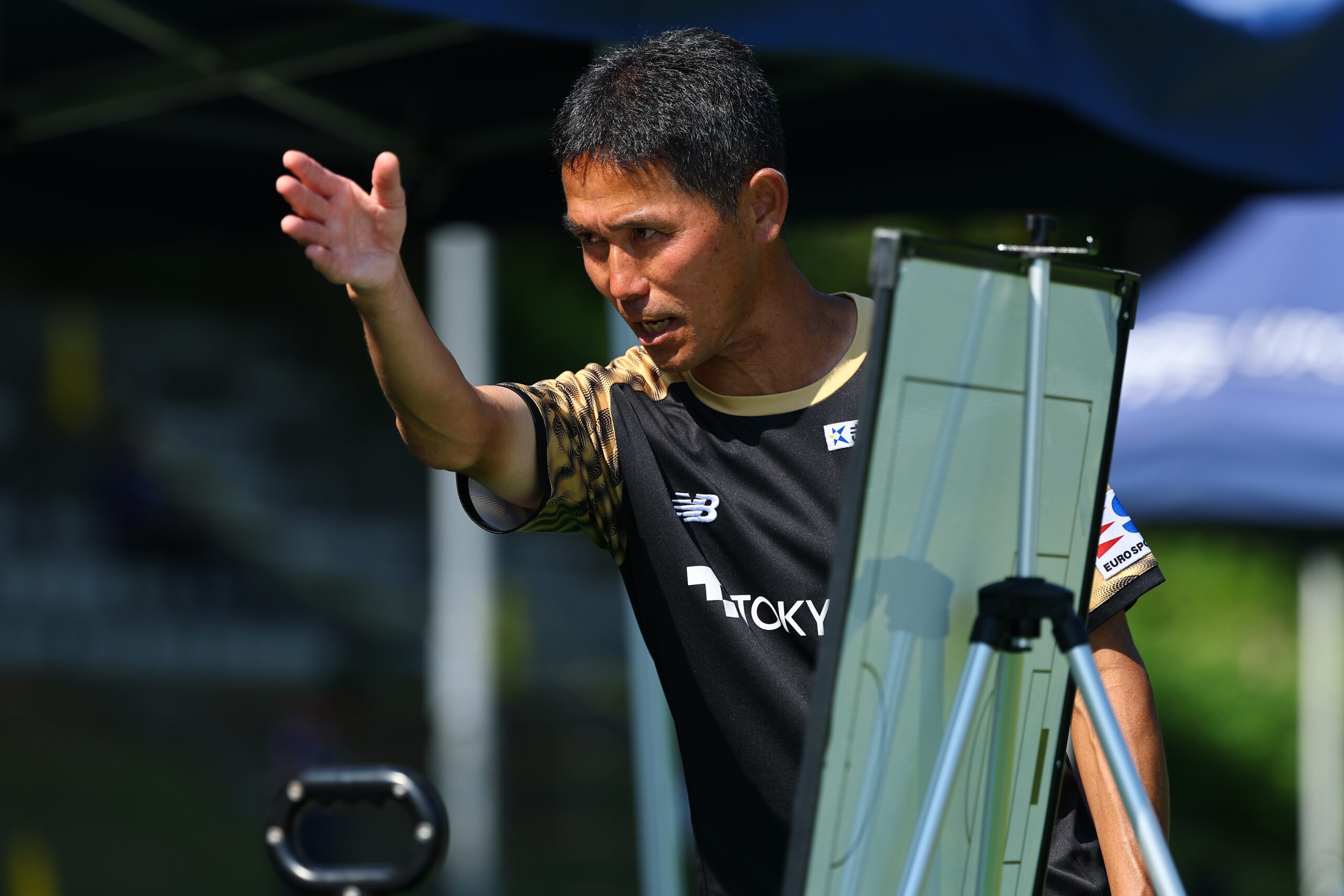
In the meeting before the upcoming training match against Nagoya Grampus, the coach said, "If there are players who don't feel frustration about losing, I think that's a lie," and spoke to the players with even more direct words.
"Depending on the situation, I might ask you to move forward instead of connecting from the back. I might say to play a long ball, win the second ball, and press on aggressively."
This did not mean a change in tactics, but above all, it was a strong message to "be obsessed with victory." The players who accepted that resolve each processed it in their own minds and began to speak in unison, saying, "We want to become a team that can make better decisions according to the situation."
Coach Matsuhashi, with a slight smile, continued, "They always respond when we communicate with them."
"Ultimately, offense is the best defense, and if we have the ball, we won't concede goals. If we take the lead by one goal, we will keep possession and aim for the second goal. However, that is not absolute. In soccer, it is common for the team that scores first to end up on the back foot. We must share a common understanding of how to prevent them from gaining that rhythm. While moving the ball along the defensive line, if the opponent presses forward, we will target the space behind and recover the second ball. I think we will create our rhythm in the opponent’s territory and use the flanks instead of the center, which is more vulnerable to counters."
To draw such a formula for victory on the pitch, this camp has focused intensively on refining side attacks. If we allocate enough players to the sides, immediate recovery of the ball is possible even if it is lost. With that in mind, we have been trying to create new opportunities on the flanks.
“There is no single correct answer. However, what is important is to make what we do the correct answer. We must continue to align our perspectives.”
Transforming the presented intentions into the optimal solution on the pitch with our own hands—. The match against Nagoya, which came after such a mutual adjustment of awareness, was exactly a game where that situational judgment bore fruit. In the early stages, we struggled against a man-to-man style opponent. However, using a bold action as the starting point, we found a rotation to break down the man-to-man defense and brilliantly secured a 2-1 come-from-behind victory. It was also a small success experience where the players on the pitch drew the “correct answer” closer with their own hands.
“They were aware of the optimal solution for what was happening in that moment. This is something that can also occur in upcoming league matches. Tactics and theory are important, but when you actually step onto the pitch, it’s about how you make them succeed. There are many ways to break away from a man-to-man opponent, but this was a game where we were able to steer things in a positive direction ourselves. That is what I expect.”
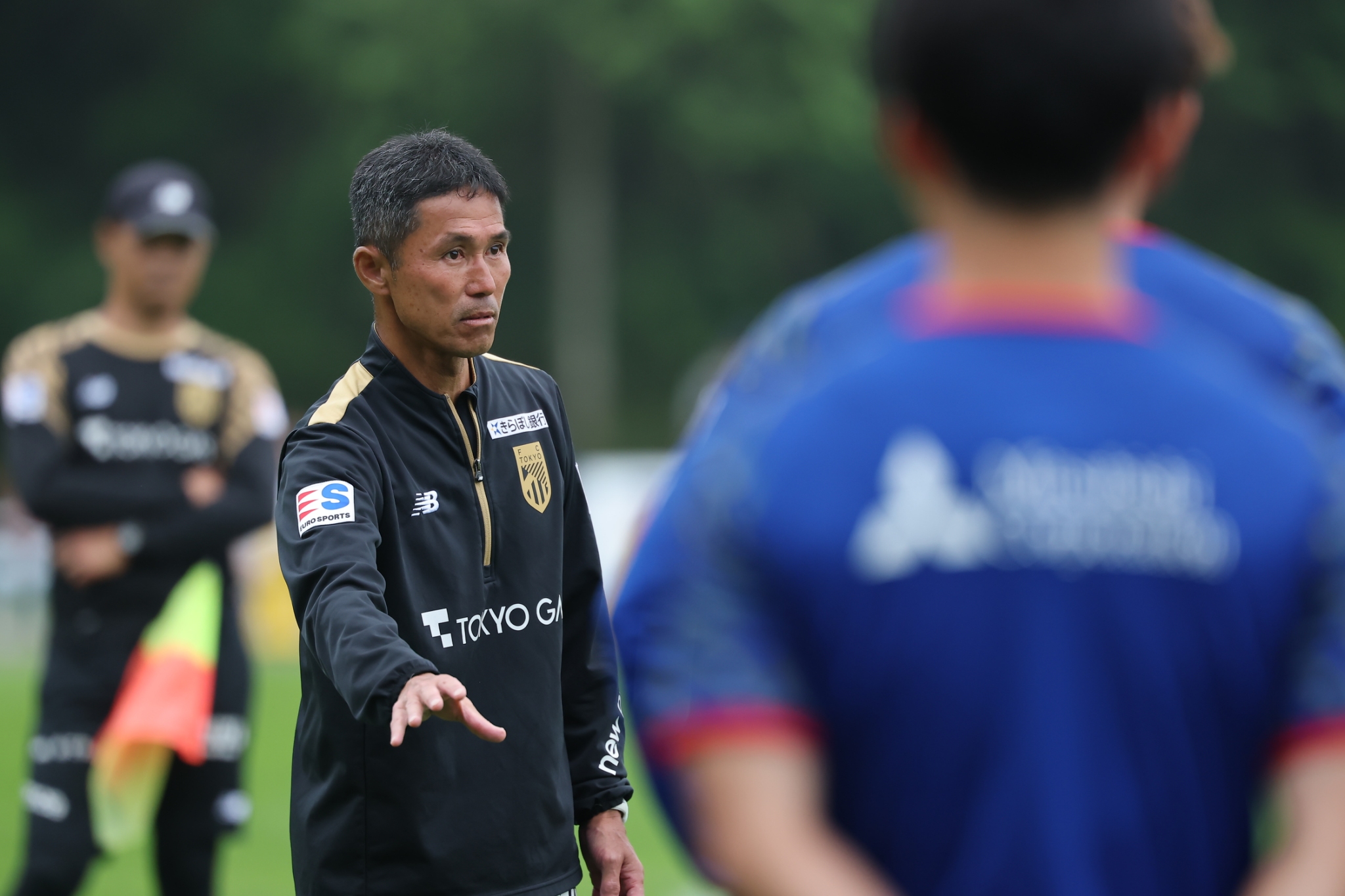
To further evolve the team that has grown in the Meiji Yasuda J1 Century Vision League, we have been striving to refine the finer details. Everything is for the sake of seizing the two characters of “championship.” Coach Matsuhashi reportedly shared these words with the players during a meeting ahead of the new season.
"We must live each day with the aim of achieving the goals we have set. I believe there is no other way. We are heading toward the bright future of winning the league, but that future may still be far ahead. Even if we don’t look that far, this very moment is already the future. We keep moving forward, advancing into the future. That’s why 'the future is now.'"
He also added this secret to cherishing the “now.” The sincerity was evident in the coach’s expression as he emphasized the importance of steadily accumulating efforts day by day.
“I believe what matters is how much you can do now and how much you can dedicate yourself to it. However, people tend to overestimate what they can accomplish in a single day and end up overwhelmed, even though they actually can’t do that much. That’s why how you value the present moment is everything. Without overestimating what can be done in a single day here and now, I believe that the future waiting ahead—built on steady, consistent efforts—will surely bring great results. This camp didn’t start by tackling too many things at once; we progressed with clear themes in mind. In the remaining two weeks of the preseason, we want to refine the details and head into the opening match. I hope we can get off to a good start and then steadily, whether gradually or rapidly, move upward so that in the end, we find ourselves at the very top. I believe this moment is for that purpose, and I want to share this mindset with everyone as we move forward.”
He looks at that “now” more passionately and calmly than anyone else. Before the start of the new season, the coach expressed, “I want to be the one who wishes for the league championship the most.”
He says, “I’m the type of person whose ups and downs are hard to see, and I always have to keep myself in a neutral state,” but those 12 days also offered glimpses of that side of him in unexpected moments.
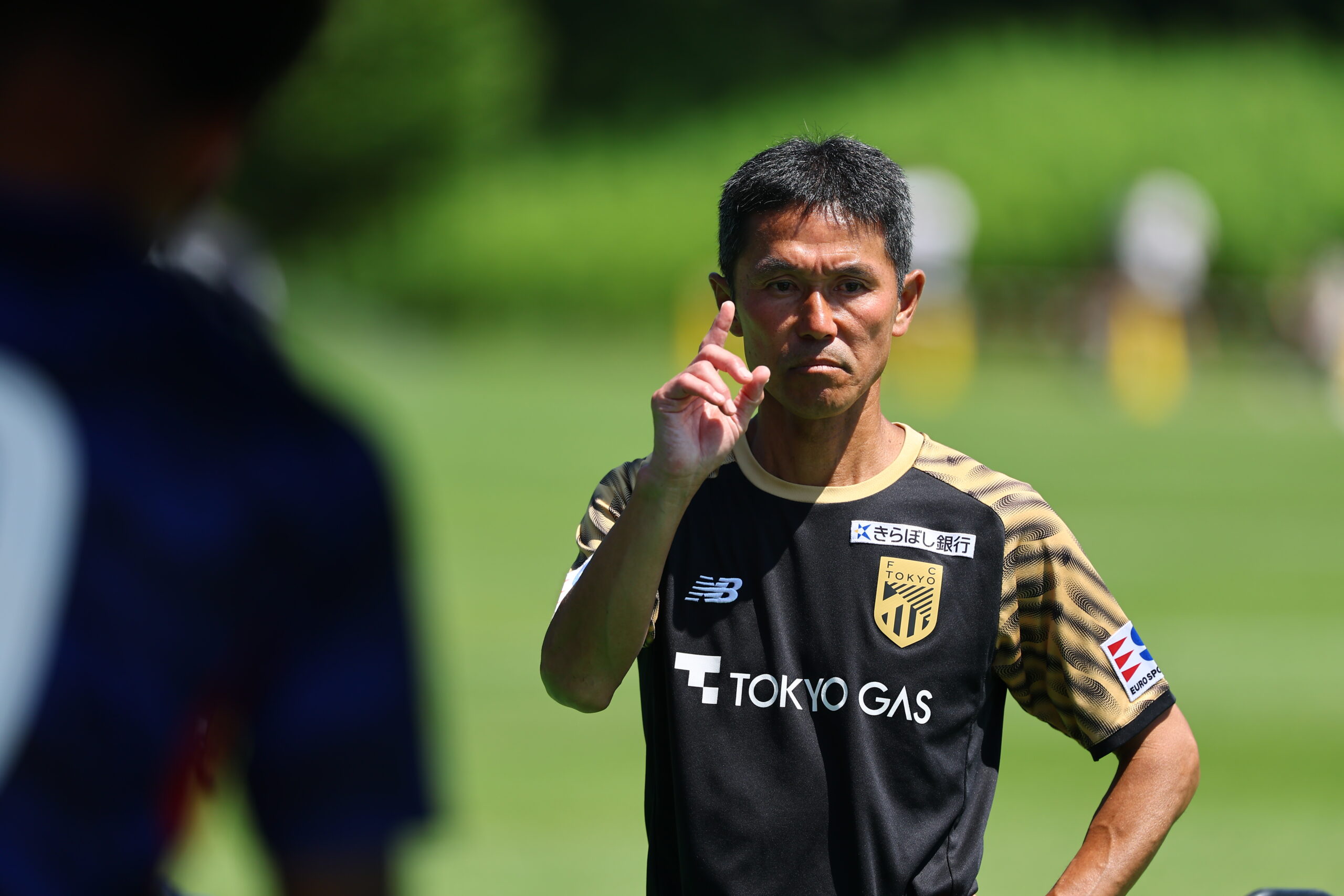
"If I am not like that myself, they cannot think that way either. There were times during the camp when I raised my voice, and how much we can regret each and every loss. I have also tried some new approaches in meetings since becoming the manager. I have to challenge myself even more than what I demand from the players. If that ultimately leads to great results, then I must continue doing it myself."
The passion shown by the man who always strives to remain neutral steadily spread to the players throughout these intense days. After the camp in Shiraoi Town, Hokkaido, they have become a group even hungrier for victory.
Seeking answers that are not singular and making the chosen approach the right one. The path that “Rikizo Tokyo” aims for, leading to the summit of the 2026/27 season, was clearly demonstrated on the northern land.
(Honorifics omitted in the text)
Text by Tadashi BABA (Freelance Writer)