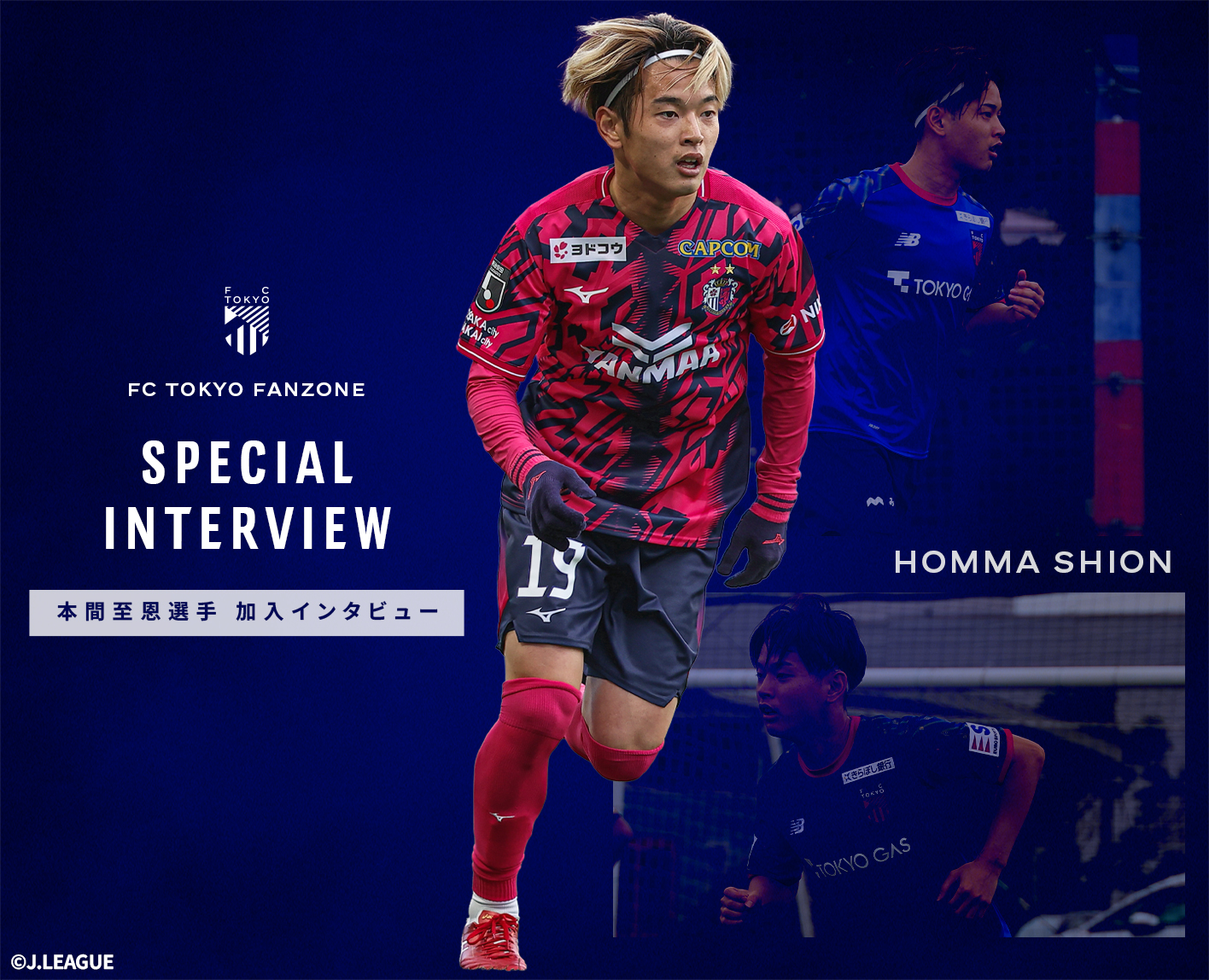


Q. Could you tell us about the circumstances that led you to decide to transfer to Tokyo?
A. I worked with Coach Rikizo MATSUHASHI during my time at Albirex Niigata, and understanding the style of soccer he wants to play was a major reason for deciding to transfer. Another big factor was believing that I could achieve the goal of winning the league with FC Tokyo.I had a direct meeting involving the technical staff and Coach MATSUHASHI, where they explained where they wanted me to play and the kind of play they expected from me. That gave me a clear image, and since I knew many of the players, along with my desire to play for a team that can win the championship, I felt strongly about it. I sense that Tokyo is a team with momentum, and considering all these factors, I decided to make the transfer.
Q. You transferred to an overseas club and then returned to the J.League. I imagine you also had some injuries, but were there any difficulties you felt upon returning to Japan?
A. It was that I couldn’t firmly secure playing opportunities at the first club I joined after returning to Japan (Urawa Reds). Since my condition wasn’t particularly bad, I wanted to get more playing time and play more. Although I returned to Japan, I immediately faced a difficult situation. However, after transferring to Cerezo Osaka, I was gradually able to increase my playing time, and my condition steadily improved. I believe I am in good shape now.
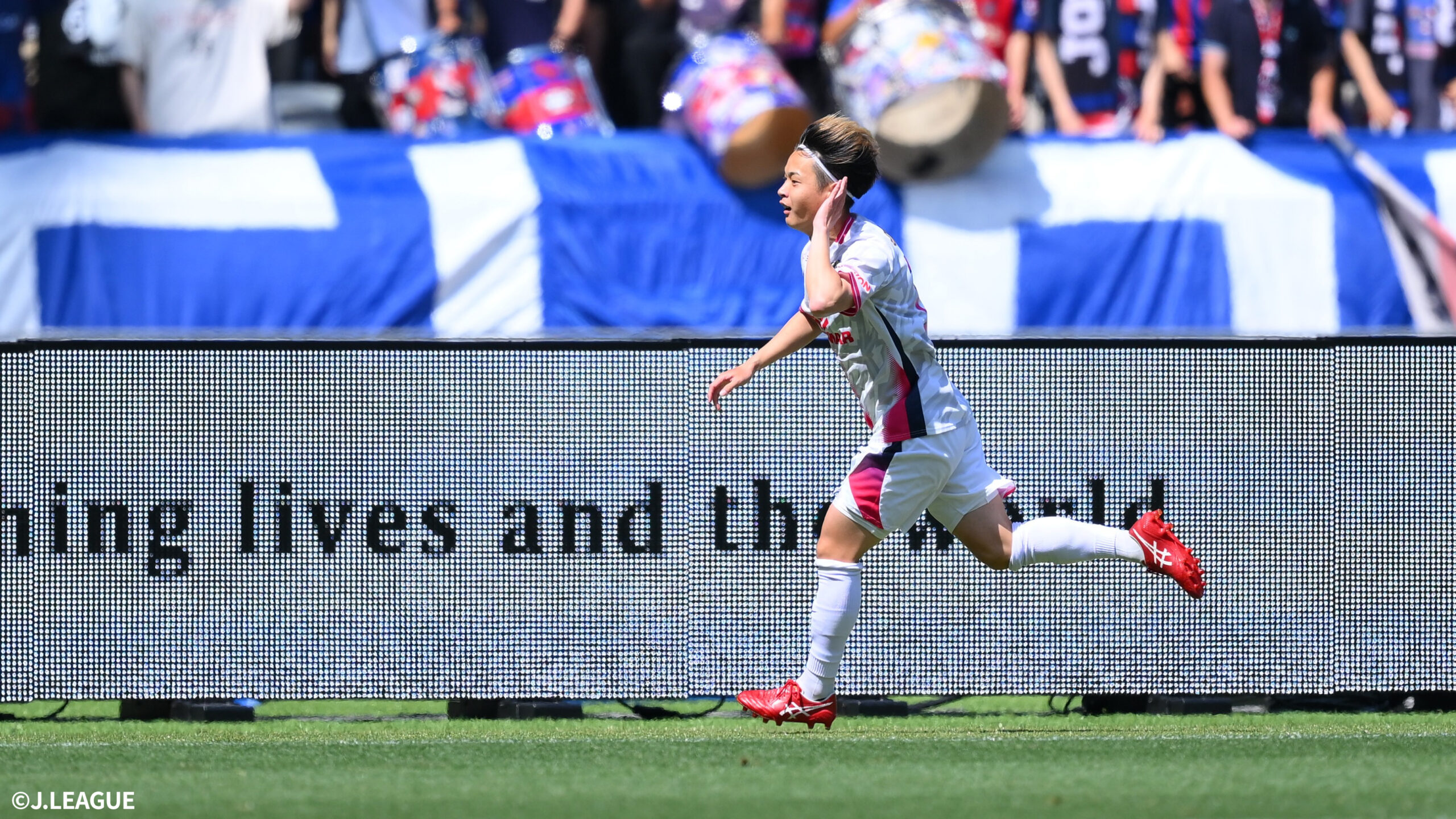
Q. You made a strong impression by scoring a goal in the Meiji Yasuda J1 Century Vision League playoffs. It seems like you were in good form; how do you look back on that period?
A. I wish I had achieved a bit more in terms of results, but considering the amount of playing time I had, I think the outcome was not bad. However, I do feel that I wanted to contribute more to the team. Even so, compared to the period when I couldn’t play, my match sharpness has returned, and I truly believe my condition has improved significantly.
Q. Please tell us about your image of FC Tokyo and their style of play from your perspective.
A. I think there is quite a high degree of freedom. Of course, there are things that must be done, but I feel that the players' creativity is very important. As a team, I had the impression that their counterattacks were somewhat frightening. As an opponent, the forwards have individual strength, and even when they are being pressed, they left a very intimidating impression. They can also maintain possession of the ball, and I had the impression that everyone was very skilled. In the second match of the playoff round, it was good that we scored three goals in the first half, but in the second half, we were pressed and the situation completely reversed. We faced tremendous pressure, and they were truly strong.
Q. When you actually matched up against players, were there any players you found threatening or particularly noteworthy?
A. Sei MUROYA is amazing. When going one-on-one, you really feel the pressure; he’s fast, strong, and aggressive. I experienced firsthand the high level of skill he has from playing overseas for a long time. His competitiveness and fighting spirit stand out, and I felt that he truly has a very positive impact on the team. Even when facing him, I often thought, "Even if I try to take him on, I can’t get past him."
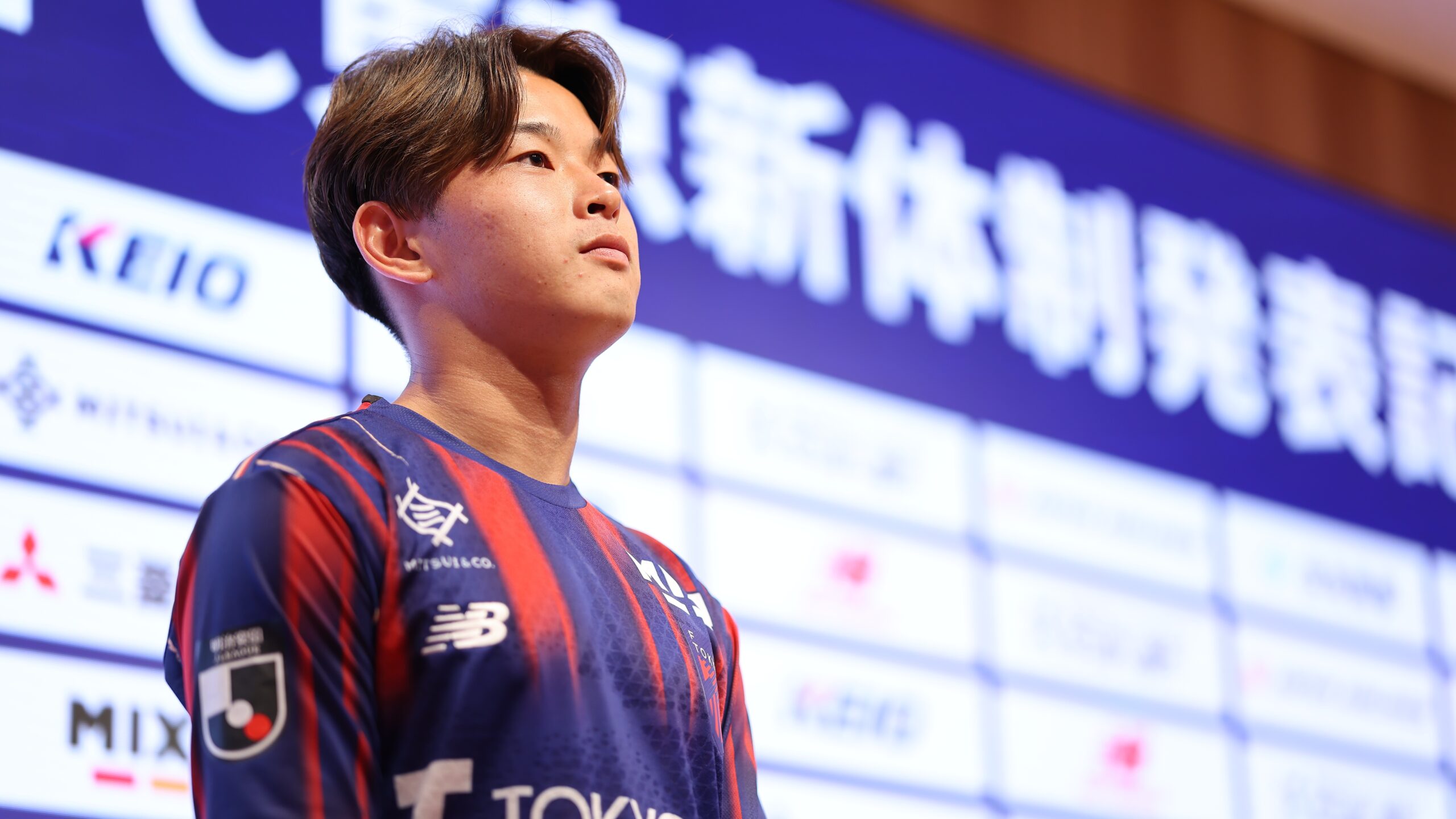
Q, Considering your strong points, how do you want to integrate them with the current team style?
A, I take on one-on-one situations near the sidelines, but I’m not the type of player who completely breaks away vertically with speed. I want people to watch how I break down defenses through coordination with those around me. I will aggressively take on opportunities where I can go solo. The accuracy of my final passes and shots has always been a challenge, and I want to refine that. If I can produce good results, I believe the team can rise even higher, so I really want to work hard on that.
Q. You have gained a lot of experience with various teams. Now that you have joined Tokyo, is there anything you personally want to achieve based on your past experiences?
A. Even when I talk about personal goals, it ultimately comes down to the team. I’m gradually reaching an age where I’m no longer very young. That’s precisely why I want to win titles in Japan that I haven’t won yet. Of course, the league title is the biggest goal, but I want to win as many titles as possible, including others. That is truly my goal as well as the team’s goal. It all comes down to that.
Q. Please share your enthusiasm and message for the fans and supporters.
A. I have felt since competing against them that the passionate support from FC Tokyo’s fans and supporters is a great source of strength for the players. Receiving that wonderful encouragement, I will do my best. Let’s win titles together.