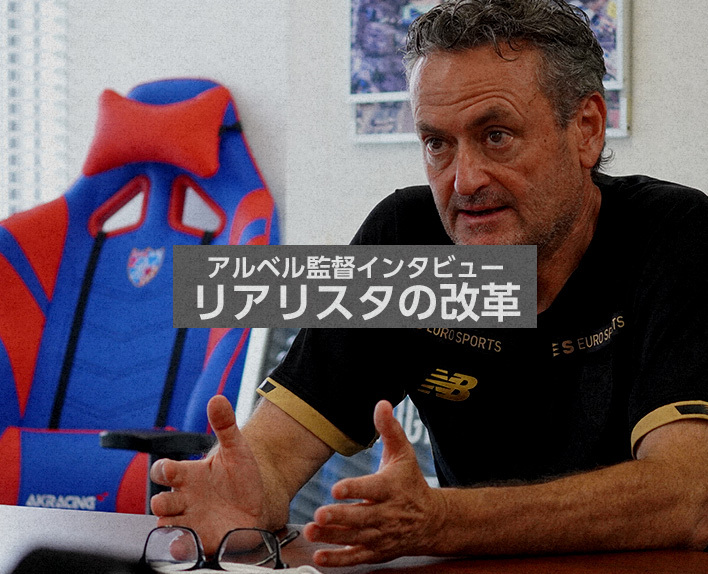


Albert PUIG ORTONEDA took over as coach and the 2022 season, which aims to build a new playing style, is now down to the final third. How much has the team grown so far? We interviewed sports writer Atsushi Iio, who also interviewed coach Albert before the start of the season, to ask the commander about the team's current position.
Q, the match against Hokkaido Consadole Sapporo on July 6th was a test match for vocal support operation. It was the first time for Coach Albert to hear cheers and chants in Japan since the opening match of the 2020 season when he was leading Albirex Niigata. How did you feel about the singing voices of the fans and supporters?
A, I think the atmosphere that should originally be in the stadium has returned. During these two years, there were times when matches were held without spectators. Even when fans and supporters began to fill the stands, they were unable to raise their voices. I believe everyone felt frustrated, and we also found it tough. What I want to convey to those who cheered at Ajinomoto Stadium that day is that both "You’ll Never Walk Alone" and the "Albert Tokyo" chants were clearly heard. Your support gave us a boost, allowing us to play a wonderful match. At the same time, I could also hear the fans and supporters of Sapporo continuing their cheers until the very end. I want to express my gratitude to the fans and supporters of both teams who created such a fantastic atmosphere.
Q: By the way, what do you think Albert PUIG ORTONEDA thinks of himself as a romanticist or a realist, as a type of coach?
A, suddenly, what's wrong (laughs). I consider myself a realist.
Q, why do you think so?
A, Romantistais something that ends just by dreaming. However, I always look at reality in order to incorporate my ideal soccer into the team. In recent years, with the spread of the internet and the development of technology, soccer analysis has advanced extremely, but on the other hand, I feel that the elements that soccer originally possesses are being lost. For example, there is an overflow of tactical analysis of soccer on the internet. There is a prevailing opinion that winning a game means winning tactically, and losing a game means having a bad tactic, but soccer is not that simple. A team is a group of living human beings. Each person has strengths and weaknesses, and sometimes they have problems off the pitch. The coach must bring together such living human beings effectively. That's why, while having ideals, I always face reality.
Q, the reason is that in the first 10 games of the season, there were many direct plays and the style from the previous season was strongly evident. We gradually want to incorporate the playing style we aim for while earning points and make it possible to embody "soccer that loves the ball". I felt the skillfulness in this aspect.
A, the first thing I felt when I came to this club was that there were few mid-career players in their late 20s, and the team was composed mostly of young players and veterans. Furthermore, the team struggled with the novel coronavirus in the early part of the season. In such a situation, if I had stubbornly stuck to my ideals, what do you think would have happened? We might have been fighting to avoid relegation by now. What I need to do this season is to gradually get the team used to the new playing style and build a foundation, while also giving young players opportunities and gradually rejuvenating the team. You can understand that things are slowly changing by comparing the possession rates of the past few years with this season.
Q, while building a base and giving young players a chance, and earning as many points as possible. In the midst of such difficult challenges, I think the matches against Shimizu S-Pulse on May 25th and Kashima Antlers on May 29th embodied the soccer that Coach Albert PUIG ORTONEDA aims for. Especially the match against Kashima Antlers was a game that showed the guideline of "this is the standard".
A, I think we played well in those two matches. Also, the first half of the Emperor's Cup match against V-Varen Nagasaki on June 22nd and the match against Sagan Tosu on June 26th were not bad. It can be said that the team has progressed to the next phase. However, as we have become able to possess the ball, technical mistakes have become more noticeable and we have been exposed to counterattacks more often. This is a new challenge that comes with growth. It still takes time to be more composed in controlling the ball, provide appropriate support, and aim for the opponent's goal at the right timing.
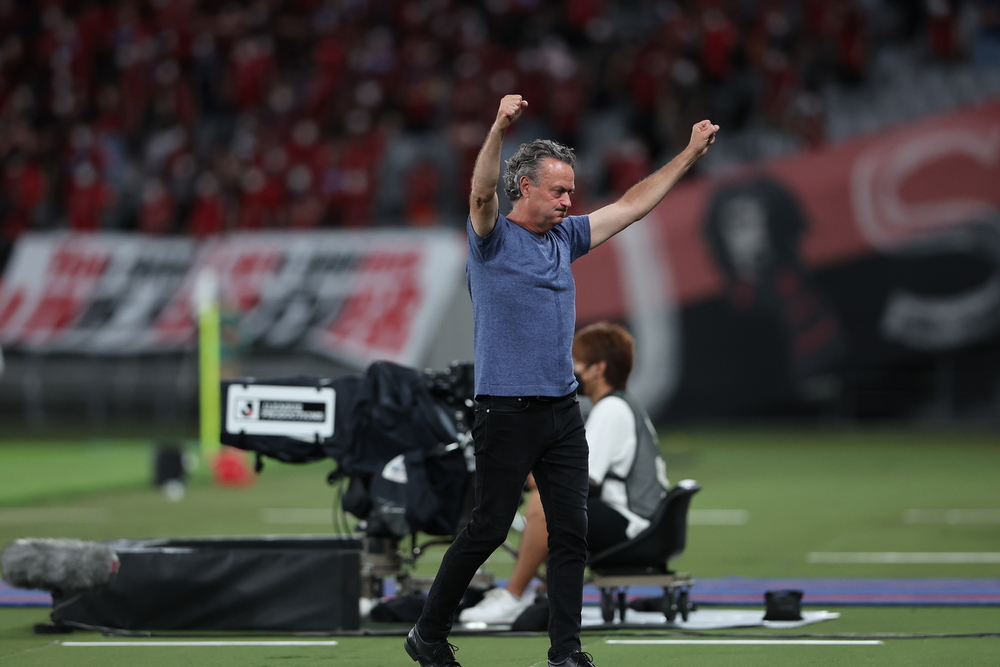
Q: When you are building your style, you said, "Sometimes you have to take two steps forward and one step back."
A, moreover, there have been a series of injuries. When so many players are injured, there is a limit to what the coach can do. With Henrique TREVISAN sidelined, Morishige (Masato) and Kimoto (Yasuki) have had to continue playing as center backs. Hodaka (Nakamura), Takuya AOKI, and Shuto ABE are also injured, and Adailton and Diego OLIVEIRA are playing while dealing with pain. Given this team situation, we had no choice but to place 18- and 19-year-old players in the center of the team.
Q, it's Kuryu MATSUKI and Yuki KAJIURA, right?
A, if Kajiura had not made a passing mistake in the match against Urawa on July 10th and the halftime score had been 0-0, the subsequent flow of the game would have been completely different. It may sound harsh, but that conceded goal had a significant impact on the course of the match. It was a painful goal for the team, but I believe Kajiura himself gained very valuable experience. Such experience can only be gained by actually playing in matches. However, I repeat, it has only been six months since we started working on a new playing style, and we are still in the process of building the foundation. Even at Albirex Niigata, where I was in charge, we struggled in the first year, but in the second year, a clear playing style was established and we were able to achieve results. Yokohama F.Marinos, who won the championship in the 2019 season, were also in their second year under a new coach. Josep Guardiola at Manchester City also went trophyless in his first year but made significant investments in the second year and achieved a double. It’s the same with Jürgen Klopp at Liverpool.
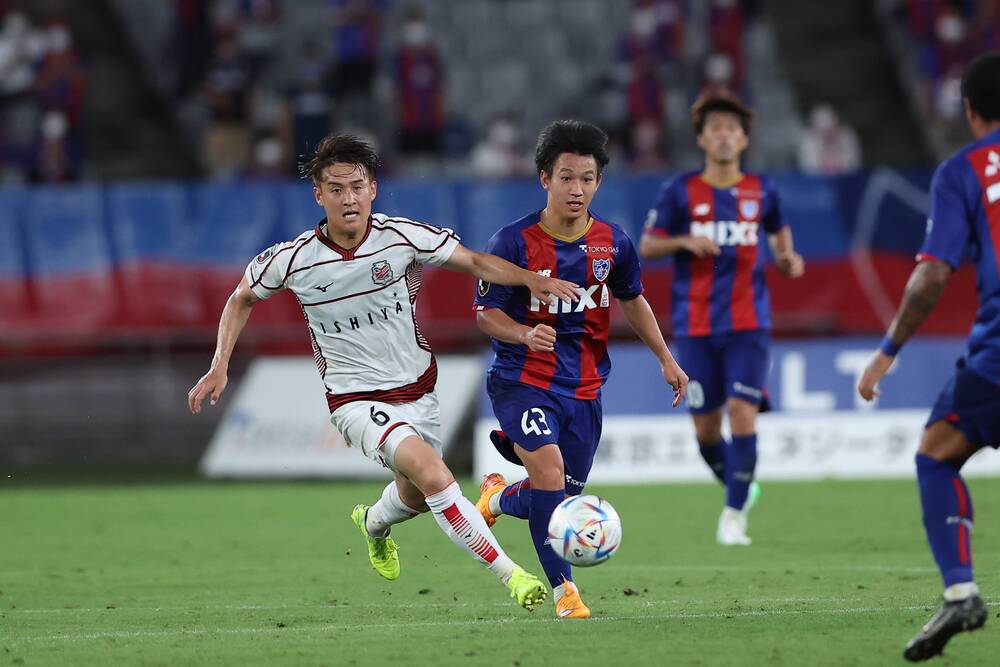
Q, Klopp won his first title at Liverpool in his fourth season.
A: I don't know if I will be given that much time (laughs), but I want to build a team that can compete for titles step by step. A coach is not a magician. Of course, I accept criticism when we lose, but the club has only just begun its reforms. I hope people understand that.
Q, The performance of Ryoma WATANABE was outstanding in the first half. He played as a right-back, right inside-half, and right winger, and fulfilled the required roles effectively. How does Coach Albert PUIG ORTONEDA feel about his performance and abilities?
A, Ryoma is one of the types of players I look for. His main position is MF, but sometimes he plays like a winger, and other times he can play like a full-back. There is still room for improvement in ball possession, but he is doing very well. In matches, players must adapt to various flows. Leandro is the same, but polyvalent players expand the range of options and tactics, making them valuable assets.
Q, Furthermore, I am particularly interested in Yuto NAGATOMO and Keigo HIGASHI. NAGATOMO had a delayed arrival due to national team activities and did not have the opportunity to play in the early stages of the season, but he seized the right full-back position. HIGASHI had been warming the bench for a while, but he seized the opportunity that came as an anchor, which is not his main position. Amidst the generational change, it is impressive to see the strength of the veteran players who have prepared themselves without rotting and are making a comeback.
A, Nagatomo is one of the few Japanese players who have continued to play at great clubs in Europe. The reason he has been able to compete at that level is because he has a soul that is obsessed with winning. He is full of eagerness to learn and always gives 100 percent in training. Last year, he faced criticism for his performances with the Japan national team, but he overcame it with a strong mentality and hard work. I believe that players with a mentality like his are truly great players. Young Japanese players should learn a lot from Nagatomo. Keigo also has a strong mentality and possesses excellent skills. As you said, he has overcome difficult situations and is now playing as an anchor. It’s as if he has been playing in this position all along. I think it is a position that suits him well.
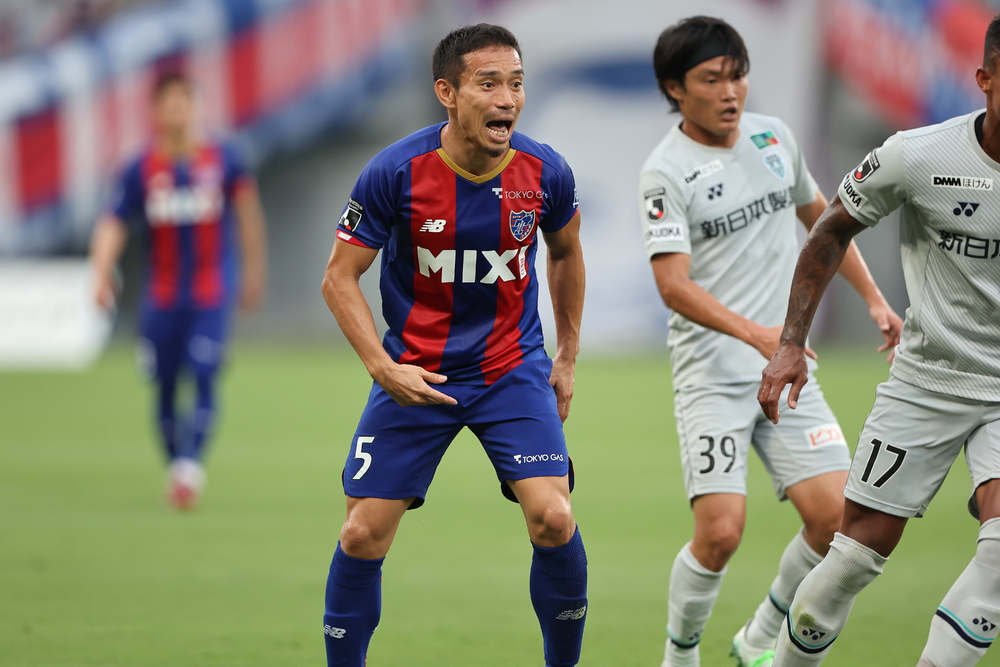
Q, on the other hand, in the inside half, mainly Abe and Matsuki are used. I think they are players who rely more on intensity than creativity. Is intensity more important in the image of the inside half that Coach Albert is looking for?
A, even if I told Shuto to "play like Iniesta," it doesn't mean he can become Iniesta. As a realist, I first want to make the most of the strengths of the player in front of me. Of course, I also expect gradual improvement. For example, I think it is clear to everyone that Kuse has made significant progress over the past few months. Not only is his intensity high, but the quality when he has the ball is also vastly different from the beginning of the season.
Q, there were important farewells with the players this summer. First, let's talk about Ryoya OGAWA. What kind of words did you say to send him off?
A, "To succeed at a high level in Europe, I want you to first make use of what you have learned over the past few months." And I told him, "Be mentally strong." I emphasized that having a competitive spirit is important. I also talked about how "many Japanese players face challenges when playing in Europe that they must overcome." That is adaptability. Going back to the earlier point, Nagatomo speaks Italian. Just going to Italy doesn’t mean you can immediately master the language. Nagatomo reportedly said, "I don’t need an interpreter," in order to learn the language faster. On the other hand, I have heard of Japanese players who have lived in Europe for several years but return without having learned the language. So, I told Ryoya, "It’s either you adapt properly or you come back by Christmas."
Q, what do you think about Kensuke NAGAI and Yojiro TAKAHAGI? I believe there are quite a few shocked fans and supporters.
A, regarding Kensuke, he wanted a different playing style and a different place in order to play longer as an active player. He played an important role in this team, so it is unfortunate that he is leaving, but I wanted to respect Kensuke’s feelings. Since it is a transfer within the same league, I am looking forward to facing him. Yojiro also has the desire to continue playing longer, and I think this transfer will be a positive move for him. His technical level is excellent, but as he has aged, it has become difficult to keep running constantly and to repeat sprints. I hope he gets plenty of playing time at Tochigi SC, and at the same time, I believe he has the ability to be a coach, so I advised him, “While you play, it’s better to prepare for becoming a coach in the future.”
Q, is it sometimes necessary to part ways during the process of reform?
A, of course, it is an unavoidable path in football. Even in Niigata, many foreign players left after the first year ended. As long as there is a style we aim for, I believe it is necessary to replace players to realize it. Even Manchester City and Liverpool refresh their squads almost every year while refining their style and strengthening their team. If you don’t do that and keep changing styles and concepts frequently, you fall into a negative cycle. For example, in Niigata now, Coach Rikizo MATSUHASHI is inheriting the style I built and is guiding the team in a good direction while making some player changes. I hope that when I leave Tokyo, my successor will inherit the style and ideas and lead the team in the same direction. I believe that is the secret to success.
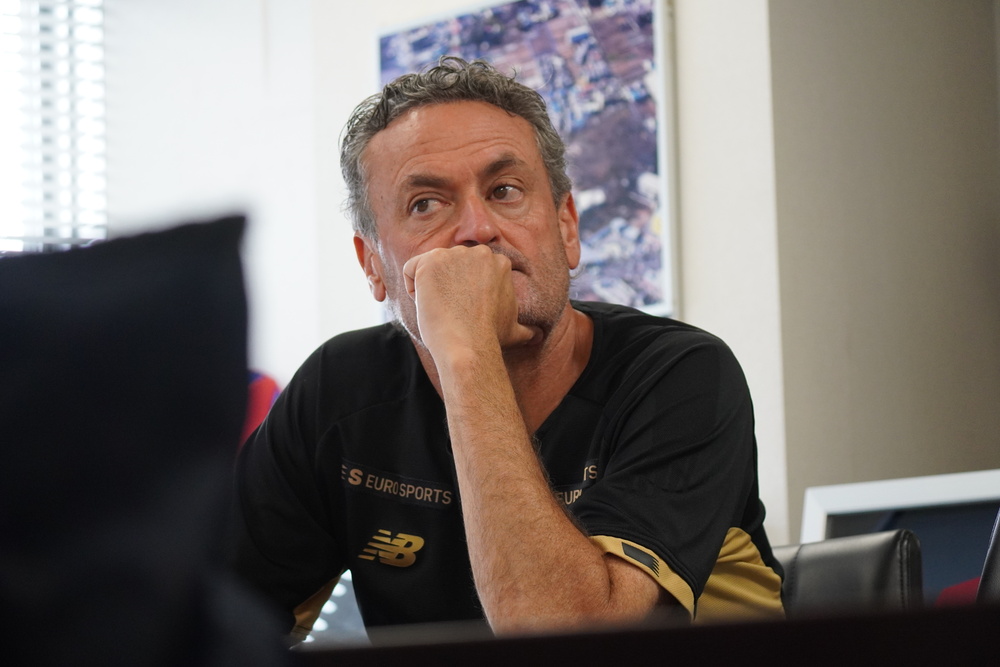
Q, I think you are also making efforts to reform the club. You have said, "We must change the club's mentality." What kind of mentality do you currently have, and what do you want to change?
A, we must not forget that the club is an organization built by living, breathing people. And in order for the team to develop a winner's mentality, everyone involved with the club must also possess it. We must not soak in lukewarm water. No matter the department or division, everyone must continuously demand more from themselves. A winner's mentality means always being hungry for victory and giving your all to win. This applies equally to the club's management, the strengthening department, the marketing department, and the public relations team. In the case of public relations, they must constantly work to have the club covered by more media outlets and continue efforts to disseminate the club's information. Every department must always aim higher. I believe that is the winner's mentality within the club. Even if the playing style changes, without a winner's mentality in the club, great success cannot be achieved. When you visit great clubs in Europe, you can feel the winner's mentality intensely from the moment you step inside. I would be very happy if Tokyo could acquire that.
Q: We are now one-third into the season. What kind of season do you want to finish with?
A, I want to continue pursuing the same things as before. It is about focusing on competition, putting in daily effort, and continuously growing. And I want to build a solid foundation that will lead into the next season.
Text by Atsushi Iio (Sports Writer)