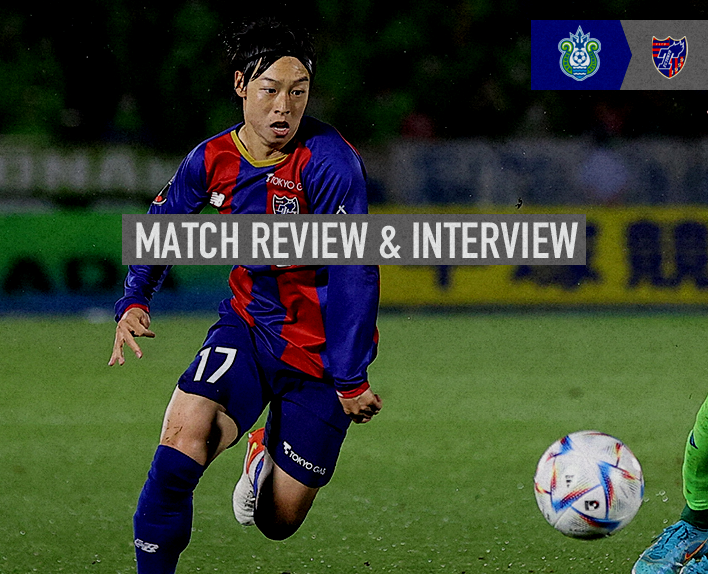
<Match Preview>
Before entering the second half of the J1 League, Tokyo will face V-Varen Nagasaki at their home stadium, Transcosmos Stadium Nagasaki, in the 3rd round of the Emperor's Cup.
Nagasaki is expected to come into the match against Tokyo in the J1 League with a very high level of motivation. Furthermore, on June 12th, they made a change in their coaching staff and have been determined to win in their pursuit of promotion to the J1 League. While they struggled to secure wins in the early stages of the J2 League, they have won their last three matches and also achieved a 2-0 victory in their first match after the coaching change.
However, for this 3rd round of the Emperor's Cup, newly invited Brazilian national Fabio CARILLE will not make it in time and U-18 coach Takeo HARADA will temporarily take command. The team's current state is unknown as they work towards rebuilding. We will analyze based on their performance in the league, but we must also be prepared to adapt to unexpected strategies.
Adaptation is necessary even for the difficulty of fighting due to different categories.
In a J1 League match, there are calm moments, and then the pace picks up, creating a match with varying intensity. On the other hand, in a J2 League match, there tends to be a long period of high-intensity play. (Omitted) First, we must compete with the same intensity. However, we want to express our playing style firmly without being influenced by the opponent and play in our own flow.
As Albert PUIG ORTONEDA, the coach, cooperated in the 2nd round of the Emperor's Cup, the way of playing and the intensity in the league matches, which are different categories, are also different. Facing opponents with high motivation and strong intensity, it is important to confront them with equal or even higher motivation and intensity. Based on that, we will stick to our own way of playing and aim for victory.
Of course, in a tournament, victory is necessary, but for a team that is still growing, it is also an important challenge to stick to their own style against any opponent. In the midst of a mission that is even more difficult than the regular league matches, we want to bring back the ticket to the round of 16.
[Albert PUIG ORTONEDA Interview]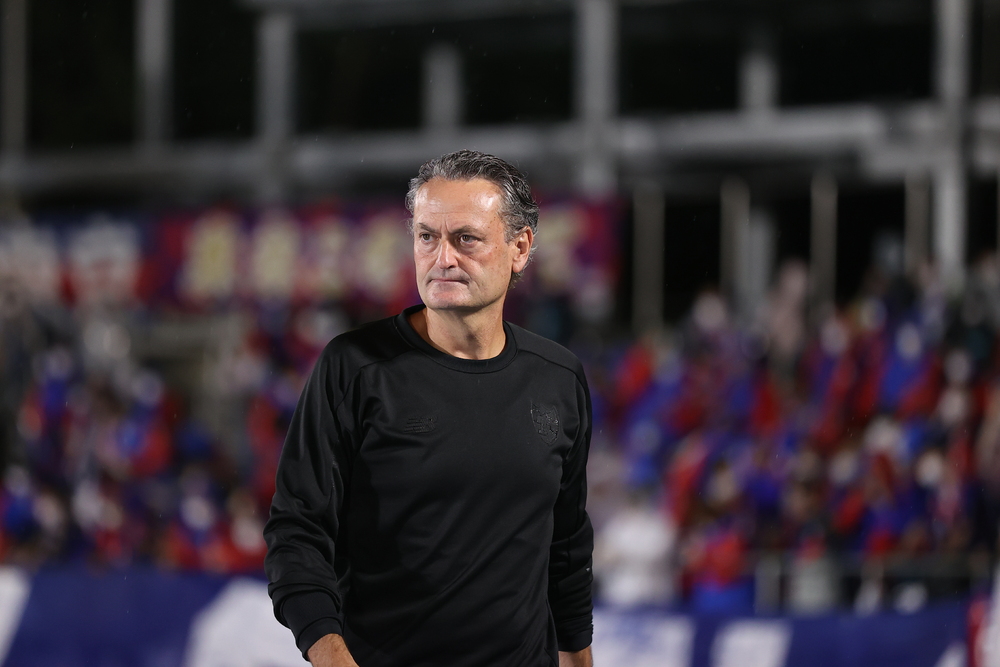
Q: Kunitomo SUZUKI has returned, but Matsuki has not yet returned. How will you approach the Nagasaki match in this situation?
A: Matsuki has not yet arrived in Japan, and Diego TABA is experiencing some discomfort. Other than that, the players are available to play. We will select from among them to compete.
Q: How do you feel about being able to be more aggressive against Nagasaki, who is in the J2 League?
A: We analyze that Nagasaki has assembled players capable of competing sufficiently in the J1 League. It is a club with a larger operational scale than several clubs in the J1 League. I believe they have gathered some of the highest quality players in the J2 League this season. Additionally, the team is currently in the midst of a coaching change. Whether it is because the match results have not met expectations or because the foreign players have not been able to deliver the expected performance, there may be various reasons, but they are right in the middle of a coaching transition. We analyze Nagasaki as a team with a player roster that has a level of quality equivalent to that of J1 League teams.
It has never happened before that all teams in the J1 league have won for 23 years. I think it is proof that the tournament always forces lower category teams to have a difficult battle against J1 clubs. It will also be a home game in Nagasaki. I think the players will be highly motivated, including the fact that there is a change in coach, and it will definitely be a difficult game.
Q: How do you analyze Nagasaki's offensive capabilities?
A: I think Nagasaki's style of play resembles that of a J1 League club rather than a J2 League team. We have faced Nagasaki in the past two seasons until last season. Their players' high quality stood out, and the matches were very difficult. We expect the same this time as well.
Q, where should we be cautious?
A, first they attack at a relaxed pace, but once they enter the finishing zone, there is a change in speed, and they make very dangerous plays there. They have players capable of playing even in tight spaces. We must be cautious of the changes in tempo during their play.
Q, is there anything you want to challenge in the Nagasaki match?
A, there is nothing special we want to challenge in this match. We simply want to continue growing match by match, just as we have done so far, even in the Nagasaki game. Of course, growth is not something that can be sustained continuously; it is natural to take one step forward and two steps back. In that sense, it is important to persistently and patiently continue making efforts. Only a few months have passed since the team started. In that regard, the team has not yet reached a state where it can consistently perform well. Our playing style is not one that can reach its final form in a short period of time. It is a style that requires at least two to three seasons to develop.
Q, what is important in the summer battles?
A, I think the longer you maintain possession of the ball, the more advantageous it becomes. Naturally, during cold periods, players can run and press actively, but the hotter it gets, the harder it is to move and apply pressure, so I believe it’s better to keep possession of the ball.
Q, how do you think about the importance of taking breaks as a team during the hiatus period?
I think that giving two or three consecutive days off after a two-month period of a packed schedule is actually quite little. I don't think it's too much. Until the recent match against Shonan, we had no games during the national team activity period, while Shonan had matches in the Levain Cup, so they may have had a better sense of match rhythm. However, I don't believe that we lost the match simply because we had too much time off; I think the results were influenced by other factors. Of course, I think it's worth analyzing that, but we had weeks without any breaks during the first few months. In Japan, there may be a virtue in continuing to work without rest, and I think there is a tendency to prioritize quantity over quality. I believe that makes it difficult to achieve high-quality work. There may be different values in Japanese culture, but for me, achieving high-quality work requires high-quality rest.
[Player Interview]
<Kazuya KONNO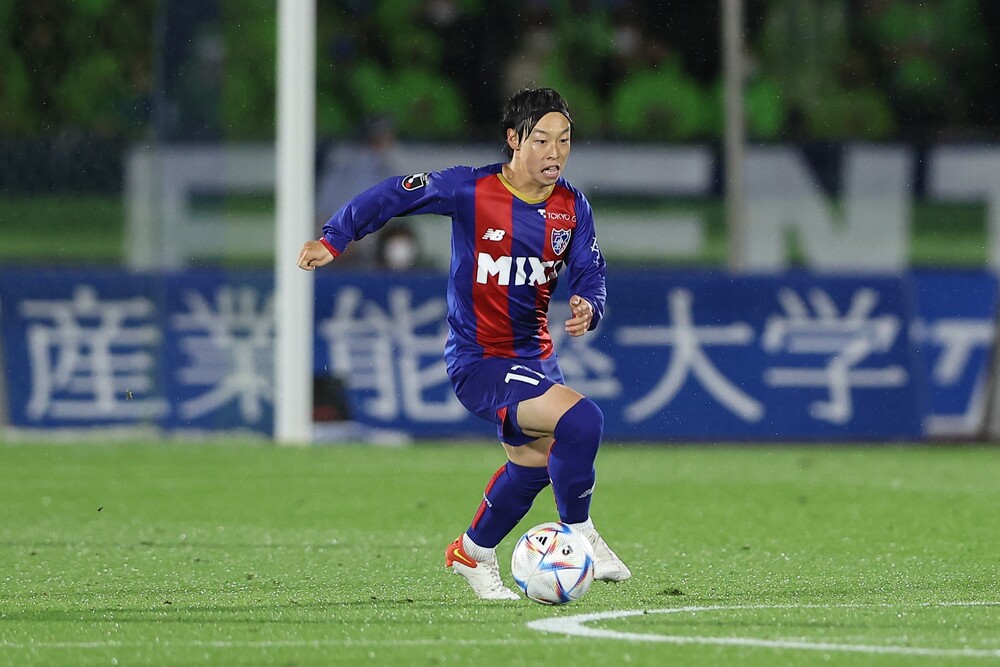
Q, I think I was able to change the flow of the game and make passes and attempts towards the goal even though I entered the game midway against Shonan. Did you have anything in mind when you played in the match?
A, since playing towards the goal is my characteristic, I first focused on expressing that clearly. Being in a situation where we were losing and needed to score, I consciously tried to take on challenges even forcefully, and I was also mindful of delivering early crosses from a distance to connect with teammates in front of the goal.
Q, regarding the Emperor's Cup, I think the previous match against Fuji University was also a difficult game. Tomorrow's match is against a J2 League team. I think the motivation and style of play will be different from the usual league matches. How do you feel about it?
A, since it is an away game and an opponent we haven't faced much before, I think it will be a somewhat difficult match. However, we want to firmly play our own style of soccer. Nagasaki has very good players, including many at the J1 level, so we do not consider them inferior at all. We want to stay fully focused, play well, and win.
Q, Nagasaki seems to have a high intensity of play from the start of the game. When we replace it with a league match, what kind of play should we do?
A, even in league matches, there are times when we struggle because the opponent presses with high intensity. It is best to connect passes without kicking the ball away easily, but I also think it is important to decisively aim behind the opponent at first. Until the opponent's (press) settles down, I want to consciously play by intentionally targeting behind them. I believe it is difficult for the opponent to maintain high intensity throughout the full 90 minutes, and they usually calm down after about 20 minutes in the first half, so from there, we want to properly play our own style of soccer, present various attacking patterns, and move toward scoring goals.
Q, in contrast to the league matches, you cannot proceed without winning the Emperor's Cup.
A, we must avoid conceding goals due to simple mistakes, and the start of the match will be extremely important. Scoring the first goal is crucial, and although there is a possibility of becoming tense from the beginning, if everyone fights hard right from the start, I believe we can take control of the game’s pace. We want to fight through the full 90 minutes and win. Since it’s a knockout tournament with a single match, there are difficult aspects, but first and foremost, we want to express our own style of football, win, and advance to the next round.