[Albert PUIG ORTONEDA Interview]
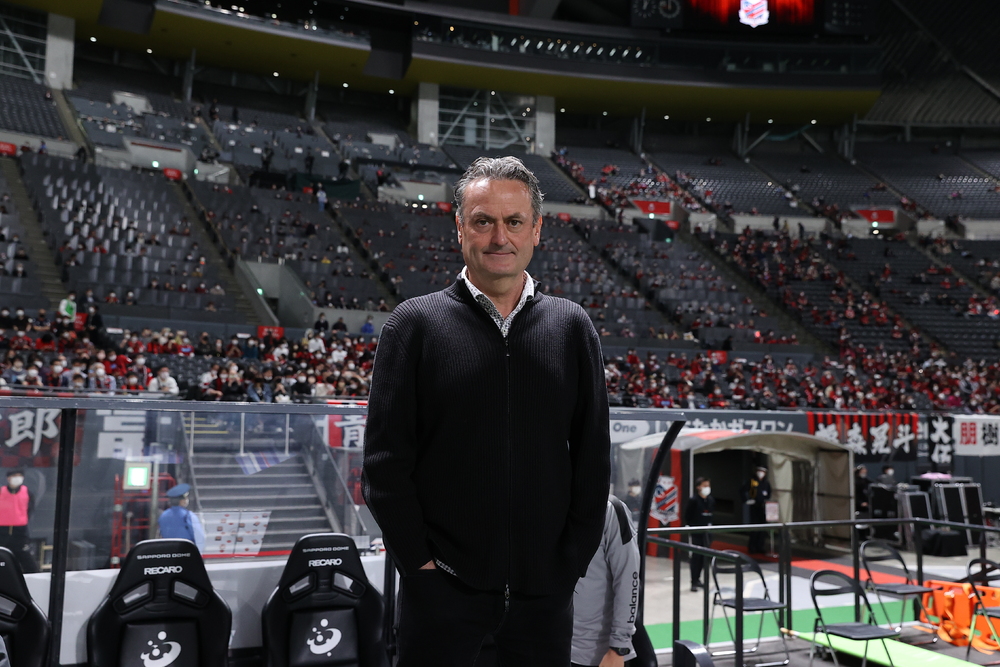
Q, I always hear that our growth is important. Please tell me your impression of Nagoya Grampus.
A, what I want to convey once again to everyone is that our mission this season is to gradually establish a new playing style. And, of course, since we are in the professional world, we are promoting growth while focusing on securing more victories and points during this development phase. Naturally, we want to connect the players' characteristics effectively to earning points. The goal this season is to foster the team's growth while making good use of the current players' strengths. Looking ahead to next season, with the cooperation of Mixi, we expect to move on to the next phase by strengthening the squad with better players. Regarding the Levain Cup, we want to give opportunities to young players. To confirm their potential, we need to see them play in official matches. We also want to provide playing time to those who have not had many opportunities so far in the Levain Cup. That is the general direction for this season.
After considering this season, we must capture the characteristics of the opponent's game and come up with a game plan. For example, in the previous match against Sapporo, I interpreted it as a good overall game. Sapporo is a very difficult opponent. It is difficult to play against a team that comes with a man-to-man marking style. And, although it was only a little, we were able to surpass them in possession rate. There were also a few close calls, but Kubo (SLOWIK) made fine saves to stop them. We also had decisive chances towards the end of the game, but we couldn't score due to a few centimeters difference. We will be playing against Nagoya tomorrow, and I think they are a dangerous team. However, our players have been consistently playing with a strong determination this season. Tomorrow, we also want to consider the opponent's characteristics and promote the growth of our team. At the same time, we want to bring out the strengths of our players and aim for another victory tomorrow.
Q: How satisfied are you with being able to have a competitive match against a strong opponent like Sapporo.D?
A, in each match, there are times when the game plan works well and times when it does not. Naturally, many people interpret whether the game plan was successful by linking it to the match result. For example, if Kubo had failed to stop a decisive chance from Sapporo and we had lost, some might have considered the game plan to be wrong. However, from the field perspective, there are many cases where the game plan was on target, but the match result did not meet expectations. For instance, Hiroshima, like Sapporo, is a team that applies intense high pressing from the front line. We were able to secure a victory against Hiroshima, but if you ask whether the game plan worked well, the answer is definitely no, and we were not able to perform the play we had hoped for.
Regarding tomorrow's Nagoya match, we have a different playing style. As for the players' positions, there may be similarities with Sapporo, but there is a clear difference in playing style between the two teams. Although the playing style is different, Nagoya has a lineup of high-quality players. In that sense, I think it will be very difficult to earn 3 points from them. However, the players have been practicing well to achieve good results through good play. In that sense, I can calmly and confidently face tomorrow's match.
Q: At the beginning, you said that the completion level was about 20%. I think you set 100% as the level to win the AFC Champions League (ACL). What is the current completion level of the team?
A: It is 25%. If we can reach a completion level of 50% to 60% by the end of this season, I would consider that a success. However, the team's completion level and the number of victories are different matters. Currently, I am 100% satisfied with the players' determined attitude toward competition and the match results the team has achieved. The evaluation criteria for the team's completion level, the players' attitude, and satisfaction with points earned are completely different. The players are competing with a strong fighting spirit. This includes their effort both when they have the ball and when they do not. Regarding that aspect, I am more than 100% satisfied.
Q: Is there a proportional relationship between results and growth?
A: Of course, they are not proportional. However, winning is something that promotes growth. This is because when the team wins, the players' trust in the team increases. I believe the fans and supporters will also be more satisfied. Additionally, the media will likely reduce their criticism of me. Therefore, it is obviously better to win the matches.
Q, what is the most important thing you focus on to promote growth?
A: There is almost no secret to promoting growth. The growth of a team is similar to cooking. First, time is necessary. Adjusting the heat is also required. The distribution of salt is important as well. Even if the cooking method is the same, there is a big difference in the quality of the dish between freshly caught fish and fish that has been frozen for years. That’s the kind of image I have.
Q: What will be important to break Nagoya's strong defense in the last two matches?
A, I think the key point will be to identify which zones they leave space in and to exploit those spaces. However, the opponent commits many players, often forming a defensive block with eight field players, so breaking through that will be difficult. They also have high-quality players. Their dangerous points lie not only in defense but also in attack, so I expect it to be a tough match. Depending on how the game unfolds, Nagoya may even surpass us in ball possession rate, but we want to focus on winning and play with that mindset tomorrow. As always, we intend to keep fighting for the full 90 minutes until the match ends.
Q: Is there anything that Coach Hasegawa, who was in charge until last season, is conscious of?
A, I do not place much importance on the fact that Coach Hasegawa was formerly the coach of FC Tokyo. However, I do think he is a great coach. In that sense, I do consider it significant that the team is led by him. He undoubtedly has a deeper understanding of Japanese soccer than I do. Additionally, he is a coach who has won multiple titles. For these reasons, I definitely expect tomorrow's match to be a difficult one.
[Player Interview]
<Yuto NAGATOMO>
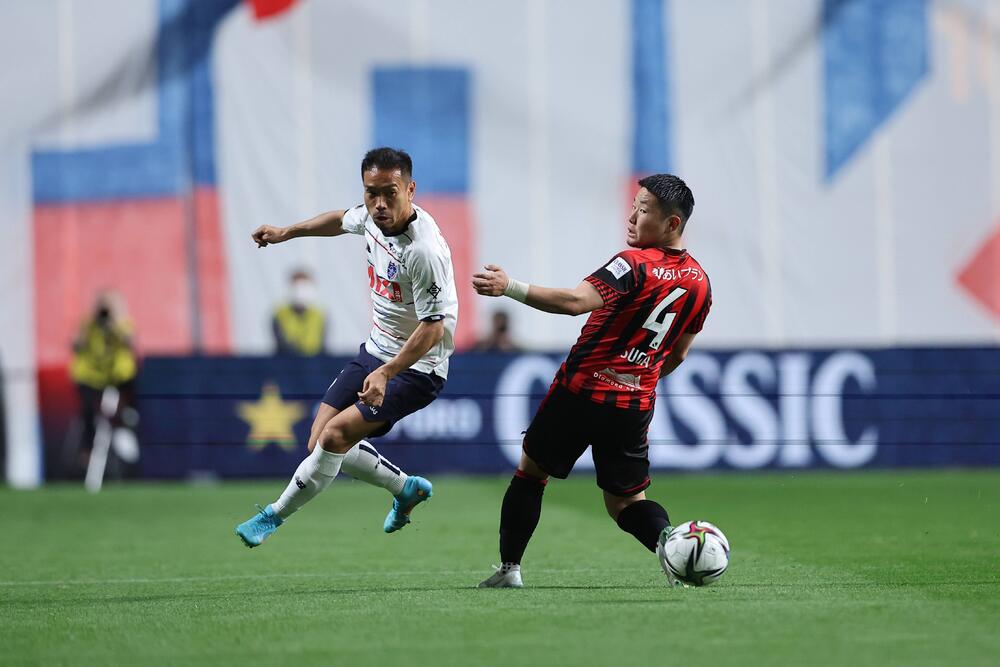
Q: How do you feel about your progress while working on a new style?
A, I feel that I am understanding and absorbing the coach's new tactics, and I am also growing on the pitch. There are still many challenges, so I am working every day to absorb everything.
Q, how do you feel about trying out new moves like narrowing down and inner wraps, which are different from your usual style?
A, recently, I've been addicted to playing inside (laughs). I had so much fun, really. The game is really enjoyable. I used to think that running up the side lane was the role of a full-back, but modern soccer is changing, and what the coach is asking for is also changing, so I need to understand the coach's tactics well and be able to play inside now. I've played with various coaches overseas, so I don't think it will take me that long to adapt, and I think I've actually been able to embody it on the pitch.
Q, it is valuable to be able to experience new things at this age, isn't it?
A, Is there any age-related thing? Rather, as I get older, I become more flexible and I also have a desire to learn from young players. Isn't it the opposite pattern? It is my own sense that getting older makes me more flexible.
Q, how does the team's situation look from an objective perspective as you work on a new style?
A, I am challenging myself with new things, and it's not that easy, but I feel a sense of growth. Everyone is enjoying playing, and I am too. I think enjoying is the most important thing and it contributes to growth, and I think it affects the speed of growth. I still feel that I can continue to grow.
Q: Is it the mind that gets tired more than the body?
A, no, I'm not that tired. It's not that I'm not tired at all, but I can play soccer with good positioning, so physical fatigue doesn't come heavily in the latter part of the second half. Because my physical condition is good, my mental fatigue is also reduced. It's about being able to play good soccer, being able to position myself well. It's also because my own condition is good, but the soccer I'm playing is in a place where physical fatigue is less likely to occur.
Q, it is fun to play in the center, and it is the feeling that I am able to receive the ball in a good form precisely because I am in a good position.
A, because it is a sport that is played with 11 people, not just by oneself, I am always conscious of which position I can connect with. Until now, I have been playing wide, so there have been times when the distance between me and the center was far, or conversely, I took a position that was too close and troubled my teammates. Looking back now, I realize that. I can play with a good sense of distance inside, and of course, it is necessary to open up and take width depending on the situation of my teammates and the opponent, and I feel growth in being able to play while overlooking soccer. I think that enjoying it is about those aspects.
Q: Tomorrow's match is against Nagoya, and Kenta HASEGAWA, who fought together last season, is in charge. Do you have any thoughts on that?
A, there is also the fact that if Kenta-san did not desire me, I would not have been able to return to Tokyo, so I feel grateful to him for being able to come back to this wonderful club. On the other hand, there are also complex feelings of not being able to contribute to Kenta-san's team. Now, I will fight as an enemy, but I am determined to show what I have learned from Kenta-san in the short time and my own growth.
Q: You mentioned that you want to learn from young players, but Matsuki has been playing since the beginning of the season. Are there any aspects in which you are inspired by him?
AFirst of all, I think the most important thing to succeed as a professional is mentality, and he has that fearlessness. No matter what stage he plays in the future, I think that mentality will help him grow and lead him to even greater heights. It's reliable to have that. I'm about twice his age, but I think his dignified behavior that doesn't make me feel that is his strength. I'm desperately watching him to absorb that.
Q: After the set play against Sapporo, there was a scene where you strongly stopped the opponent around the halfway line. Is this the best condition you have been in since returning last season?
A, both mentally and physically, I am in a good state and still improving. I think there are various factors, but since returning to Japan, I have been active in the national team and there has been a congested schedule. Also, having played overseas for 11 seasons, I finally feel adapted to the environment in Japan. I have also adapted to the J-League.
Q: You have been frequently used as a right full-back, have you gotten used to it?
A, right, it's fun. I've been playing on the left all this time, and occasionally I played on the right, but I honestly had a sense of weakness thinking "the right side is not interesting". However, now I'm really enjoying it, thinking "the right side is so much fun. Why haven't I been doing this until now" (laughs). It's not just about the condition, but I think I can strive for high-quality play.
Q, with this style, even when the ball is taken away, I feel that I am able to switch and recover well because my positioning is good.
A, because I often take the inside, it's really difficult to go up unless it's a really good timing to go up, and in that sense, the quality of judgment on countermeasures and decisions on where to go and where not to go has also improved, and I think that's largely because of good positioning and being able to play with ease. When I tighten to the inside during defense, the opponent also has a hard time countering, and I don't feel like I'm being beaten because I can confront the opponent in a good state.
<Shuto ABE>
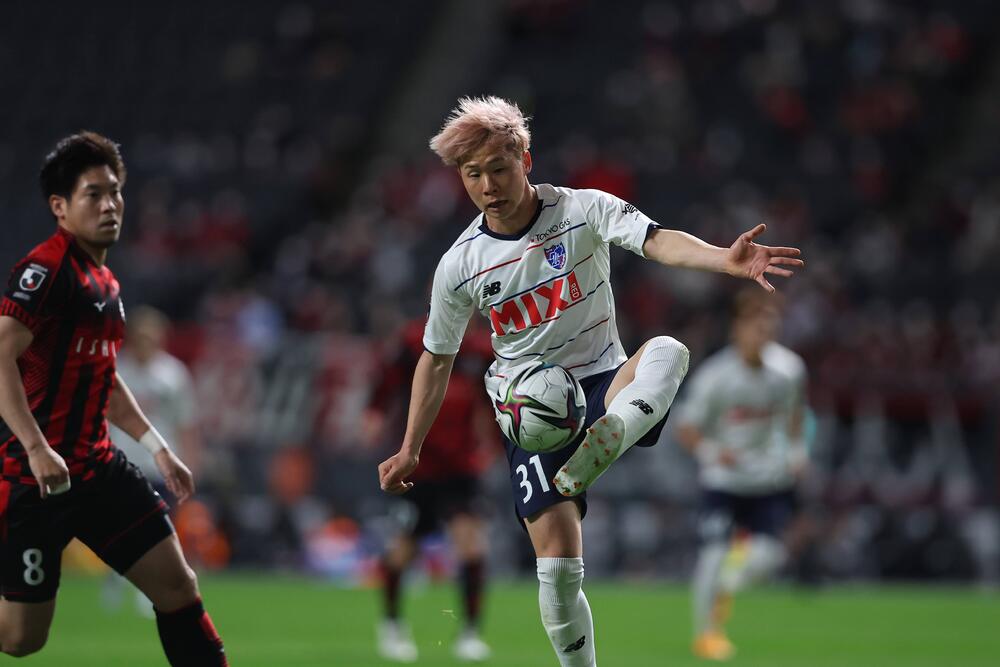
Q: In the league matches, we had back-to-back scoreless draws in the 8th round against Urawa and the 9th round against Sapporo. How do you perceive these results?
A, not being able to score in both matches is something to reflect on. There were moments when the build-up from the back, which we have been working on this season, went well, but overall, I think there are still many challenges. However, the image of the style of soccer the team aims for is unified. I believe it is important to continue challenging ourselves without fear of failure and to connect that to growth.
Q, in terms of defense, do you feel a sense of accomplishment in keeping a clean sheet in both matches?
A, Urawa and Sapporo are teams with completely different styles of play, so I view keeping a clean sheet against both positively. Under Coach Albert PUIG ORTONEDA, we have worked on organized defense, and I believe we were able to demonstrate the results of that effort on the pitch to some extent.
Q, Coach Albert Puig always emphasizes the word "growth". Do you feel the team's growth?
A, I feel that the team's level of completion is improving with each match. However, even if the content is good, it is frustrating not to win, and I believe the fans and supporters will not be able to enjoy it. I want to focus on the results and continue to grow while winning matches.
Q: This week's match is against Nagoya, led by coach Kenta HASEGAWA. How do you feel about it?
A, I am grateful to have been coached by Coach HASEGAWA for three years since I became a professional. I want to repay that by showing how much I have grown and securing a victory.
Q, please share your enthusiasm for the game with the fans and supporters.
A, Everyone's passionate support is our motivation. We will do our best to repay the energy we receive with results and performance, and we are determined to secure 3 points. Please continue to support us this week as well!
Matchday program is available here!