[Albert PUIG ORTONEDA Interview]
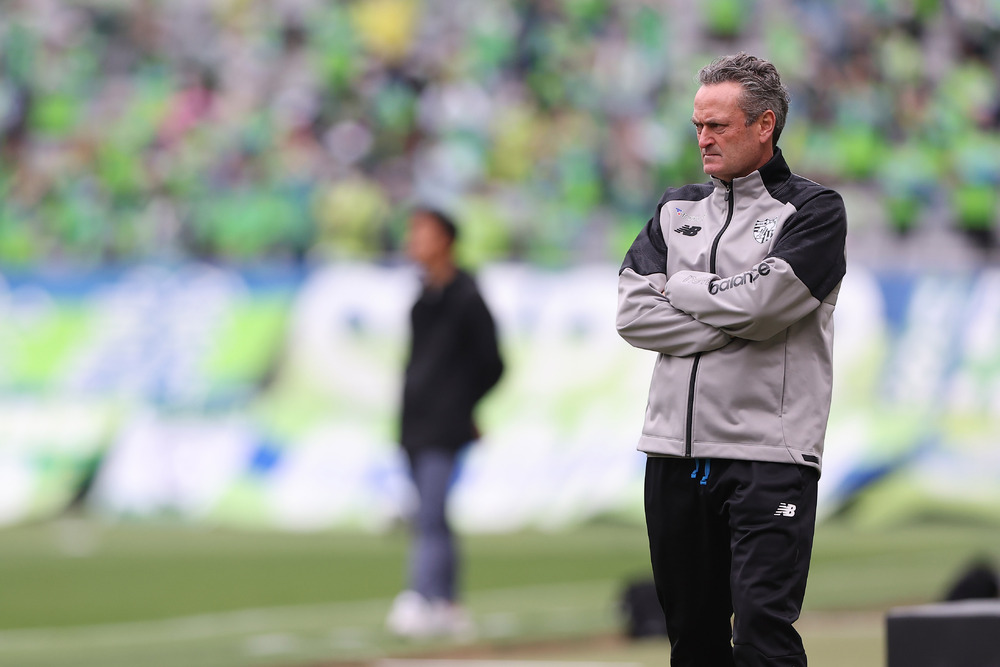
Q: Coach Lewis of Kobe seemed to be playing defense in a zone during the Kyoto match. If the opponent doesn't come from the front line this time as well, the theme will be to break through the opponent's defense in the zone. What do you think?
A: The coach has changed, and to be honest, we have not obtained much information yet. However, I know him well. I think he is good at using the 4-4-2 system to defend compactly and then launch attacks from there. They defend by tightly closing down spaces and are also strong in counterattacks. Of course, they do not forget the importance of ball possession. The dangerous factor for us is that the team is highly focused right after the coaching change. They also have high-quality players. Naturally, every team wants to win the match in front of them, but Kobe, who has struggled to earn points at the start of the season, surely wants to secure points at all costs. We are also hungry for victory, but I believe Kobe is equally, if not more, hungry. Each team grows along with its own play style, and we are currently in a growth phase with our play style. I expect the team to continue growing through this match as well.
Q: I think there was progress in terms of content in the Yokohama FM match. I think we will approach it with a desire to improve the content, but how do you feel about the Kobe match?
A, the team also grew in the match against Yokohama FM. I think the signs of growth were more clearly visible in the first half. Yokohama FM's most dangerous attack is their counterattack, but they also have ball possession as one of their weapons. We were able to effectively neutralize that and aim for counterattacks ourselves in the first half. The difference between Yokohama FM and Kawasaki is that when Kawasaki pushes you back, it is quite difficult to break free. On the other hand, even if Yokohama FM pushes you back, there is a possibility to create chances after regaining possession. When you are out-possessed by Kawasaki, the game becomes difficult. Against Yokohama FM, by intentionally conceding possession, we were able to execute our plan well in the first half by regaining the ball and turning it into counterattacks. It would have been good to score additional goals in the first half, but things didn’t go smoothly, and unfortunately, at the start of the second half, due to a mistake, we conceded the second goal from one of Yokohama FM’s major weapons, their counterattack.
In any case, I think the team has grown through the Yokohama FM match, and I hope that the team will continue to grow consistently as we play more games this season. Both Kawasaki and Yokohama FM have been playing with the same play style for multiple seasons. Naturally, it is difficult to play against a team that is highly developed and mature. However, I am satisfied with the team and players' performance. I am proud that we were able to compete equally with Kawasaki and Yokohama FM, even though we have only been playing with a new play style for a few months. The team's growth is clearly evident not only in games but also in daily practices. What we can do in practice cannot be immediately expressed in games. It takes time to be able to express it, so it is important to patiently wait. Once we can express it, I believe we will be able to dominate the game regardless of the strength of our opponents.
Q, the strategy against Yokohama FM was to intentionally let them have the ball and aim for counterattacks. However, it did not work against Kawasaki. Please explain why this strategy works against Yokohama FM but not against Kawasaki.
A, each team has a different play style. For example, Kawasaki is characterized by maintaining a high ball possession rate to press the opponent and create chances. However, I don't think they always play positional football across the entire pitch. When they are pressed and lose the ball, one of their major strengths is immediately regaining possession and continuing the attack. Yokohama FM’s characteristic, I believe, is an attack that leverages the speed of their wingers more than ball possession. When you have wingers who use speed as a weapon, they require space. A typical play of this was the scene of our second conceded goal. They launched a counterattack with space expanding in front of the winger, which is Yokohama FM’s most dangerous play, and we conceded a goal from that. On the other hand, while Yokohama FM’s counterattack was dangerous, the match was also one where creating chances through counterattacks against Yokohama FM was two sides of the same coin. A typical example was the play in the first half. Against an opponent strong in counterattacks, we also created many chances from counterattacks. However, because we conceded the second goal at the start of the second half, we had to take the initiative and control the game. From there, Yokohama’s counterattack began to function effectively, and the match developed into one where more chances were created in the second half than in the first.
The Kawasaki game had a different flow. They struggle with being pushed back. In that sense, when they were able to push Kawasaki back while maintaining a high position with the ball, they were able to create many chances. However, the game plan changes from game to game. I believe that the players' appropriate judgment in each moment is what determines the outcome of the game. Each team approaches the game with a clear game plan, but ultimately it comes down to whether the players can make the appropriate decisions on the pitch and play according to the game plan. However, even if they are able to play with appropriate judgment, if they lack finishing ability in the end, they cannot win in this sport. A typical game of this is the Kyoto Sanga F.C. game. Soccer is a competition of goals, so I think finishing ability in front of the goal is one of the important points. That is the reality of soccer.
Q, in April, due to consecutive matches, it was mentioned that young players would be actively used in cup matches, but these past 3 matches are league matches. How do you plan to select players in this congested schedule?
A, we plan to rotate players in the cup matches. First of all, I think it is impossible for the same players to play throughout this congested schedule. Our team has many high-quality players. We also have wonderful young players. In that sense, we want to give young players opportunities to play in the cup matches. Looking globally, there are not many teams that can maintain high-quality play while competing in two or three tournaments simultaneously. Whether in Major League Soccer in the United States or the J.League, I feel that teams participating in tournaments like the AFC Champions League struggle with the congested schedule and find it difficult to maintain good performance throughout the season. Looking at Europe, I think only about 10 to 15 clubs can consistently demonstrate high quality across multiple tournaments, including the UEFA Champions League.
Q, what have you emphasized in preparation for the Kobe match despite the short preparation period?
A, with limited time, rather than focusing on how to adapt to the opposing team, we focused on how to develop our own play, practicing while utilizing video. In modern soccer, it is important to hold analysis meetings using video. There is a limit to the time available for practice on the pitch. This is even more true with a congested schedule. Therefore, we spend time reviewing our areas for improvement and good plays through video, connecting that to the next match and embedding new concepts.
Q, I think there are great players on the opposing team.
A, Kobe has one of the greatest players who has truly made his mark in the history of football.
Q, what are your memories of playing with Andres Iniesta and what does his presence mean to you, Coach Albert?
A, I believe he is a legend in the world of soccer. He is also one of the few players who have proven that it is not always necessary to have a high level of physicality to perform at the top level globally. He transformed soccer into a work of art. He has continued to deliver such great performances that there is no need to further explain how wonderful a player he is. Furthermore, he has proven that one can continue to perform at the highest level in the world while maintaining a humble attitude. He broke the mold of what a top-level player in soccer is supposed to be. He is a great player loved by soccer fans all over the world. I have heard that he is also enjoying his life in Japan. I am proud that we can compete against him here in Japan. At some point, the time will come for him to retire as a player. When that happens, I sincerely hope that he will return to FC Barcelona, a club I deeply love and consider my hometown.
[Player Interview]
<Takuya AOKI>
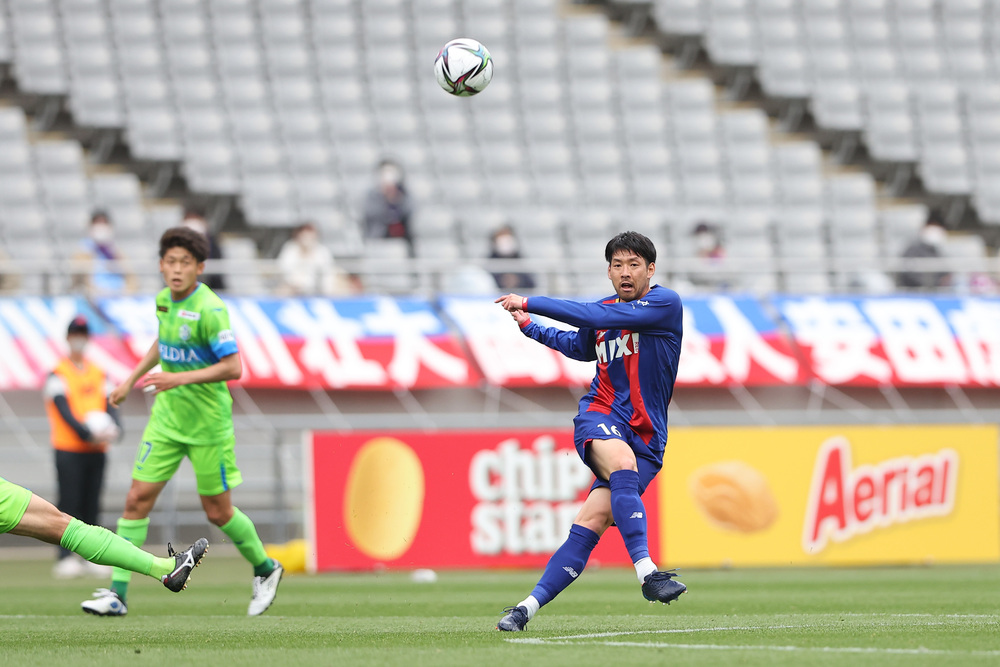
Q, it is expected that Iniesta will play in a position similar to second striker for Kobe. What kind of image do you have in mind for the defense to grab that position?
A, there are also parts that you won't know until you try playing the game. However, since he is a dangerous player when he is close to the goal, someone must always confront him. Rather than focusing on which player of the opponent to face, it is more important to be conscious of doing what we want to do.
Q, I think our goal is to keep possession of the ball. How do you feel as an anchor?
A, although there are few special things I can do from my position, I am always conscious of ensuring that the team can play smoothly.
Q: What are the areas where the team as a whole has improved?
A, both in attack and defense, the whole team feels connected. The most important thing is the players' sense of distance. Since we play positional play, we are not scattered, and each player can be in a good position, so the whole team can play connected.
Q, what is the most important thing that is being asked by coach Albert PUIG ORTONEDA in the anchor position?
A, it's about balance. Also, composure is important. I try to keep an eye on my surroundings and play in a way that doesn't leave any gaps.
Q, don't you think your role is more diverse compared to a double pivot? Hasn't the frequency of moving the players around you increased?
A, it's also easy to play because the inside half player moves a lot, and I play while thinking about what to do after they have gone forward. It is important to make decisions such as looking for spaces they have left or, conversely, following and supporting the inside half.
<Shuto ABE>
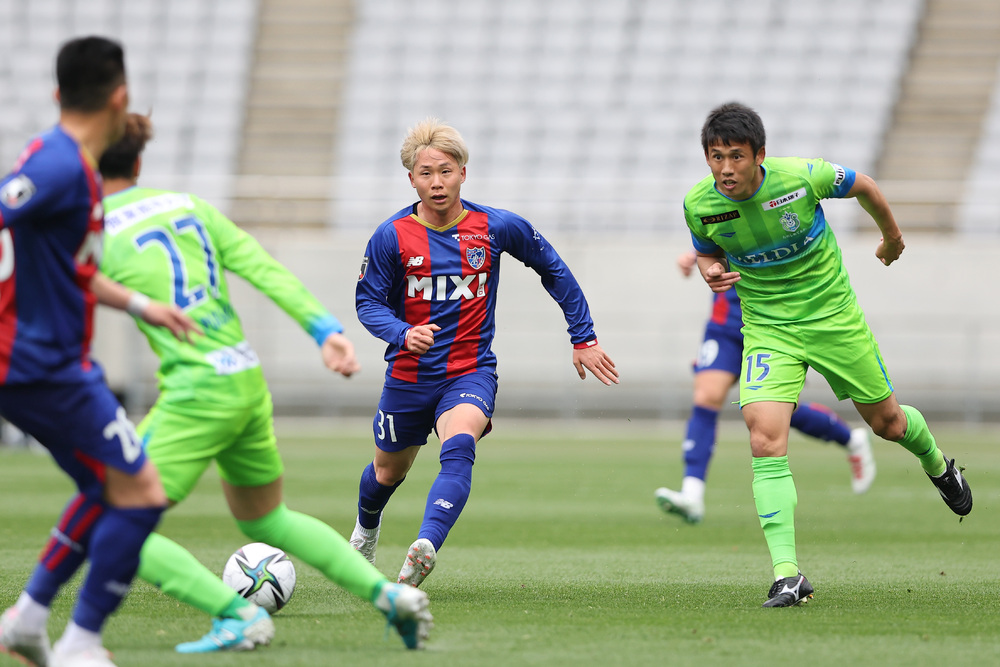
Q: I have scored in two consecutive official matches, but I feel like I am becoming more composed in front of the goal.
A, I don't really feel that way myself. In the home match against Hiroshima, when Adailton scored a goal, there was a scene before that where I missed a one-on-one with the goalkeeper. After that match, I remember receiving advice from Takahagi, who said, 'In that situation, the keeper can't reach the near side, so it's good to aim for the near post.' In the match against Yokohama FM, a similar situation came up, so I think I was able to calmly aim for the near post.
Q, you remained calm without showing much excitement even after scoring a goal.
A, the match against Yokohama FM was still tied, so I was thinking, "Let's stay calm from here on," which is why I remained composed. In the Kobe match, I want to score a goal that lets my emotions explode. On the goal side where Tokyo’s fans and supporters are.
Q, the match against Yokohama FM was a game where we were outplayed in terms of strength, but I think we are gradually able to show what we have been working on in practice. Do you feel that you are improving with each game?
A: I think there are scenes where things go well and scenes where they don’t. I still have few moments where I feel like I’m doing well, but I believe everyone has the will to express what the coach demands on the pitch. I want to strengthen that will and improve my play as well.
Q: Tomorrow's match against Kobe. There is a senior from the academy, Kento HASHIMOTO, who plays in the same position. What kind of presence is HASHIMOTO for player Abe?
A, I still remember when I was a senior in university and became a special designated player, playing together with him. He can win the ball, distribute it well, and also score goals, so I thought he was my ideal defensive midfielder. At that time, he was also part of the Japan national team, and I thought that players who can achieve such results are the ones who move up.
Q, I don't think I'm very conscious of it, but do you have a desire not to lose?
A, I’m not that conscious of it, but when there are national team-level players, I get fired up and feel like, "I’ll show them." However, as a team, we absolutely want to win here. If we can dominate the midfield where players like HASHIMOTO and INIESTA are, I believe it will naturally lead to the team’s victory and also contribute to my own growth, so I want to play with a strong mindset.
Q: Please tell us about your thoughts and feelings for the match against Kobe Univ at Ajinomoto Stadium, which was player Abe's J1 debut.
A, Kobe is a team with many outstanding players besides HASHIMOTO and INIESTA. However, among them, INIESTA is one of the world’s most exceptional players, so being able to play with such a player is a great honor. That said, they are still the opponent, so I want to take away INIESTA’s freedom, seize control there, and win at Ajinomoto.
Q, tomorrow's game will be played with 100% capacity. Please leave a message to all the fans and supporters.
A, although it is a weekday match, I believe many fans and supporters will come rushing to Ajinomoto Stadium. For those fans and supporters, we must deliver a victory, and I think it is our responsibility to play in a way that makes them want to come watch FC Tokyo’s games again. We want to win firmly and produce results. The more fans and supporters there are, the higher my motivation becomes, so I am truly looking forward to it myself. Please continue to support us tomorrow as well.
<Hirotaka MITA>
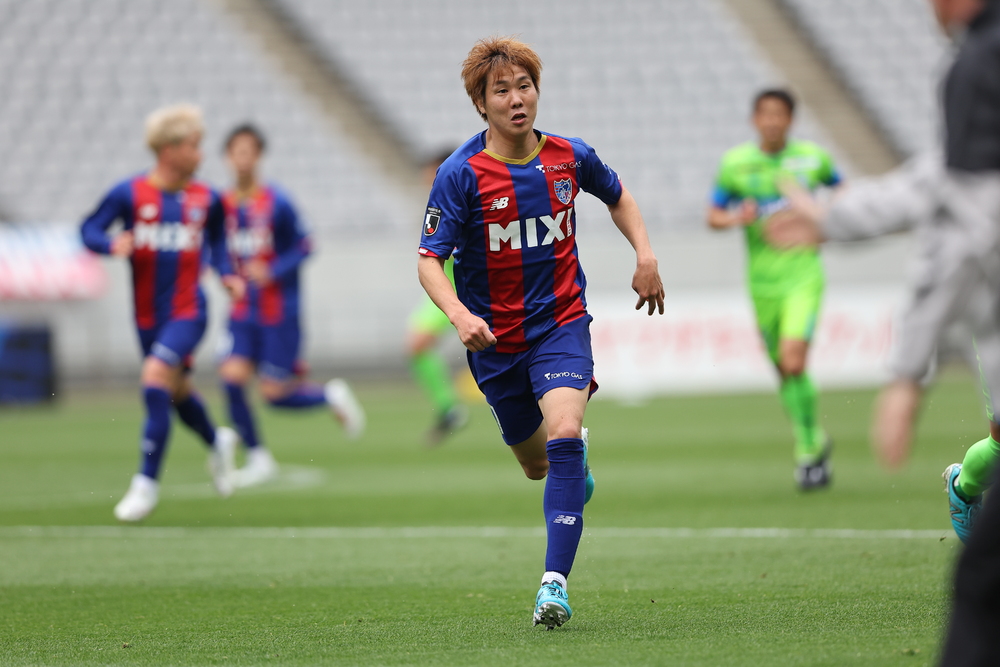
Q: How do you feel about the fight so far, starting with 3 wins in the first 5 games of the league?
A, under Coach Albert, we are at the stage of trying to express a new style centered on positional play. At this point, we must not only seek results but also pursue quality and improve the areas where we are lacking. However, I feel that the direction the team is aiming for is a positive one for Tokyo.
Q: In Albert's "love for the ball" football, Mita is being used in various positions such as midfield and wing. What kind of role do you think is expected of him?
A: Basically, my role is to move the ball, create rhythm, and control the pace of the game. I don’t mind playing in any position. With Tokyo’s style this season, I am confident that I can play anywhere. I believe my strength lies in being able to naturally switch my play depending on the situation and position.
Q: What kind of things do you keep in mind when approaching the Kobe match this round?
A: To improve the team's cohesion, it is necessary to play matches continuously at this stage, so we must value each game and use it as an opportunity for growth. Kobe is a team with highly skilled players. I believe this match will test our strength to see if we can play our style of football even against such opponents.
Q: Please share your enthusiasm for the game with the fans and supporters.
A: I’m excited to finally be able to see Ajinomoto Stadium filled with fans and supporters now that attendance restrictions have been lifted. I want everyone to enjoy watching Tokyo grow with each match this season, and I will also work hard to improve myself and contribute to the team. We will show attractive football, so please cheer us on!
OFFICIAL MATCH DAY PROGRAM IS HERE!